Do You Need a Power Conditioner for Home Theater?
Most home theaters need surge protection, not 'cleaner power.' What conditioners fix and don't, when a $209.95 Furman PST-8D is enough, and when regulation or a projector UPS earns its price.
Loading...
Building a home theater can feel overwhelming, but it does not have to be. Start with the guides below to understand the basics, then use our free tools to plan your specific setup. Every guide links to the next logical step, so you can follow the path from beginner to confident builder.
Most home theaters need surge protection, not 'cleaner power.' What conditioners fix and don't, when a $209.95 Furman PST-8D is enough, and when regulation or a projector UPS earns its price.
The subwoofer crawl is the easy, free fix for boomy bass: swap the sub with your ears to find its best spot. A 30-minute guide that can cut a 10dB peak.
Infinity Vision sets a 45-ft + 7.1 audio floor. Acoustically transparent LED walls arrive. 5 CinemaCon 2026 trends reaching home in 2026-27.
Switch 2 maxes at 4K/60 and 1080p/120. No VRR, no Dolby Vision. The TCL QM6K ($450) and LG B4 ($600) cover most buyers. Full guide with specs.
Same OLED SE panel, opposite HDR formats. The B6 has Dolby Vision, the S85H measured brighter, and last year's S85F hides a QD-OLED panel at two sizes. Which cheap OLED wins?
The LG C6 and Samsung S90H share a $2,699.99 list price and a $1,399.99 sale price. Samsung switched the S90H to WOLED and it still measured slightly brighter. Our pick for each room.
A model-by-model comparison of every Denon and Yamaha AVR in 2026, from the entry 5.2 models to the $2,200 RX-A8A. Neither entry model decodes Atmos. Clear picks at every price tier.
Dolby Atmos wins on content library. DTS:X wins on technical flexibility. IMAX Enhanced is a marketing certification. Here is what each format actually is, which AVRs decode them, and why you should stop overthinking it.
A definitive comparison of every TV panel technology in 2026: Mini LED, WOLED, QD-OLED, RGB Micro-Lens OLED, and Micro LED. Specific products, real prices, and a clear verdict on which panel belongs in your room.
The SVS PB-2000 Pro is still the sweet spot at $900. The new SVS R|Evolution 3000 series makes the $600 tier competitive for the first time. Here's every tier from $200 to $2,000, matched to your room volume in cubic feet.
The LG C6 ($1,399.99 for 65" on sale) is the best PS5 Pro TV for most people. The G6 adds 4K/165Hz for PC gamers. Samsung S95H has the widest VRR range for Xbox. Every pick with input lag numbers, refresh rates, and the features that actually matter for each platform.
Three wireless surround ecosystems shipped in 2026: Dolby Atmos FlexConnect (LG), Sony 360 SSM, and Samsung Q-Symphony. We rank them on audio quality, setup flexibility, latency, and total cost. Plus the best wired alternatives at each price points.
Hisense's 2026 lineup runs from the $400 U6N to the $15,000+ 116-inch RGB evo. The U7N is the value sweet spot at $700 for a 65". Here's every model, what changed from 2025, and which sizes actually make sense.
Filmmaker Mode, color temp Warm, sharpness 0, motion smoothing off. Brand-specific menu names for LG, Samsung, Sony, TCL, and Hisense.
Same 96dB sensitivity rating, same 38Hz bass floor, yet one line uses spun-copper woofers and the other Cerametallic. And on sale, the cheaper line now costs more. Which Klipsch to buy.
The Hisense U8N ($700 for 65-inch) is the best budget 4K TV for dark rooms. TCL QM851G ($750) wins for bright rooms. Samsung Q80D ($900) is the safe overpay. Sony X90L has the best processing. Full 2026 comparison with prices, specs, and the ad problem nobody wants to talk about.
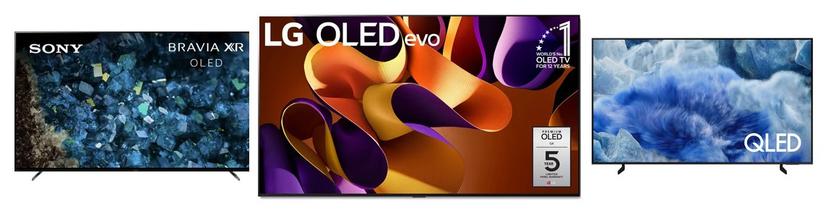
Going from 5.1 to 5.1.2 is the single biggest upgrade in home theater immersion. 5.1.2 to 7.1.4 is a much smaller jump. Here is when each Atmos tier is worth the money, which AVRs you need, and how room size determines the right channel count.
Practical cable management for every home theater setup. Paintable raceways, flat speaker wire, banana plugs, and wireless alternatives with specific products and prices.
LG C6 OLED ($2,700) is the best overall. Samsung S90H ($1,600) for budget. Hisense U8N ($700) for value. All tested for 4K 120Hz VRR.
The Sonos Beam Gen 2 ($450) is the best small-room soundbar. The Samsung HW-Q990D ($1,400) is the only one that approaches real surround. The JBL Bar 1000 ($900) splits the difference. Everyone else is wasting your money.
The 77" LG C4 costs $2,100. The 83" costs $2,800. That's $700 for 6 more inches of screen, which is $116 per diagonal inch. The 85" Samsung S95D QD-OLED is $4,300. Here's when bigger is worth it and when you're paying a premium for diminishing returns.
A $400 separates system digs 40 Hz deeper than a Sonos Beam, and a $1,130 Denon, Emotiva, and Dayton stack out-measures an $800 soundbar. We ran the numbers at three budgets.
The JBL Bar 1300X ($1,700) wireless surrounds work but sound thin. The Sonos Arc + Era 300 system ($2,100) is better but still can't match wired 5.1 at half the price. WiSA-based systems like the Platin Monaco 5.1.2 ($1,100) are the closest to real wireless surround. Here's the honest breakdown.
A dedicated theater room with light control and acoustic treatment will always outperform a living room setup. But 90% of home theater enthusiasts don't have a spare room, and a well-optimized living room can still sound incredible. Here's how to maximize either situation.
KEF LS50 Wireless II ($2,800/pair) vs KEF LS50 Meta ($1,600/pair) plus a Denon AVR-S760H ($350). Same driver, same brand, wildly different philosophies. Powered speakers are taking over desktops and small rooms. Passive still owns home theater. Here's where the line is.
Speakers hold 70% of their value and last decades. AVRs lose 50% in two years and HDMI standards change. Subwoofers are the best used deal in home theater if you test the amp. Here's what to buy used, what to buy new, and how to spot problems before you pay.
Denon now forces HEOS account creation for firmware updates and network streaming. Yamaha MusicCast does not. Both platforms are mediocre. Here is what actually matters when picking an AVR, and why the smart platform should be your lowest priority.
A Bose Lifestyle 650 costs $3,000 for tiny cube speakers and a bass module with no user-accessible crossover. A Denon AVR-S760H ($350) with Emotiva B1+ speakers ($460) and an SVS PB-1000 Pro ($600) costs $1,500 and sounds dramatically better. Here's why Bose keeps selling anyway.
Basements are the best rooms in your house for a home theater, but most builds get three things wrong. Here's how to do it right, from moisture control and pre-wire to speaker placement and acoustic treatment, with specific gear picks at $2K, $5K, and $10K+ budgets.
48 Gbps Ultra High Speed HDMI under 15 ft, RUIPRO fiber for longer runs, 14-gauge CL2 speaker wire, and a Furman PST-8 surge protector. Wiring checklist with specific products for new builds and retrofits.
Atmos puts sound above you using ceiling speakers or height modules. The entry point is a 7-channel receiver like the Denon AVR-S770H plus two height speakers. What Atmos requires and whether it is worth adding.
Denon + JBL stereo at about $900, full 5.1 from about $1,350, 5.1.2 Atmos at $2,500, and a reference 7.2.4 at $5,000. Complete component lists with specific models, prices, and why each was chosen.
Bookshelves win on sound per dollar. KEF Ci160QS is the in-wall to beat. Micca M-8C is the budget Atmos ceiling pick. Which speaker type fits each channel, with specific models at every price.

Impedance mismatch can fry your AVR. Underpowered channels clip and damage tweeters. The 3 specs to check (impedance, ACD watts, sensitivity) plus how room correction tiers affect which receiver you need.

Ceiling speakers go 45 degrees in front of and behind your seat, not straight overhead: about 4.7 feet each way on an 8 ft ceiling. Exact positions for 5.1.2, 5.1.4, and 7.1.4, plus when upfiring modules actually work.

Denon AVR-S670H, JBL Stage speakers, and a Dayton sub make a full 5.1 system for about $1,300. Component lists for stereo, 3.1, and 5.1 that outperform $3,000 soundbar setups, with the upgrade path at each step.

Denon X1800H for most 5.1 setups, Yamaha RX-A4A if you want YPAO RSC, Marantz Cinema 50 for premium builds. How many channels you need, why room correction matters more than watts, and 2026 picks at every price.

SVS PB-2000 Pro is the sweet spot for most rooms. RSL Speedwoofer 12S wins under $800. Ported vs sealed by room size, the subwoofer crawl for placement, and why your sub matters more than your speakers.

GIK 244 Bass Traps in corners, DIY fiberglass panels at first reflection points, skip the Amazon foam tiles. The treatment order that fixes 80% of room problems for under $500.

The LG G6 wins brightness at $3,400. Samsung S95H leads color at $3,400. Sony A95L wins for film. Every 2026 OLED ranked by room type.

Surrounds go at 110-120 degrees, not behind you. Exact angles, heights, and distances for every speaker in a 5.1 or 7.1 layout, plus workarounds when your room forces compromises.

Apple TV 4K wins for 90% of setups with lossless Atmos and HDMI 2.1. Shield TV Pro if you run Plex. Skip Fire Stick for serious audio. Why your TV's built-in apps compromise sound quality.

KEF Q250c for most setups, Emotiva C1+ on a budget, Klipsch RP-504C II for large rooms. The center handles 60-70% of a movie's audio. Why timbre matching matters and the best centers at $150 to $1,000.

A 100-inch projected image costs $1,500. A 98-inch TV costs $4,000+. But contrast and ambient light change everything. Projector vs OLED TV compared on cost per inch, brightness, and room requirements.

48 Gbps Ultra High Speed certified cables from Amazon Basics or Zeskit for under $15. HDMI 2.1 vs 2.0, when fiber optic cables are worth it, and why $50 Monster cables do nothing extra.

A 3.1 system that beats a $1,500 soundbar costs about $1,400. Four real builds with every component and price: $865 stereo, $1,415 3.1, $2,850 Atmos, and $5,500 reference.

ButtKicker bass shakers replace subwoofer rumble, Audyssey Dynamic EQ boosts bass at low volumes, and sealed subs leak less than ported. Apartment-friendly gear picks and settings that actually work.

A 100W-rated Denon delivers about 65W with all channels driven. The ACD formula, how impedance affects real output, and a calculator to check if your receiver has enough power for your speakers.

THX recommends 40 degrees of vision. At 9 feet, that means 75 inches minimum. The exact formula for 4K and 1080p content, plus a calculator to find your ideal screen size.