77" vs 83" vs 85" OLED - Price-Per-Inch Math
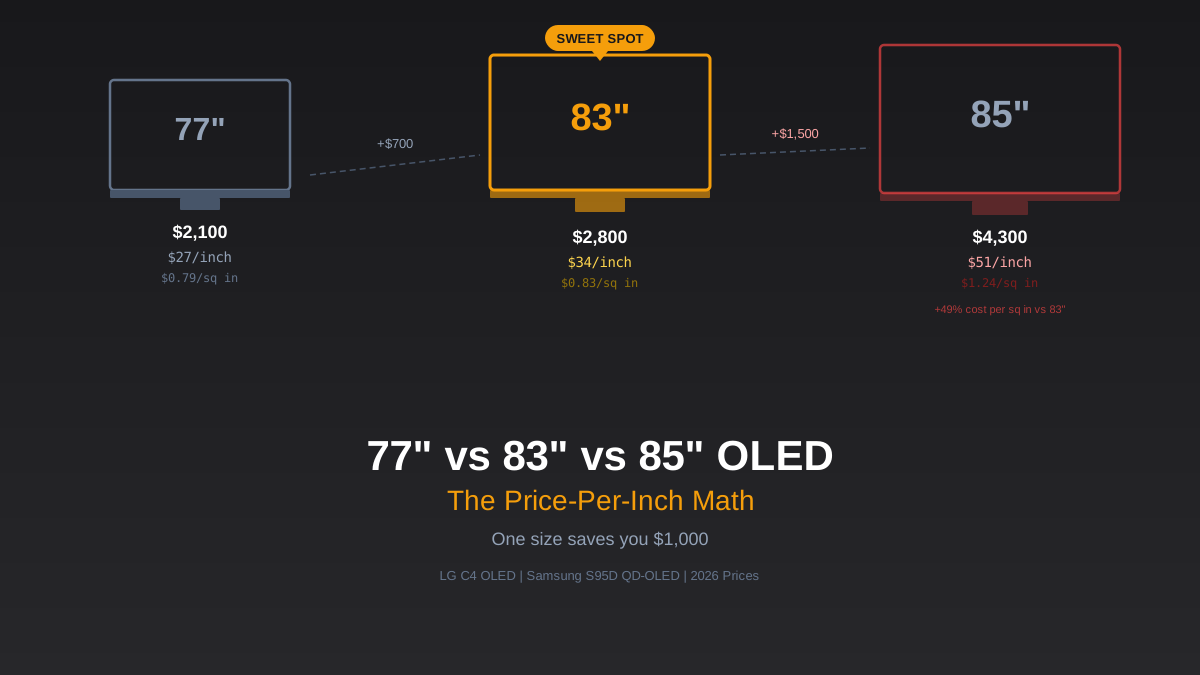
The 77" LG C4 costs $2,100. The 83" LG C4 costs $2,800. That is $700 more for six diagonal inches, or $116 per extra inch. The 85" Samsung S95D QD-OLED jumps to $4,300. That is $1,500 more than the 83" for two more inches of screen. Two inches. Seven hundred fifty dollars per inch.
The internet will tell you to buy the biggest TV you can afford. That advice is wrong. The right advice is to buy the biggest TV that makes mathematical sense for your room. Here is how to figure out which size that is.
The Price-Per-Diagonal-Inch Breakdown
Let's start with raw price per diagonal inch across the most popular OLED models in 2026. These are current street prices, not MSRP.
- LG C4 55" ($1,100): $20/inch
- LG C4 65" ($1,500): $23/inch
- LG C4 77" ($2,100): $27/inch
- LG C4 83" ($2,800): $34/inch
- Samsung S95D 55" ($1,600): $29/inch
- Samsung S95D 65" ($2,200): $34/inch
- Samsung S95D 77" ($3,100): $40/inch
- Sony A80L 55" ($1,300): $24/inch
- Sony A80L 65" ($1,700): $26/inch
- Sony A80L 77" ($2,500): $32/inch
At every brand, the cost per inch climbs steeply above 77". But diagonal inches are misleading. A TV is a rectangle, not a line. What you actually see is area.
Rob's take
The 77-to-83-inch jump is the most consistently undervalued upgrade in display buying. Most people size their rooms at 9 feet of viewing distance and buy 65 inches because it looks large in the store. At 9 feet, 83 inches lands near the THX 36-degree recommendation. The 77-inch is the pragmatic choice for most living rooms; the 83 is correct if accuracy is the goal.
Price Per Square Inch Tells the Real Story
A 16:9 TV's viewable area scales with the square of the diagonal. Here is what that means in practice:
- 55": ~1,293 square inches of screen. LG C4 at $1,100 = $0.85/sq in
- 65": ~1,804 square inches. LG C4 at $1,500 = $0.83/sq in
- 77": ~2,533 square inches. LG C4 at $2,100 = $0.83/sq in
- 83": ~2,943 square inches. LG C4 at $2,800 = $0.95/sq in
- 85" (Samsung S95D): ~3,086 square inches at $4,300 = $1.39/sq in
Look at the 65" and 77" LG C4. They cost the same per square inch: $0.83. You are getting proportionally more screen for proportionally more money. That is a fair deal. The 77" is 40% more screen area than the 65" for 40% more money.
The 83" breaks the curve. You pay 33% more than the 77" but only get 16% more area. And the 85" Samsung S95D is in a different stratosphere: 67% more expensive per square inch than the 83" LG C4, for a screen that is barely 5% larger.
The 85" tax is not a size tax. It is a scarcity tax. Only Samsung makes an 85" OLED panel right now, and it is their flagship QD-OLED. You are paying for the panel technology and the lack of competition at that size, not for the extra two inches.
The Viewing Distance Factor
Screen size only matters relative to how far you sit from it. This is the part most people skip, and it is the part that matters most.
At 8 feet (the most common living room viewing distance in the US), a 77" TV fills about 36 degrees of your field of vision. The Society of Motion Picture and Television Engineers (SMPTE) recommends 30 degrees minimum for a cinematic experience. At 8 feet, the 77" already exceeds that.
The 83" at 8 feet fills about 39 degrees. That is a 3-degree difference. In a blind test at that distance, most people cannot reliably distinguish 77" from 83". The pixels are the same resolution (4K), the brightness is the same, the colors are the same. You are paying $700 for 3 degrees of peripheral vision that your brain barely registers.
At 10 feet, the math changes. The 77" drops to about 29 degrees, just under the SMPTE recommendation. The 83" holds at 31 degrees. Now the size difference is meaningful because you have crossed a perceptual threshold. At 12 feet, you probably want the 83" or you will feel like you are watching a TV instead of being immersed in it.
CinemaConfig's viewing distance calculator will show you the exact field of vision for any size and distance combination. Plug in your room measurements before you spend the money.
The Upgrade That Actually Makes Sense (and the One That Does Not)
Going from 65" to 77" is the single best size upgrade in the OLED market right now. You get 40% more viewable area at the same cost per square inch. At any viewing distance between 7 and 12 feet, the jump from 65" to 77" is immediately, obviously visible. Nobody has ever regretted going from 65" to 77".
Going from 77" to 83" is a reasonable upgrade if your viewing distance is 10 feet or more. The $700 premium on the LG C4 buys you 16% more screen area, and at that distance, you will notice it. If you sit closer than 10 feet, save the money.
Going from 83" to 85" (switching from LG to Samsung in the process) is almost never worth it for size alone. You are paying $1,500 more for 5% more area. The Samsung S95D is an excellent TV, and QD-OLED has real advantages in brightness and color saturation, but buying it because it is two inches bigger than the LG is the wrong reason. Buy it because you want QD-OLED. Buy the 77" S95D at $3,100 if that is the case, and save $1,200 over the 85".
The "I Should Save Money with 65 Inch" Mistake
On the other end of the spectrum, I see people talk themselves down from 77" to 65" to save $600. For rooms with 8+ foot viewing distances, this is almost always a mistake.
That $600 savings costs you 29% of your screen area. At 9 feet, a 65" TV fills 27 degrees of your field of vision, below the SMPTE minimum. You will spend the next five years wishing you had gone bigger. A TV is a 5-7 year purchase. Amortize that $600 over 6 years and it is $100 per year, or $8.33 per month, for a screen that fills your room the way a home theater display should.
The 55" makes sense in bedrooms and small rooms where you sit 5-6 feet away. For a main home theater or living room, 65" is the minimum and 77" is what you should be targeting.
Quick Decision Guide
- Sitting 6-8 feet back, budget under $1,600: 65" LG C4 ($1,500). Best value per square inch in the lineup.
- Sitting 8-10 feet back, want the best deal: 77" LG C4 ($2,100). Same cost per square inch as the 65" with 40% more screen. This is the sweet spot for most rooms.
- Sitting 10+ feet back, can stretch the budget: 83" LG C4 ($2,800). The size upgrade is perceptible at this distance and the premium is reasonable.
- Want QD-OLED specifically: 77" Samsung S95D ($3,100). Better brightness and color than the LG, and $1,200 less than the 85" for a negligible size difference.
- Want the absolute biggest OLED available: 85" Samsung S95D ($4,300). Just know that you are paying a 49% premium per square inch over the 83" LG C4 for 5% more area.
For a deeper comparison of LG, Sony, and Samsung OLED models beyond size, our OLED buying guide covers panel technology, processing differences, and which brand wins for specific use cases.
Measure your viewing distance. Run the calculator. Then buy the size the math says, not the size the showroom floor makes you want. Your wallet will thank you, and at the right distance, your eyes will not know the difference.
Rob Teller
Founder, CinemaConfig
15 years in consumer hardware and software, mostly on the product side. NZXT (cases and cooling), Asetek (liquid cooling, global sales), a short run advising on Alienware's roadmap at Dell, then four ... More about Rob · Affiliate disclosure