5.1.2 vs 7.1.4 Atmos - When More Height Speakers Matter
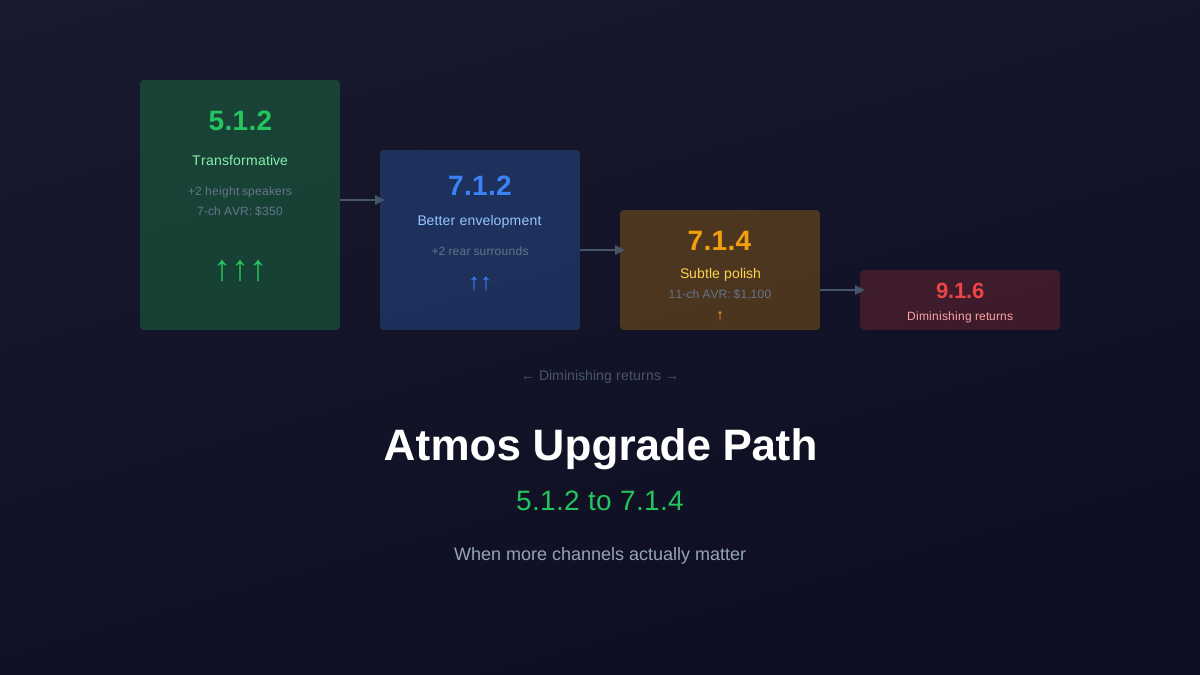
Going from 5.1 to 5.1.2 is the single biggest upgrade in home theater immersion. Going from 5.1.2 to 7.1.4 is a much smaller jump. The first two height speakers change everything; the next six improve it incrementally.
The Upgrade Tiers: What Each Step Actually Adds
5.1 to 5.1.2: Transformative. Two height speakers create an entirely new vertical dimension. Rain falls from above. Helicopters pan overhead. If you are on a 5.1 system right now, this is where your next dollar should go.
5.1.2 to 7.1.2: Better envelopment. Adding two rear surround speakers fills in the gap between your side surrounds and the listening position. Panning effects that sweep from front to back become smoother.
7.1.2 to 7.1.4: Subtle polish. Going from two to four height channels adds front and rear height pairs. Noticeable in well-mixed Atmos content, but nowhere near as dramatic as zero to two.
7.1.4 to 9.1.6: Enthusiast territory. Almost no consumer content is mixed beyond 7.1.4. You need a dedicated room and a serious budget.
Rob's take
The jump from 5.1.2 to 5.1.4 is real and worth doing. Two height channels create a point source overhead; four create an overhead soundfield that tracks with content panning from front to rear. The jump from 5.1.4 to 7.1.4 is smaller and only matters in larger rooms where rear ear-level surrounds can be placed with sufficient separation to avoid the point-source problem. Get four heights before adding rear surrounds.
5.1.2: The Sweet Spot for Most Rooms
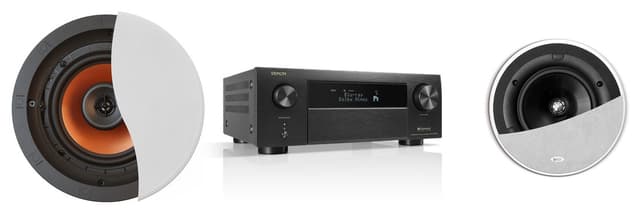
Two height speakers at the top middle position between your front and rear channels create a convincing overhead layer. AVR requirements: 7-channel minimum. Denon AVR-S760H ($350) or Yamaha RX-V6A ($400). Check our AVR buying guide for current pricing.
Budget tip: spending $300 on two good height speakers for 5.1.2 beats spending $300 on four cheap speakers for 5.1.4. Speaker quality per channel matters more than channel count.
5.1.4 vs 7.1.2: Which Expansion Matters More?
5.1.4 gives you four height speakers with directional overhead panning. 7.1.2 gives you four ear-level surrounds plus two heights, wrapping the surround field tighter. For most rooms, we lean toward 7.1.2 as the better next step. Use our speaker layout tool to model both for your dimensions.
7.1.4: The Enthusiast Target
Four height channels plus a full 7.1 bed layer. This is what most Atmos content is actually mixed for. AVR requirements: 11-channel processing minimum. Denon X3800H ($1,100) or Marantz Cinema 40 ($1,500). Budget another $150-300 for an external stereo amp.
This is where we tell most people to stop upgrading channel count and start investing in room treatment or speaker quality.
The Content Reality Check
Almost all consumer Atmos content is mixed for 7.1.4 or fewer channels. Having more than 11 channels means your AVR is upmixing to fill the extra speakers. If you have $5,000 to spend, a 7.1.4 system with quality speakers and acoustic treatment will sound better than a 9.1.6 system with budget speakers every time.
Room Size: The Deciding Factor
Under 2,000 cubic feet: 5.1.2 is plenty. 2,000 to 3,000 cubic feet: 5.1.4 or 7.1.2 works well. Over 3,000 cubic feet: 7.1.4 is worth pursuing.
If you already have a 5.1 system, buy two ceiling speakers and a 7-channel AVR. Our Dolby Atmos explainer covers the technology, and CinemaConfig's builder will validate your entire signal chain before you buy anything.
Start with two heights. That is where the magic is.
Rob Teller
Founder, CinemaConfig
15 years in consumer hardware and software, mostly on the product side. NZXT (cases and cooling), Asetek (liquid cooling, global sales), a short run advising on Alienware's roadmap at Dell, then four ... More about Rob · Affiliate disclosure