Picking the best Center Channel Speakers 2026: 5 Picks for Clear Dialogue
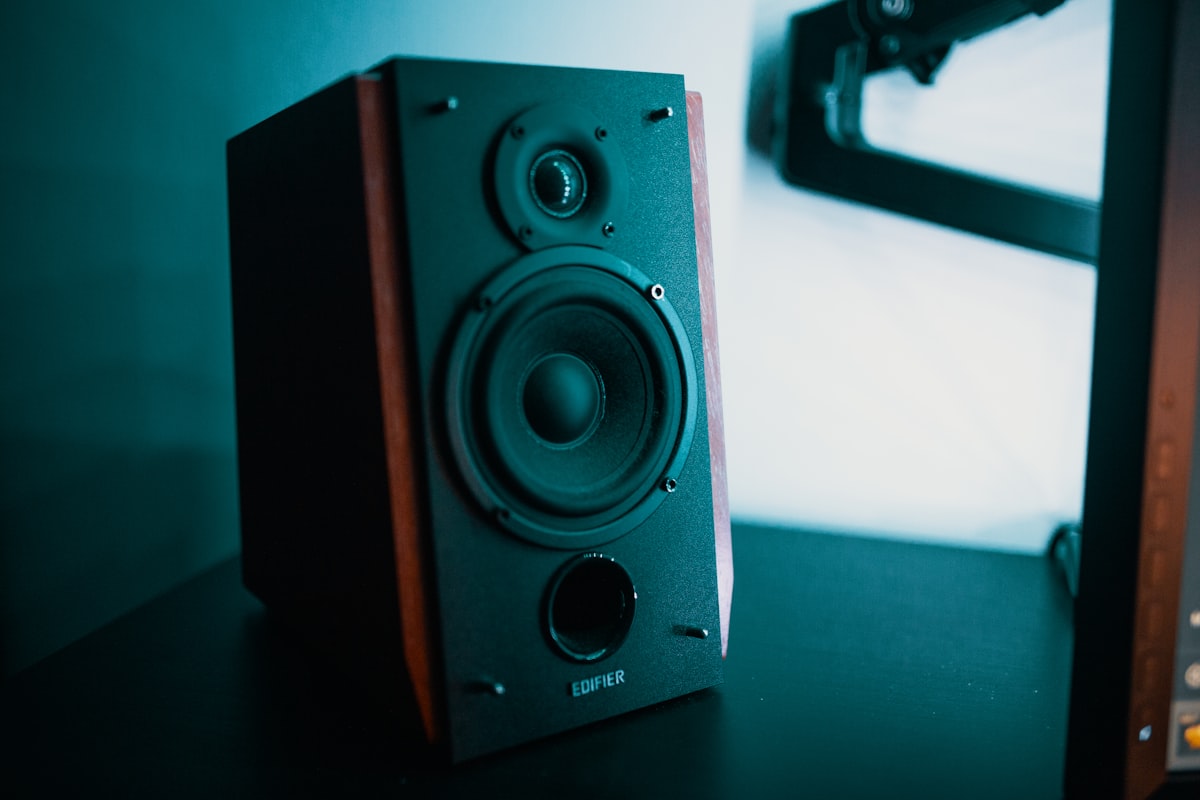
The center channel handles 60 to 70 percent of a movie's audio. Dialogue, foley, score cues tied to on-screen action. All of it routes through this one speaker. If you skimped here, you skimped on most of the movie.
We see it constantly: someone drops $2,000 on tower speakers and a subwoofer, then grabs whatever center channel is on sale to "round out" the system. The result is a home theater that sounds impressive during explosions and terrible during conversations. The most common complaint in home theater ("I can't understand the dialogue") is almost always a center channel problem.
Dialogue Clarity Is a System Problem, Not a Volume Problem
People blame dialogue issues on the movie mix, the streaming service, or Christopher Nolan personally. Sometimes the mix genuinely is aggressive. But in a properly configured surround system, dialogue clarity comes down to four things, and three of them involve the center channel.
Midrange response. The human voice lives between 300Hz and 3kHz. A center channel with a dip at 1-2kHz will make dialogue sound recessed, like actors are mumbling into their shirts. A peak in the same range makes voices harsh and fatiguing. Cheap center channels cut corners on midrange drivers because they are the most expensive part to get right. This is exactly the wrong place to save money.
Timbre matching with your L/R speakers. When a car pans across the screen, audio moves from left through center to right. If the center uses different driver types or crossover design than your mains, that panning sounds like the audio "jumps" between different-sounding speakers. Your brain notices this even when you don't consciously register it. It's fatiguing, and it makes the front soundstage feel disjointed.
Placement. A center channel stuffed inside a closed entertainment center, pointed at your knees instead of your ears, or sitting behind a perforated screen that blocks high frequencies. Any of these can negate the performance of an $800 speaker. We cover this in our speaker placement guide, but the short version: tweeter aimed at ear level, front baffle flush with or ahead of the shelf edge, nothing on top of the cabinet.
Room reflections. A hard coffee table, glass entertainment center, or bare floor between the center and your ears creates reflections that smear dialogue. This is often the real cause of "muddy" center channel sound that people attribute to the speaker itself. A thick rug and some basic acoustic treatment at the first reflection points can do more for dialogue clarity than a speaker upgrade.
Room correction software (Audyssey, YPAO, Dirac) helps with the room interaction piece, but it cannot fix a fundamentally mismatched center channel or bad placement. Get those right first, then let the software clean up what's left.
Rob's take
The timbre matching rule is non-negotiable and I've never seen a good argument against it. The single most common home theater complaint — dialogue that sounds different from the rest of the sound — is almost always a mismatched center. Buy from the same series as your fronts, even if it means a smaller center than you'd otherwise choose. Timbre consistency beats absolute center channel performance.
Timbre Matching: Not a Suggestion
Buy from the same series as your front left and right speakers. This is not a suggestion.
Speaker series are designed with matched drivers, crossover points, and voicing. The JBL Stage A125C ($150) is designed to pair with Stage A130 or A170 fronts. The KEF Q250c ($400) matches the Q150 and Q350. The Emotiva C1+ ($200) matches the B1+ and T1+. Mixing a KEF center with JBL mains, even if both are individually excellent, creates a timbre mismatch that no amount of room correction can fully fix. We've heard people argue they "can't tell the difference." They can; they just got used to it.
If your L/R speakers are from a discontinued series and the matching center is unavailable, your best option is three identical bookshelf speakers across the front stage. This is actually what many professionals and enthusiast builders prefer, because identical speakers guarantee perfect timbre matching. It also sidesteps the horizontal center channel compromise entirely.
One more thing: impedance matters here too. Running a 4-ohm center on a budget AVR rated only for 8-ohm loads means the receiver works twice as hard to drive that one channel. During loud dialogue-heavy passages, exactly when you need clean center channel output, the AVR may thermally protect and shut down. CinemaConfig's builder checks impedance compatibility across your entire speaker set and flags mismatches before you buy. The amplifier headroom calculator can also verify whether your AVR has enough real-world power for your specific speakers.
Horizontal vs. Vertical: The Comb Filtering Problem
Most center channels are horizontal: a wide, low box designed to sit on a shelf or above/below a TV. This shape is a practical compromise born from living room reality, and acoustically it's a real trade-off.
The problem is comb filtering. In a horizontal center with two or more drivers mounted side by side, the distance from each driver to your ears changes depending on where you sit. Dead center, the path lengths are equal and everything sums correctly. But move a seat to the left or right, and one driver is now slightly closer than the other. At certain frequencies, the sound waves from the two drivers arrive partially out of phase and cancel each other. The result: a frequency response that changes based on seating position. Voices sound slightly different depending on which seat you're in.
This isn't subtle in wider rooms. If you have a three-seat couch and the people on the ends notice dialogue sounding thinner or more nasal than at the center seat, comb filtering from a horizontal center channel is the likely culprit.
There are two solutions. The first is a coaxial or concentric driver design, speakers like KEF's Uni-Q, where the tweeter is mounted inside the midrange driver. Because both drivers radiate from the same point, there's no path-length difference regardless of where you sit. The KEF Q250c ($400) and R2c ($700) both use Uni-Q. If you have a wide seating area, a coaxial center is worth the premium.
The second solution is a vertical center channel: either a bookshelf speaker turned on its side (not recommended, as it rotates the dispersion pattern) or a standard bookshelf speaker used upright as the center. This works acoustically but requires a screen or TV setup that accommodates a taller speaker in the center position. In a dedicated theater with an acoustically transparent screen, this is the objectively correct approach.
Best Center Channels by Budget (2026)
Under $200: Entry-Level
- JBL Stage A125C ($150): Best overall value at this tier. JBL's waveguide horn design provides surprisingly good off-axis response for a traditional horizontal center; it partially mitigates the comb filtering issue. Pair with Stage A130 or A170 fronts.
- Polk Monitor XT30 ($130): Compact and clean in the midrange. Better suited to small rooms where the center doesn't need to fill a large space. Pair with Monitor XT series.
- Emotiva C1+ ($200): Punches above its price. Larger cabinet than most sub-$200 centers gives it better low-end extension and a fuller sound. Pair with Emotiva B1+ or T1+.
At this tier, timbre matching your L/R speakers matters more than picking the "best" individual center. A $130 Polk center matched to Polk mains will sound more coherent than a $200 Emotiva center mismatched with KEF towers.
$200 to $500: Mid-Range
- KEF Q250c ($400): The Uni-Q coaxial driver makes this the best center under $500 for wide seating areas. Off-axis performance is in a different league from any traditional horizontal design at this price. Pair with Q150 or Q350.
- Paradigm Monitor SE 2000C ($300): Canadian-made, excellent build quality, neutral voicing. Paradigm doesn't get the hype of some other brands, but their speakers consistently measure well and sound natural.
- SVS Prime Center ($350): Wide dispersion, handles high volumes cleanly. SVS made their name in subwoofers, but their speakers are genuinely good, not an afterthought product line. Pairs with SVS Prime bookshelf and tower speakers.
$500+: High Performance
- KEF R2c ($700): Larger Uni-Q driver array than the Q250c, better low-end extension, more detail. If you're building a high-performance system and have wide seating, this is the center to beat.
- Emotiva C2+ ($500): Three-way design with a dedicated midrange driver. This solves dialogue clarity with brute force: voices get their own driver that doesn't share duty with bass or treble reproduction. Excellent value for a three-way center.
- MartinLogan Motion XT C100 ($700): Folded motion tweeter provides exceptional detail in the upper frequencies without harshness. Dialogue sounds crisp and present. A different flavor from the KEF, more forward in its presentation.
Prices and recommendations current as of March 2026.
Placement Rules That Actually Matter
- Aim the tweeter at ear level. If the center sits on a low TV stand, angle it upward with a speaker wedge or small rubber feet under the rear edge. The difference between a center pointed at your ears versus your chest is not subtle.
- Do not enclose it. A center inside a closed entertainment center will sound colored by the cabinet surfaces. If it must go on a shelf, pull it to the front edge so the baffle isn't recessed.
- Decouple from the surface. Isolation pads or rubber feet prevent vibration from transferring to the shelf or stand. Without them, the furniture resonates and adds coloration you'll blame on the speaker.
- Keep the top clear. Objects on top of a horizontal center cause vibration and can partially block upward sound radiation.
For a budget build where every dollar counts, correct placement of a $130 center channel will outperform sloppy placement of a $400 one. Placement is free. Use it.
Rob Teller
Founder, CinemaConfig
15 years in consumer hardware and software, mostly on the product side. NZXT (cases and cooling), Asetek (liquid cooling, global sales), a short run advising on Alienware's roadmap at Dell, then four ... More about Rob · Affiliate disclosure
![Klipsch Reference vs Premiere: Differences and Picks [2026]](/images/blog/klipsch-speakers-guide.svg?dpl=dpl_A7yvEusbtVmAimLWJZTA31x7Ag82)

