Skip the Foam, Do This Instead (Home Theater Acoustic Treatment)
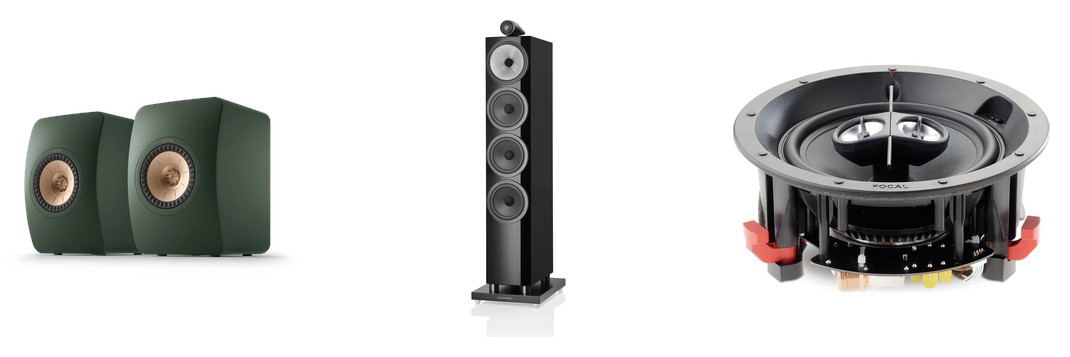
I've measured the same pair of KEF Q350s in six different rooms over the past three years. The variation in frequency response between those rooms — all untreated, all reasonably furnished — was larger than any difference I've ever measured between speaker models at similar price points. One room had a 14dB peak at 63Hz. Another had a 9dB trough at 200Hz that made vocals sound like they were recorded in a phone booth. The speakers were identical in every test. The rooms were the variable.
The good news: treating a room does not require covering every wall in foam. A few well-placed panels make a dramatic difference, and you can do it for a few hundred dollars if you are willing to build panels yourself.
The Three Types of Treatment (and What Each Does)
Absorption Panels
Absorbers are the workhorses of room treatment. They are panels of dense, fibrous material (rigid fiberglass or mineral wool, typically 2 to 4 inches thick) wrapped in acoustically transparent fabric. When sound hits them, the wave's energy is converted to heat through friction in the fibers.
Absorbers tame reflections that cause comb filtering (where the direct sound and reflected sound partially cancel each other out, creating an uneven frequency response at your listening position). They also reduce overall reverberation time, which makes dialogue clearer and imaging more precise.
Bass Traps
Low frequencies are the hardest to control. Bass wavelengths are long (a 50Hz wave is about 22 feet long), which means they build up in room corners and create "room modes" where certain bass frequencies are drastically louder or quieter depending on where you sit.
Bass traps are thick, dense absorption panels (minimum 4 inches, ideally 6+) mounted in corners where low-frequency energy accumulates. They smooth out the bass response so that your subwoofer sounds even across different seats, not boomy in one spot and thin two feet over.
Diffusers
Diffusers scatter sound rather than absorbing it. They are surfaces with mathematically determined irregular shapes (skyline diffusers, QRD diffusers) that redirect reflections in many directions at once, preserving the energy of the sound while eliminating the focused reflection.
Diffusion is most useful on the rear wall of a theater, where you want some acoustic energy (for a sense of envelopment and spaciousness) but not a strong, focused reflection that would muddy the surround field.
Rob's take
The first-reflection points are where the money goes. Not the rear wall, not the ceiling — the two panels on the side walls at the mirror points are doing the highest-impact acoustic work in the room. I treated a room with exactly those two panels and a pair of corner bass traps and the improvement in dialogue clarity and stereo imaging was more audible than any equipment upgrade I've made in that room.
Where to Treat First (Priority Order)
If you are treating a room on a budget, this is the order that gives the most impact per panel:
- First reflection points on side walls. Sit in your listening position and have someone slide a mirror along each side wall. Wherever you can see a speaker driver in the mirror, that is a first reflection point. Place a 2x4-foot absorption panel there. This single treatment makes the biggest audible difference in most rooms. (Our first reflection calculator can compute these points from your room dimensions and speaker positions.)
- Front wall corners (bass traps). Floor-to-ceiling bass traps in the two front corners. These tame the low-frequency buildup that makes subwoofer bass sound boomy and undefined. Thick panels (4 to 6 inches) or corner-specific traps from companies like GIK Acoustics work well here.
- Ceiling reflection point. A "ceiling cloud" panel above the primary listening position absorbs reflections from the ceiling that smear the stereo image. This is especially important if you have a hard ceiling (drywall, not drop tile).
- Rear wall. Either absorption panels or a diffuser. Absorption deadens the back of the room (good for tight imaging, can feel "dead" if overdone). Diffusion keeps the room feeling lively while preventing a single strong reflection off the back wall.
- Additional corner traps. The remaining two corners (rear) benefit from bass trapping too, especially if you have room mode issues that the front traps did not fully address.
Products That Work
GIK Acoustics is the most commonly recommended treatment brand for home theaters. Their panels use the right materials (rigid fiberglass or mineral wool, not open-cell foam), come in standard and custom sizes, and are available in a wide range of fabric colors. Their 244 Bass Traps are a workhorse product that handles both broadband absorption and bass trapping in a single 5.5-inch-thick panel.
ATS Acoustics offers similar products at slightly lower prices. Good value if GIK panels are out of budget.
DIY panels are the best value if you are handy. Rigid fiberglass insulation (Owens Corning 703 or 705) wrapped in acoustically transparent fabric (burlap, muslin, or speaker grill cloth) produces panels that perform identically to commercial products at a fraction of the cost. A set of six 2x4-foot, 2-inch-thick DIY panels costs about $150 to $200 in materials.
What Does NOT Work
A few common acoustic treatment mistakes that waste money:
- Thin foam tiles. The 1-inch acoustic foam squares that cover studio walls in YouTube videos do almost nothing below 500Hz. They absorb high frequencies (which your room may not even need), leave mid and low frequencies completely untouched, and create an unbalanced, dull-sounding room. They are cheap for a reason.
- Egg cartons. No. They do not work. This is a myth that refuses to die. Egg cartons are not dense enough to absorb any meaningful acoustic energy and are a fire hazard.
- Carpet as treatment. Carpet absorbs some high-frequency reflections from the floor, which is mildly helpful, but it does nothing for mid-range reflections off walls and ceiling, and nothing for bass. A carpeted room with bare walls still needs proper treatment.
- Covering every surface. Over-treating a room is almost as bad as not treating it. An over-damped room sounds lifeless and uncomfortable. You want to control specific reflections and bass modes, not eliminate all reverberation. Aim for a reverberation time (RT60) of about 0.3 to 0.5 seconds for a home theater. Use our RT60 calculator to estimate your room's current reverb time and how many panels you need.
Treatment and Your Room's Dimensions
Room dimensions affect which frequencies cause problems. Rectangular rooms with parallel walls create standing waves at frequencies determined by the room's length, width, and height. CinemaConfig's room mode calculator shows you exactly which frequencies will be problematic in your space, so you can prioritize bass trapping at the frequencies that need it most.
Square rooms and rooms where one dimension is a multiple of another (16x8x8, for example) have the worst room mode problems. If you are choosing between rooms for a theater, pick the one whose dimensions are the most different from each other.
Rob Teller
Founder, CinemaConfig
15 years in consumer hardware and software, mostly on the product side. NZXT (cases and cooling), Asetek (liquid cooling, global sales), a short run advising on Alienware's roadmap at Dell, then four ... More about Rob · Affiliate disclosure


