Buy Used Home Theater Gear Without Getting Burned, step by step
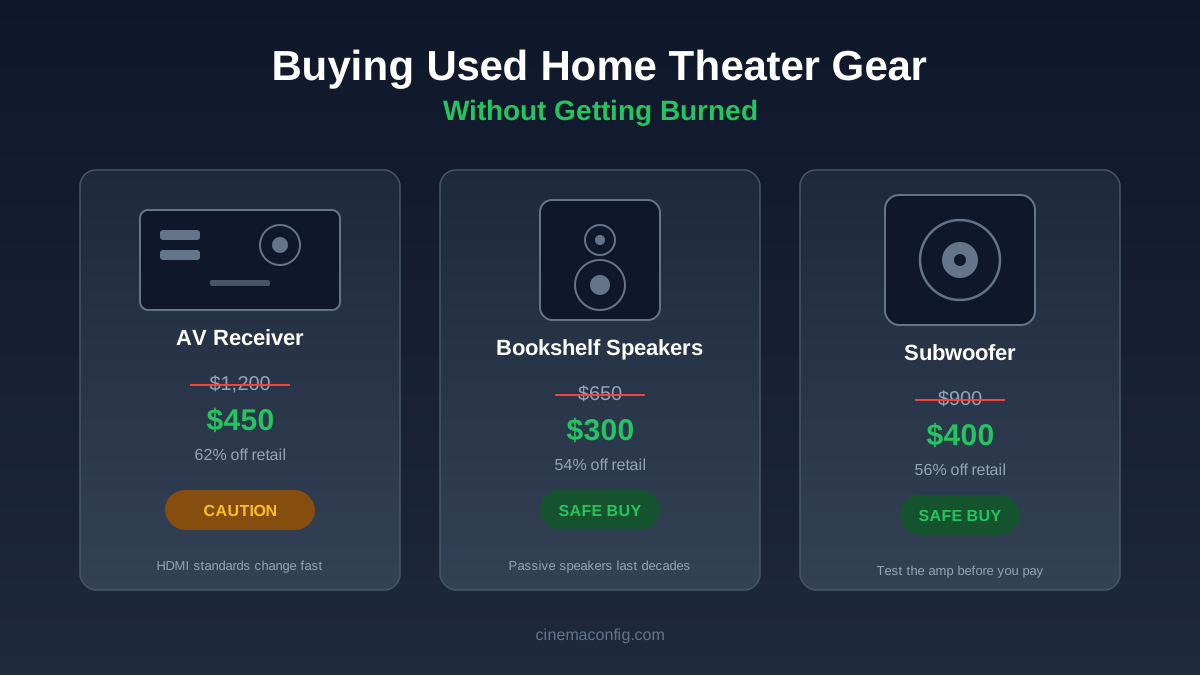
The best deal in home theater isn't on Amazon. It's a pair of 3-year-old KEF Q350s on Facebook Marketplace for $300. Retail: $650. The seller upgraded to floor-standers, the speakers have zero wear, and you just saved $350 on gear that will sound identical to new for the next 20 years.
Used home theater equipment is the fastest way to build a great system on a budget. But not every category is a smart buy. Some gear ages like wine. Some ages like milk. This guide breaks down exactly what to hunt for, what to avoid, and how to test everything before you hand over cash.
The Category-by-Category Verdict
Speakers: SAFE BUY
Passive speakers are the single best used purchase in home theater. There are no electronics to fail, no firmware to update, and no moving parts besides the drivers themselves. A well-treated pair of bookshelf or tower speakers from 2015 sounds exactly the same today as it did on day one. Brands like KEF, SVS, Klipsch, Elac, and Polk hold up for decades with normal use.
What to check: Look at the surrounds (the rubber or foam ring around the woofer cone). Foam surrounds on older speakers can rot and crumble. Rubber surrounds last essentially forever. Push gently on each driver cone and listen for scraping sounds, which indicate a damaged voice coil. Check the binding posts and crossover by playing music at moderate volume through both channels.
Expected discount: 30-50% off retail for speakers in good condition. High-end brands hold value better. Budget brands depreciate faster but still work fine.
Subwoofers: GREAT VALUE
Subwoofers are the second-best used deal because people upgrade constantly. Someone who moved from an SVS PB-2000 to a PB-3000 needs to unload a perfectly good sub. The catch: subwoofers have built-in amplifiers, and amps can fail. This is your one risk.
How to test: Bring a phone with a bass-heavy track (or a tone generator app). Connect via the sub's RCA or speaker-level input. Sweep from 20 Hz to 120 Hz. Listen for rattling, buzzing, or distortion at any frequency. If the amp hums or buzzes with no signal connected, walk away. If it plays clean bass across the full range, you're golden. For more on choosing the right sub, see our subwoofer buying guide.
Expected discount: 40-55% off retail. Shipping kills the resale market for heavy subs, so local pickup deals are even better.
AV Receivers: CAREFUL
This is where the used market gets tricky. AVRs depreciate fast for a reason: HDMI standards change every few years, and older receivers may not support features your TV or content requires. A 2020 receiver likely lacks HDMI 2.1 (needed for 4K/120Hz gaming). A 2018 model may not support eARC properly. Firmware updates can only do so much when the hardware itself is outdated.
When it makes sense: If you don't game at 4K/120Hz and your sources are a streaming stick plus a Blu-ray player, a 2021-2023 AVR with HDMI 2.1 can be a solid deal. Denon, Marantz, and Yamaha receivers from that era are plentiful on the used market.
What to check: Power it on and verify every HDMI input passes video. Test the network features (streaming, firmware update check). Make sure the remote is included, because replacement remotes cost $40-80 and universal remotes often lack advanced menu access. Check that the unit doesn't run excessively hot or shut itself off.
Expected discount: 50-65% off retail. This is great if the feature set matches your needs, but terrible if you discover you need HDMI 2.1 six months later.
TVs and Projectors: AVOID (Mostly)
Used TVs are almost never a good deal. OLED panels degrade over time (pixel wear is cumulative and irreversible). LCD TVs lose backlight brightness gradually. Burn-in on OLEDs is a real concern for used purchases since you have no way to verify the panel's total hours. Warranties don't transfer on most brands. And with TV prices falling 10-15% per year on new models, the savings on used rarely justify the risk.
The exception: Projectors with replaceable lamps can be a reasonable used buy if you factor in a new lamp ($100-200). The lamp is the wear item, and a fresh one essentially resets the projector. DLP projectors are more durable used purchases than LCD projectors, where the polarizers can yellow over time.
Cables: NEVER BUY USED
This one is simple. New HDMI cables that are certified Ultra High Speed cost $8-15 on Amazon. Used cables have unknown specs, possible damage, and save you almost nothing. Buy new, buy certified, move on.
Rob's take
Speakers are the best used home theater buy by a wide margin. The mechanical drivers, crossover components, and cabinet construction in quality speakers don't degrade with normal use. A 10-year-old pair of Paradigm Monitor towers sounds identical to how they shipped, for 30-50% of retail. Receivers, however, should be bought new: connectivity standards change, and a 2018 receiver may lack eARC entirely.
Where to Find the Best Deals
Facebook Marketplace
The largest selection and best prices for local pickup. Negotiate in person, test before you pay, and avoid shipping hassles. The downside: no buyer protection if the seller misrepresents the item. Always test on the spot.
r/AVexchange (Reddit)
The enthusiast market. Sellers here usually know what they have and price accordingly, but the gear is typically well-maintained. Check seller history and use PayPal Goods & Services for buyer protection. Never send Friends & Family payments to strangers.
eBay
Good for specific models you can't find locally. eBay's buyer protection is strong if the item arrives damaged or not as described. Factor in shipping costs for heavy items like subwoofers and tower speakers. "Buy It Now" with returns accepted is safer than auctions.
Craigslist and OfferUp
Similar to Facebook Marketplace with generally thinner selection. Same rules apply: meet in public, test in person, bring cash.
Red Flags That Should Kill Any Deal
No demo allowed. If the seller won't let you hear the speakers, power on the receiver, or test the subwoofer, assume the gear is broken. There is no legitimate reason to refuse a demo for electronics. Walk away immediately.
Smoke smell. Cigarette smoke infiltrates speaker cabinets, receiver vents, and fabric grilles. It is nearly impossible to remove completely. Beyond the smell itself, tar and nicotine residue can coat internal components and cause overheating. If it smells like smoke, pass.
Missing remotes and accessories. A missing remote on an AVR is a $40-80 problem and suggests the seller lost track of their gear. Missing speaker grilles, feet, or port plugs suggest rough handling. If the original box and manual are present, that's a positive sign of careful ownership.
Suspiciously low prices. If a 1-year-old Denon X3800H is listed at $200 (retail $1,400), it's either stolen, broken, or a scam. Check the going rate on eBay's "sold" listings to know what fair used pricing looks like.
Cosmetic damage beyond normal wear. Scratches on a receiver's top panel are normal. Deep gouges, dented corners, or cracked binding posts suggest the gear was dropped. Internal damage from impacts may not be immediately obvious but can cause intermittent failures later.
The Testing Checklist
Bring these to every used gear purchase:
- Your phone with a tone generator app and a few bass-heavy tracks
- A 3.5mm-to-RCA cable (to connect your phone to any receiver or sub)
- A known-good HDMI cable (to test receiver inputs on the spot)
- A small flashlight (to inspect driver surrounds and binding posts)
Spend 10 minutes testing. It can save you hundreds in regret.
Building a Full System Used
Here's a realistic used system that would cost $2,500+ new, built entirely from the secondhand market for under $1,200:
- 5.1 speaker set (bookshelf + center + surrounds): $350-500
- Subwoofer (SVS, HSU, or Rythmik): $250-400
- AV receiver (2022-2023 model with HDMI 2.1): $250-350
That leaves money in the budget for new cables, speaker stands, and acoustic treatment. For more tips on maximizing a tight budget, check out our budget home theater guide.
The Bottom Line
Speakers and subwoofers are the best used deals in home theater. Passive speakers don't wear out, and subwoofers depreciate heavily because enthusiasts upgrade constantly. AVRs can be smart buys if you match the feature set to your actual needs. TVs and cables should be bought new. Test everything in person, trust your ears, and don't be afraid to walk away from a deal that feels off. The used market rewards patience and punishes impulse.
Rob Teller
Founder, CinemaConfig
15 years in consumer hardware and software, mostly on the product side. NZXT (cases and cooling), Asetek (liquid cooling, global sales), a short run advising on Alienware's roadmap at Dell, then four ... More about Rob · Affiliate disclosure


![Klipsch Reference vs Premiere: Differences and Picks [2026]](/images/blog/klipsch-speakers-guide.svg?dpl=dpl_A7yvEusbtVmAimLWJZTA31x7Ag82)