SVS vs HSU vs RSL - How to Pick the Right Subwoofer for Your Room
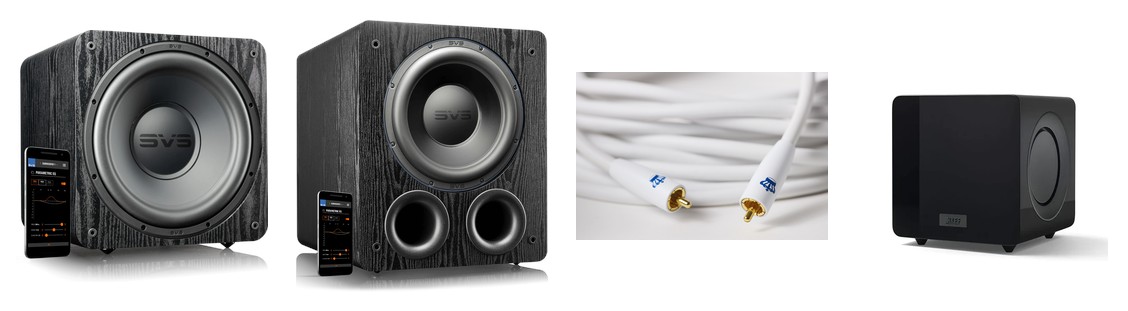
I've had a proper subwoofer in my main system for twelve years. Before that, I had a decent pair of tower speakers and thought I understood what home theater bass sounded like. I was wrong by a significant margin. The first time I played the Interstellar opening sequence with an SVS PB-2000 properly calibrated in my room, I understood immediately that what I'd been hearing before wasn't bass — it was the suggestion of bass, the upper harmonics of sounds whose fundamental frequencies my towers simply couldn't reproduce.
The difference is not subtle. A good subwoofer does not just add "more bass." It extends the low-frequency response of your entire system into the range where movie soundtracks actually live. Explosions, score, ambient rumble, the weight of a door closing in a quiet scene. All of that lives below 80Hz, where even good bookshelf and tower speakers start rolling off.
Ported vs. Sealed: Which Design Is Right for You?
Subwoofers come in two fundamental designs, and picking the right one depends on what you watch and listen to.
Ported (bass reflex) subwoofers use a tuned port to extend bass response lower and louder. They move more air for a given driver size and amplifier power, which means more visceral impact during action movies. The trade-off is that the bass can be less tight and controlled than a sealed design, and ported subs are physically larger.
Sealed subwoofers use a completely closed cabinet. The bass is tighter, more controlled, and rolls off more gradually below the tuning frequency. This makes them better for music and for rooms where boomy, sustained bass would be a problem. They are also smaller for a given driver size.
For a primary home theater subwoofer, ported designs are the more popular choice because they deliver the low-frequency extension and output that movies demand. For music-focused systems or smaller rooms where bass control is more important than raw output, sealed subs are often the better fit.
Rob's take
The single biggest mistake I see in subwoofer buying is undersizing for the room. People calculate the price-to-driver-size ratio, buy a 10-inch ported sub for a 2,800 cubic foot open-concept living room, and then wonder why it sounds thin. Room volume punishes underpowered subs hard. If you're in a medium-to-large space, go one size up from what the calculator tells you — the headroom matters.
The Brands That Specialize in Subwoofers
The best subwoofer brands are not the ones that also make TVs, headphones, and Bluetooth speakers. They are companies that focus specifically on low-frequency reproduction.
SVS
The most recognizable name in enthusiast subwoofers. The PB-1000 Pro is widely considered the entry point for "real" home theater bass, and the PB-2000 Pro is the sweet spot where you stop wondering if your sub can keep up with your speakers. SVS also offers a generous in-home trial and a trade-up program, which makes them low-risk to try. Their SB (sealed box) line is excellent for music-first systems.
RSL
The RSL Speedwoofer 10S MKII and 12S punch well above their price point. RSL is a smaller company that sells direct, which keeps prices competitive. The Speedwoofer 12S in particular has earned a reputation as one of the best values in the sub-$800 range, with output that competes with subs costing significantly more.
HSU Research
HSU has been making subwoofers for decades and sells direct from their website. Their VTF series offers exceptional output per dollar, especially the VTF-2 MK5 and VTF-3 MK5. These are large, no-nonsense subs that prioritize performance over aesthetics. If your theater room can accommodate the size, HSU delivers some of the best bang for the buck in the market.
Rythmik
Rythmik subwoofers use servo feedback technology that continuously monitors and corrects the driver's motion. The result is exceptionally clean, low-distortion bass that is hard to match at any price. Great for audiophile systems and mixed home theater/music setups where bass accuracy matters as much as output.
Budget Options
If the dedicated sub brands are out of budget, the Dayton Audio SUB-1200 (around $170) is the most commonly recommended starter sub. It will not shake the room the way a PB-2000 will, but it provides real bass extension that is miles ahead of the built-in woofers in bookshelf speakers or the sub modules that come with soundbar packages.
Matching a Sub to Your Room
Room size matters more than most buyers realize. A subwoofer that is perfect for a 12x14 bedroom will sound anemic in a 20x30 open-concept living room. The air volume the sub needs to pressurize scales with the room.
General guidelines:
- Small rooms (under 1,500 cubic feet): A 10-inch ported or 12-inch sealed sub is usually sufficient. SVS PB-1000 Pro, RSL Speedwoofer 10S MKII, or similar.
- Medium rooms (1,500 to 3,000 cubic feet): A 12-inch ported sub is the sweet spot. SVS PB-2000 Pro, HSU VTF-2 MK5, RSL Speedwoofer 12S.
- Large rooms (3,000+ cubic feet) or open floor plans: A 15-inch ported sub, or dual 12-inch subs. At this point you are looking at SVS PB-3000/4000, HSU VTF-3 MK5, or running two smaller subs to distribute bass more evenly.
Placement: The Subwoofer Crawl
Where you put the sub in the room affects its sound more than most people expect. Corner placement maximizes output but can excite room modes that cause boomy, one-note bass at certain frequencies. Mid-wall placement is often smoother but with less raw output.
The "subwoofer crawl" is the simplest way to find the best position:
- Temporarily place the subwoofer at your primary listening position (yes, on or near your seat).
- Play bass-heavy content at a moderate volume.
- Walk around the room, listening at each potential sub location. Focus on where the bass sounds the most even and natural, not where it is loudest.
- The spot where the bass sounds best from your listening position is where your sub should go.
After placement, run your AVR's room correction software (Audyssey, YPAO, Dirac, or whatever your receiver includes). These systems measure the sub's output at your listening position and apply EQ to smooth out room mode problems that physical placement alone cannot fix.
Integration With Your System
A subwoofer needs to integrate smoothly with your main speakers. The crossover frequency (where your AVR sends bass to the sub instead of the speakers) should be set based on the low-frequency capability of your main speakers. Most AVR room correction systems handle this automatically, but the general rule is:
- Small bookshelf speakers: 80 to 100Hz crossover
- Large bookshelf speakers: 60 to 80Hz crossover
- Tower/floorstanding speakers: 40 to 60Hz crossover
CinemaConfig's builder checks that your subwoofer, speakers, and AVR work together properly. It validates subwoofer cable length for your planned placement, verifies your AVR has a dedicated subwoofer preout, and checks that your chosen crossover settings make sense for your speaker configuration. If room modes are a concern, the room mode calculator shows which frequencies your room will amplify. And for a complete budget-friendly build around your sub, see our budget home theater guide.
Rob Teller
Founder, CinemaConfig
15 years in consumer hardware and software, mostly on the product side. NZXT (cases and cooling), Asetek (liquid cooling, global sales), a short run advising on Alienware's roadmap at Dell, then four ... More about Rob · Affiliate disclosure


![Klipsch Reference vs Premiere: Differences and Picks [2026]](/images/blog/klipsch-speakers-guide.svg?dpl=dpl_A7yvEusbtVmAimLWJZTA31x7Ag82)