Why foam panels are almost always the wrong answer
Most untreated rooms have an RT60 around 0.7 to 1.0 seconds at 500 Hz. A dedicated home theater should be between 0.3 and 0.4 seconds. That gap is the difference between clear dialogue and muddy reverb, and it costs about $400 in panels to fix.
This analyzer runs RT60, first reflection, SBIR, and room mode calculations in a single pass, then combines them into an overall acoustic grade with specific treatment recommendations for your room.
Start here if you have never measured your room and want to know what to treat first.
How the Acoustic Analysis Works
The Analysis
This tool combines four separate acoustic calculations. RT60 uses the Sabine equation to estimate reverberation time from room volume and surface absorption. First reflection points use mirror-source geometry to locate where panels should go. SBIR calculates bass cancellation frequencies from speaker-to-boundary distances. Room modes compute standing wave frequencies from dimensions.
Worked Example
Room: 18 x 12 x 8 feet. Walls are painted drywall (alpha 0.05 at 500 Hz), ceiling is drywall, floor is thin carpet (alpha 0.20 at 500 Hz). Volume: 1,728 cubic feet. Total absorption at 500 Hz: roughly 78 sabins. RT60: 0.049 x 1,728 / 78 = 1.09 seconds. That is over twice the 0.4-second target. The analyzer estimates you need approximately 130 more sabins at 500 Hz, which is about 16 standard 2' x 4' panels. First reflection points land at 5.2 feet from the front wall on the left side wall and 6.8 feet on the right.
Standards
RT60 targets follow the THX and Harman recommendations for home theaters (0.3 to 0.4 seconds for dedicated rooms, 0.4 to 0.6 for multipurpose). Absorption coefficients come from published acoustic data for common building materials (ASA standards). First reflection geometry follows the mirror-source method standard in architectural acoustics.
Limitations
The Sabine equation assumes a diffuse sound field, which is a rough approximation for small rectangular rooms. Real rooms have flutter echoes, comb filtering, and uneven absorption distribution that the formula does not capture. For accurate results, measure with a calibration mic and REW (free software) using an UMIK-2 ($110). This analyzer gives you a planning baseline, not a measurement.
Recommended Subwoofers
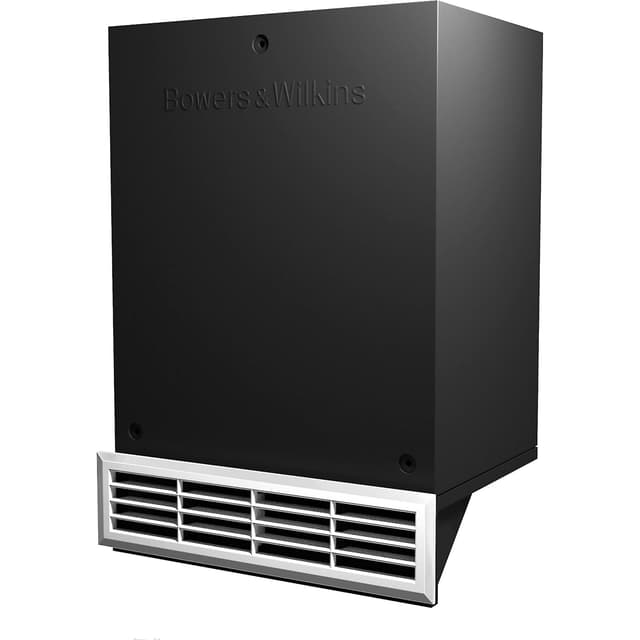
Bowers & Wilkins
749ISW3
$1,600.00View →
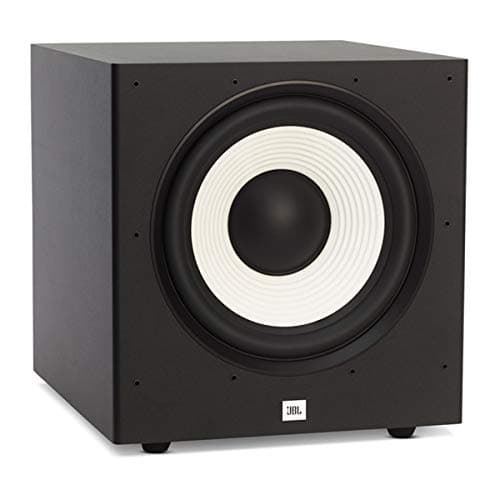
JBL
STAGEA120P
$659.95View →
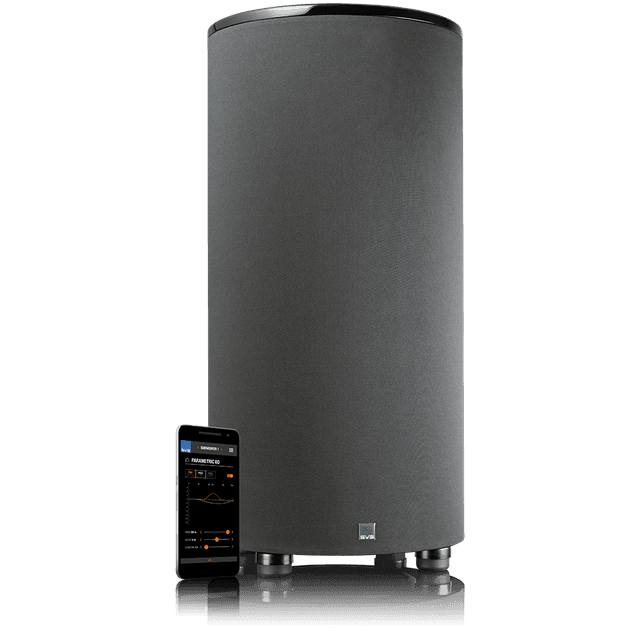
SVS
PC-2000 Pro Subwoofer – 12” Driver, 550 Watts RMS – Piano Gloss Black
$1,099.99View →
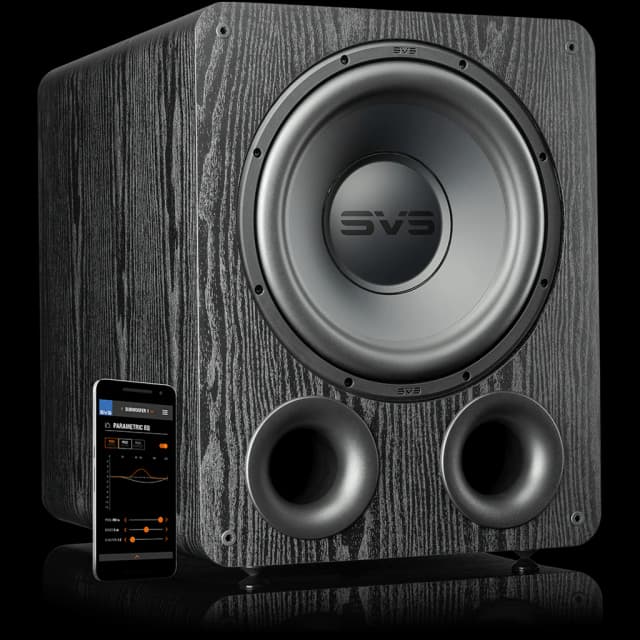
SVS
PB-1000 Pro Subwoofer – 12” Driver, 325 Watts RMS – Premium Black Ash
$799.99View →
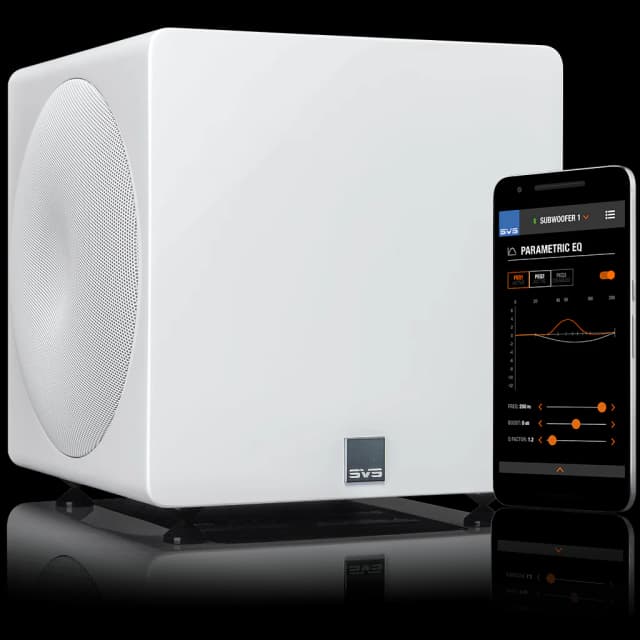
SVS
3000 Micro Subwoofer – Dual 8” Drivers, 800 Watts RMS – Piano Gloss White
$699.99View →