Why your sub is thin in one spot and boomy in another
A speaker 2.5 feet from the front wall has a bass cancellation dip at 225 Hz, right in the male vocal range. Move it to 1.5 feet and the dip shifts to 375 Hz. Neither is great. You need at least 7 feet of clearance to push the cancellation below 80 Hz and out of the critical listening range.
This calculator uses f = 1125 / (2 x distance) to compute the cancellation frequency for each boundary near a speaker, and flags any that fall in the problematic 80 to 400 Hz range.
Run this to optimize speaker placement before you commit to stands, mounts, or furniture positions.
How SBIR Cancellation Is Calculated
The Formula
When sound from a speaker hits a nearby wall, the reflected wave travels an extra round-trip distance of twice the speaker-to-wall gap. At the frequency where this extra path equals half a wavelength, destructive interference creates a cancellation dip: f = speed_of_sound / (2 x distance_to_boundary). With the speed of sound at 1,125 ft/s: f = 1125 / (2 x distance_ft).
Worked Example
Left speaker: 3 feet from the left wall, 2 feet from the front wall, 3 feet off the floor (on stands), 5 feet from the right wall, 5 feet from the ceiling, 10 feet from the rear wall. Cancellation frequencies: left wall 1125 / 6 = 187.5 Hz (problem), front wall 1125 / 4 = 281.3 Hz (problem), floor 1125 / 6 = 187.5 Hz (problem), right wall 1125 / 10 = 112.5 Hz (problem), ceiling 1125 / 10 = 112.5 Hz (problem), rear wall 1125 / 20 = 56.3 Hz (below 80 Hz, acceptable). Five of six boundaries produce cancellations in the 80 to 400 Hz problem range.
Standards
The SBIR formula is a direct application of acoustic wave interference physics. The 80 to 400 Hz problem range is the convention used by Harman International's acoustic research group and Floyd Toole's work in "Sound Reproduction" (the standard reference text for room acoustics in audio). Below 80 Hz, most systems use a subwoofer with room correction that can compensate. Above 400 Hz, the cancellation bandwidth is narrow enough to be less audible.
Limitations
This calculator models each boundary independently. In reality, multiple boundaries interact: a speaker near both a wall and the floor produces compound interference patterns that are harder to predict. The formula also assumes a perfectly rigid, reflective boundary. Lightweight drywall on studs is partially transparent to bass frequencies, reducing the severity of SBIR below about 100 Hz. Corner-loaded subwoofers are a special case where boundary reinforcement is desirable.
Recommended Subwoofers
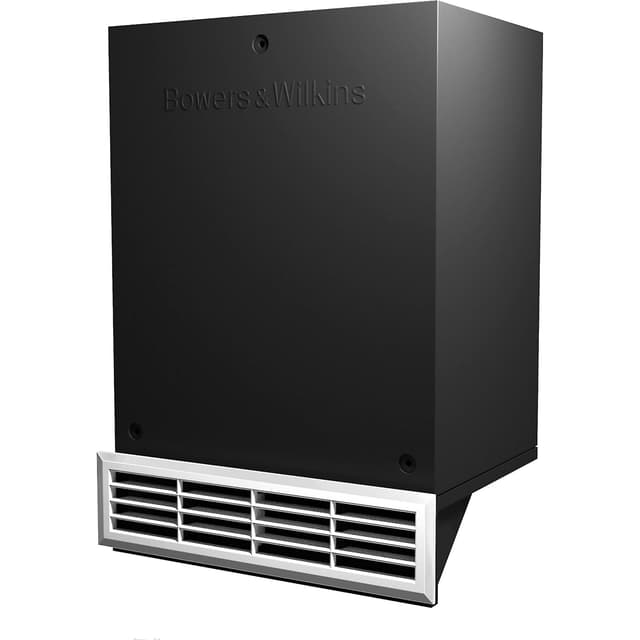
Bowers & Wilkins
749ISW3
$1,600.00View →
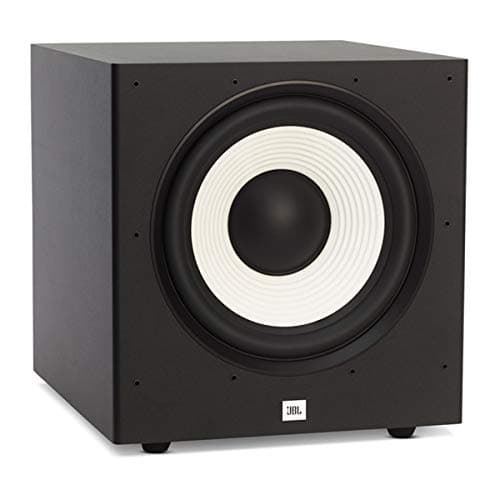
JBL
STAGEA120P
$659.95View →
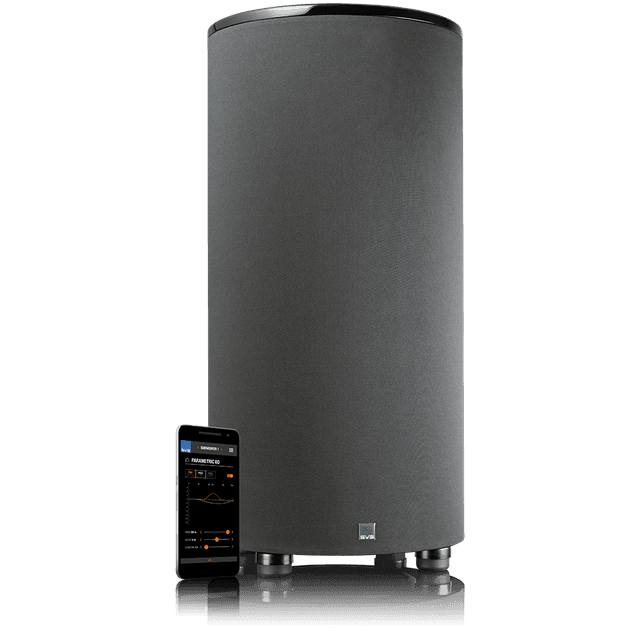
SVS
PC-2000 Pro Subwoofer – 12” Driver, 550 Watts RMS – Piano Gloss Black
$1,099.99View →
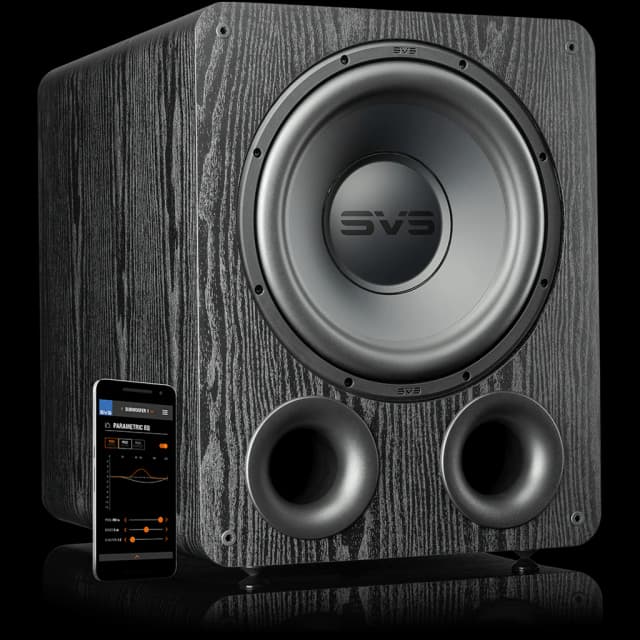
SVS
PB-1000 Pro Subwoofer – 12” Driver, 325 Watts RMS – Premium Black Ash
$799.99View →
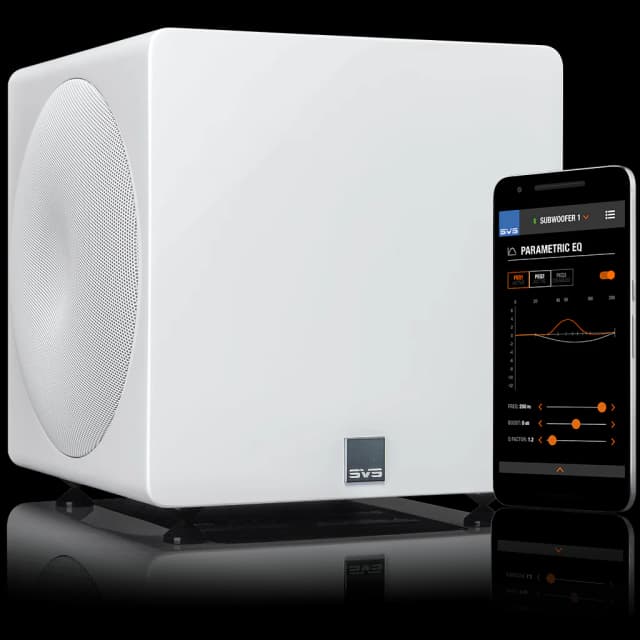
SVS
3000 Micro Subwoofer – Dual 8” Drivers, 800 Watts RMS – Piano Gloss White
$699.99View →