The SVS SB-3000 R|Evolution at $1,399.99 is the sub to buy if you want one box that ends the conversation, a sealed 13-inch with 1,200 watts RMS that reaches 20 Hz at +/-3 dB with app-driven parametric EQ, and for everyone spending less the SVS SB-1000 Pro at $699.99 does most of what it does in a far smaller cabinet.
One thing up front about this list: we stock SVS, and SVS is the whole roster here. That is not a hedge. SVS is a top-tier sub brand by any measure, and the four picks below are real, in-stock, current-price subwoofers we sell, not a wish list. So read this as the best subs we actually carry, and where a different brand is the smarter buy for a specific room, we say so.
Most subwoofer buying advice gets the framing backwards. The question is not which 12-inch has the most watts, it is how low the room needs to go and how loud it needs to get there. A sealed sub and a ported sub with the same driver behave like two different products. The sealed one sounds tighter on a kick drum; the ported one sounds bigger on the LFE rumble in a Dune theater scene. Different jobs. The SB-1000 Pro ($699.99) is the sealed budget answer with a 12-inch driver and the same app DSP as the expensive models. The PB-1000 Pro ($799.99) is the ported sibling that trades cabinet size for an extra octave of reach. The SB-3000 R|Evolution is where most enthusiasts should land. The PB-5000 R|Evolution ($2,599.99) is the 15-inch that fills a 4,000-cubic-foot room.
Four picks across four price tiers, all SVS, all in stock. The SB-3000 R|Evolution is the overall target for a serious room. The PB-1000 Pro is the value play when you want ported reach for not much more than the budget pick. The SB-1000 Pro is the budget answer that still ships with the full app DSP. The PB-5000 R|Evolution is the premium 15-inch for big rooms and cinema-first LFE.
How We Score
We score subs on four pillars: low-end extension at the rated +/-3 dB (manufacturer-published, cross-checked against Crutchfield's listing where the unit is measured there), driver and amp class (sealed versus ported, RMS amp power and peak headroom, driver size), integration features (app control, parametric EQ, room gain compensation, XLR input), and real-world owner feedback. We weight extension and integration features hardest. A sub that hits 17 Hz but lacks parametric EQ will fight a 35 Hz room mode and lose. A sub that hits only 20 Hz but lets you notch the mode out from your phone will sound deeper in the seat than the spec sheet suggests. Every SVS pick here runs the same Bluetooth DSP app, which is a real part of why they integrate so cleanly.
What you get at each price point
Where the dollars actually go as you climb the SVS ladder.
$700–$800The first real sub
The SB-1000 Pro ($699.99) and PB-1000 Pro ($799.99) live here. You get a 12-inch driver, the 325-watt RMS Sledge amp, the full app DSP with parametric EQ, and both RCA and XLR inputs. The only choice at this tier is sealed for tightness or ported for an extra octave of reach.
$1,400The sweet spot for a serious room
The SB-3000 R|Evolution ($1,399.99). A 13-inch sealed driver, 1,200 watts RMS with 4,000-plus watts of peak headroom, 20 Hz extension, and the Bluetooth DSP app with six-band parametric EQ. This is where most rooms under 3,000 cubic feet should stop.
$2,600The 15-inch for big rooms
The PB-5000 R|Evolution ($2,599.99). A 15-inch triple-ported driver with 2,000 watts RMS continuous and reach down to 13 Hz. This is a cinema-first sub built to pressurize a large room, not a music-first transient specialist.
$2,800+Where dual subs beat a single bigger one
Past this point two SB-3000 R|Evolutions will measurably outperform any single more expensive sub at smoothing seat-to-seat response. Mode cancellation is geometry. Geometry beats wattage once you can afford two boxes.
Best OverallScore: 46/100
SVS
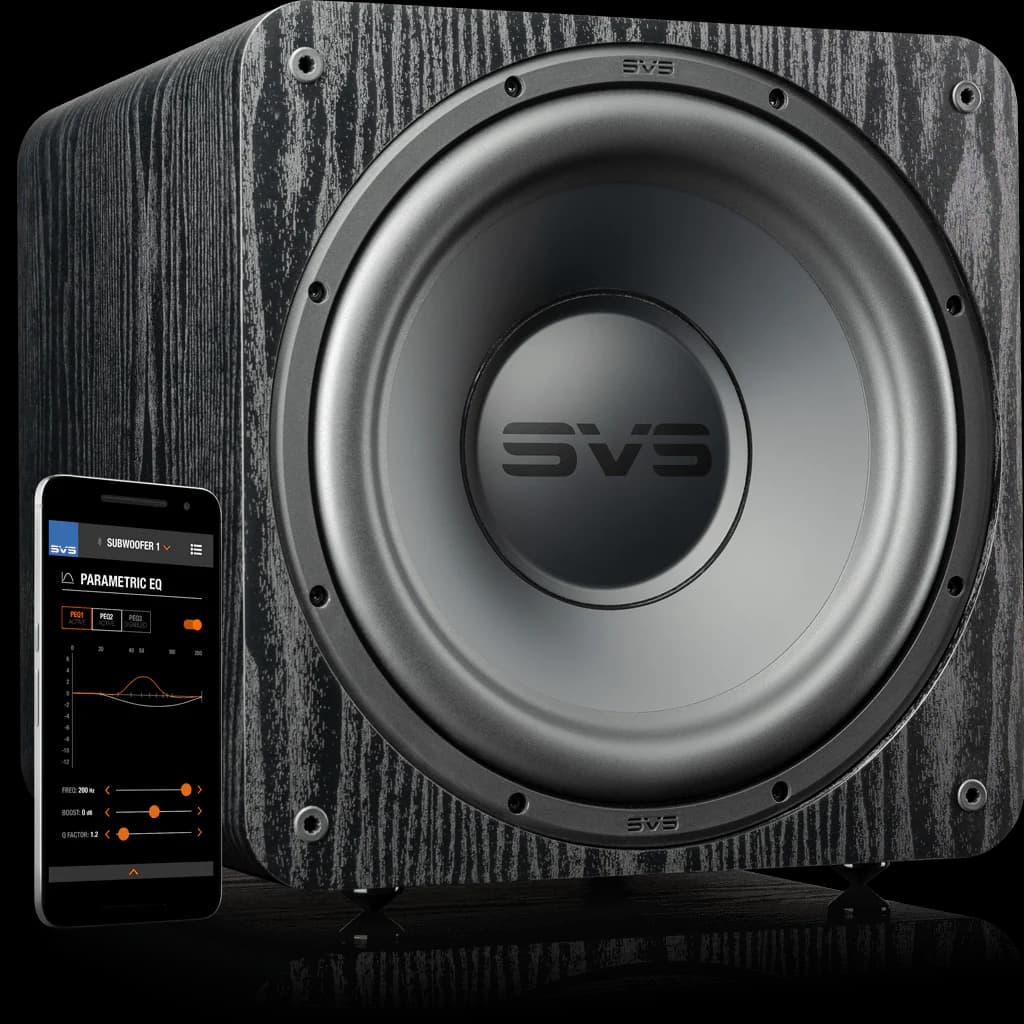
SB-3000-R
4000W RMS amplifier13" driverApp-controlled DSPSealed enclosure for tight bass
The SVS SB-3000-R earns our top pick in the subwoofer lineup, offering 4000W RMS amplifier and 13" driver at $1,299.99.
The SB-3000-R is the 2024 refresh of the SB-3000, rebuilt around the same 4,000 W peak Class-D platform that anchors the rest of SVS's R Evolution program. The 13-inch driver and sealed enclosure are evolved versions rather than carryovers, with new motor structure and updated DSP riding behind the same app interface used across the new generation. At the SVS direct price the buy reason over the original SB-3000 is the rebuilt amplifier and the new DSP; the trade-off versus the ported PB-3000 R is the usual sealed-vs-ported call, faster impulse for music versus deeper extension for movies.
Trade-off: The SVS SB-3000 R|Evolution at $1,399.99 is the sub we recommend to anyone who asks what one subwoofer to buy. It is a sealed 13-inch with 1,200 watts RMS and over 4,000 watts of peak power, rated 20 Hz to 230 Hz at +/-3 dB with usable extension down to 17 Hz, and it runs SVS's Bluetooth DSP app with six-band parametric EQ, adjustable low-pass, phase, and room gain compensation. It takes both unbalanced RCA and balanced XLR. The real trade-off is the same one every serious sealed sub has: it stays tight and accurate rather than chasing maximum SPL, so a big room that wants cinema rumble over a 15-inch ported box will out-pressurize it. If you can place two subs, two of these in opposite corners will beat any single more expensive sub at modal smoothing. The room geometry decides.
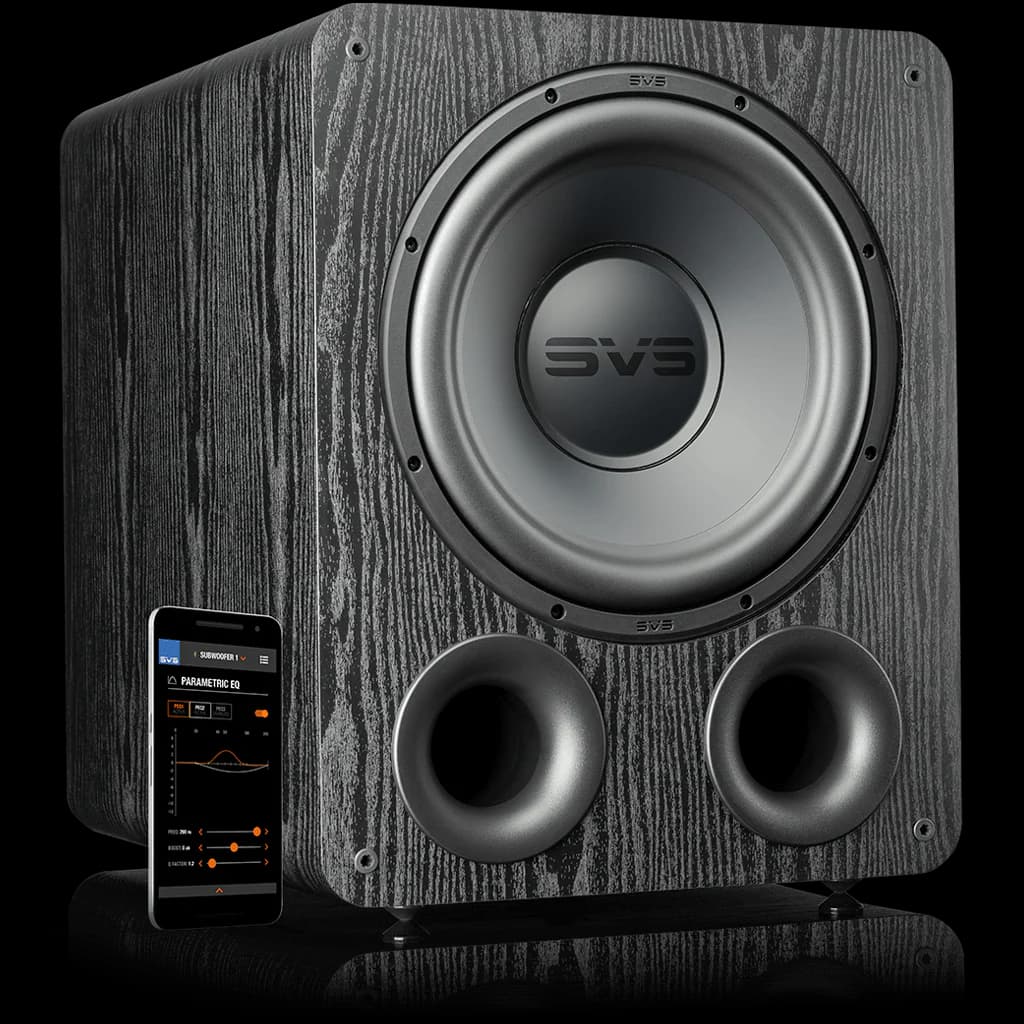
325W RMS powerDeep extension to 17 Hz12" driverApp-controlled DSP
For the best bang for your buck, the SVS PB-1000 PRO-BLACK-ASH stands out in the subwoofer lineup, offering 325W RMS power and Deep extension to 17 Hz at $799.99.
The PB-1000 Pro in Black Ash is the cheapest ported sub in the SVS lineup that ships with full app control, three-band parametric EQ, and the green-LED voltage display on the front. A 12-inch driver and 325 W RMS amp hit 17 Hz at -3 dB through a front port, which is the extension that separates the PB-1000 Pro from the sealed SB-1000 Pro at the same money. The Black Ash finish is the lower-priced of the two PB-1000 Pro options; the Piano Gloss Black runs about $100 more for the same internals and the same DSP package.
Trade-off: The SVS PB-1000 Pro (Black Ash) at $799.99 is the value pick because the extra $100 over the sealed SB-1000 Pro buys you a real octave of reach. It is a ported 12-inch on the same 325-watt RMS Sledge STA-325D amp, rated 17 Hz to 260 Hz at +/-3 dB, with the same full app DSP and parametric EQ. The trade-off is physical: a ported cabinet this deep is noticeably larger than the sealed SB-1000 Pro, and the porting that gets you to 17 Hz makes it a touch less tight on fast musical transients. If your room is cinema-first and you have the floor space, this is the smarter buy of the two thousand-series subs. If the room is small and music matters more, take the sealed sibling instead.
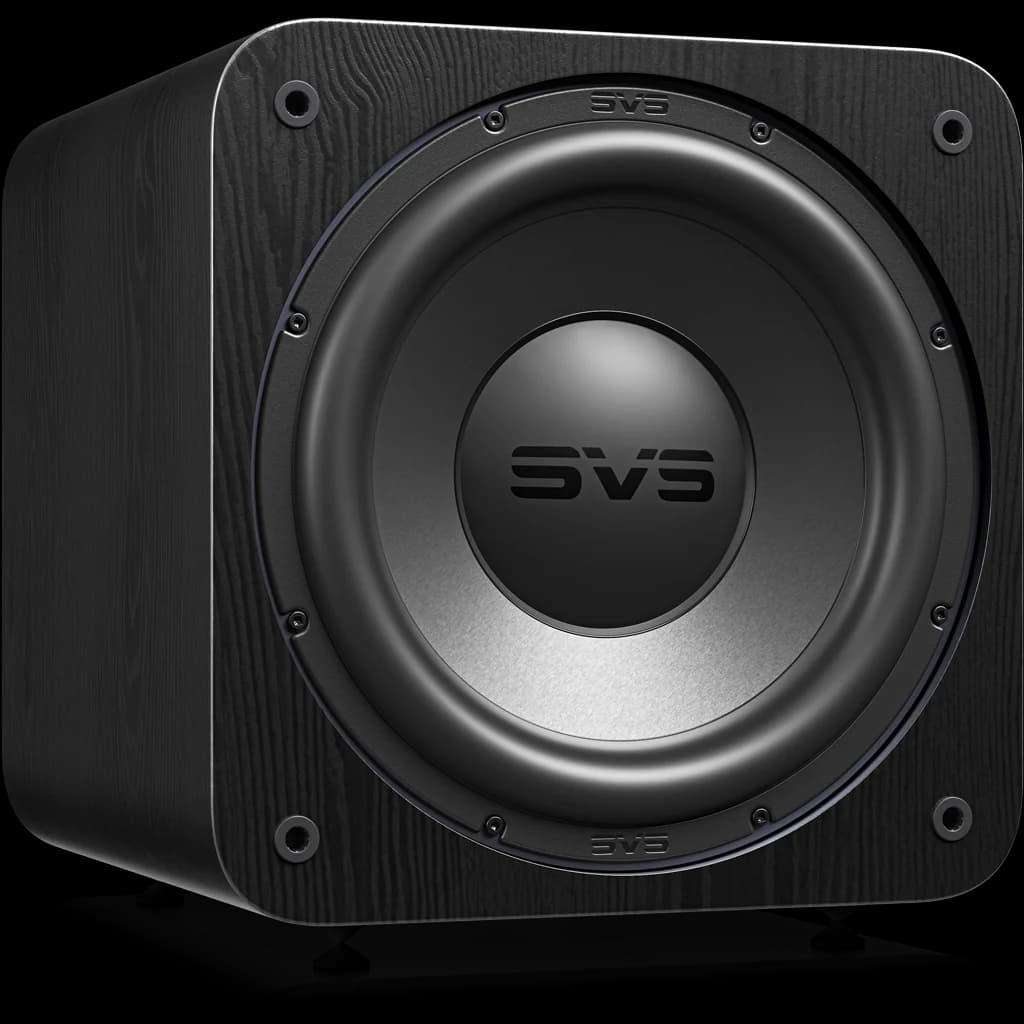
325W RMS powerDeep extension to 20 Hz12" driverApp-controlled DSP
The SVS SB-1000-PRO proves you don't need to break the bank in the subwoofer lineup, offering 325W RMS power and Deep extension to 20 Hz at $599.99.
The SB-1000 Pro is the cheapest sealed sub in SVS's Pro generation, the music-room counterpart to the PB-1000 Pro at the same direct price. A 12-inch driver and 325 W RMS amp hit 20 Hz at -3 dB out of a sealed cabinet, three Hz shallower than the ported PB-1000 Pro but with a faster impulse response and a smaller footprint. The cross-shop in this price band is the Rythmik LV12R for buyers who want servo control over DSP, or the SVS PB-1000 Pro itself when the room is movie-priority and the extra 3 Hz of extension is worth the larger cabinet.
Trade-off: The SVS SB-1000 Pro at $699.99 is the cheapest sub we will put our name on, and it earns it. A sealed 12-inch on the 325-watt RMS Sledge STA-325D amp with 820-plus watts of peak power, rated 20 Hz to 270 Hz at +/-3 dB, and it ships with the exact same Bluetooth DSP app and parametric EQ as the subs three times its price. That app is the whole argument: a $700 sub you can EQ from your phone will integrate better in a real room than a $1,000 sub you cannot. The catch is honest. With a sealed 12-inch and 325 watts, you will run out of headroom on Atmos LFE peaks in a large room before the driver gives out. For rooms under about 2,500 cubic feet it is the smartest pick on the page. Bigger than that, step up to the SB-3000 R|Evolution or pony up for the ported PB models.
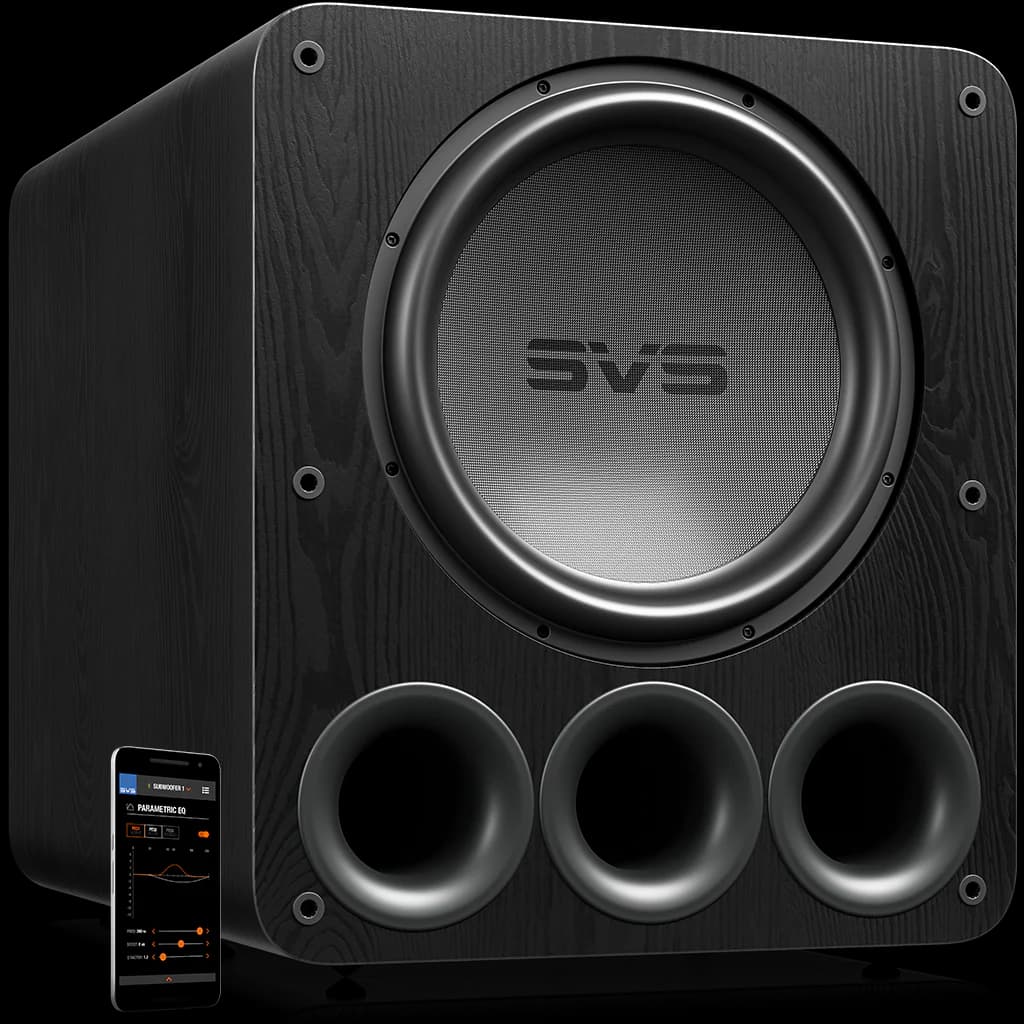
The SVS PB-5000-R represents the pinnacle in the subwoofer lineup, offering 5000W RMS amplifier and 15" driver at $2,599.99.
The PB-5000-R is SVS's upper-flagship ported sub in the 2024 R Evolution generation, with a 15-inch driver and a 5,000 W peak Class-D amplifier in a front-ported cabinet. This sits in the lineup between the PB-4000 and the PB-16-Ultra R, the price-and-output band where a single sub is genuinely capable of pressurizing rooms in the 5,000 to 7,000 cubic foot range. The cross-shop in this price band is the Rythmik G25HP or the JL Audio E-Sub e112 with dual e110 stack; the SVS argument is direct-to-consumer pricing, the trade-off is the lack of dealer setup support.
Trade-off: The SVS PB-5000 R|Evolution at $2,599.99 is what you buy when the room is big and the content is cinema. It is a ported 15-inch with a 2,000-watt RMS continuous amplifier and over 5,000 watts of peak power, a triple-ported cabinet rated 17 Hz to 280 Hz at +/-3 dB with extension down to 13 Hz, and the advanced DSP smartphone app. The trade-off is everything ported and 15-inch implies: it is large, it is heavy, and it is built to pressurize a 4,000-cubic-foot room rather than disappear into a small one. In a modest room it is overkill and the sealed SB-3000 R|Evolution will sound tighter. If you are filling a dedicated theater and want the floor to move on the LFE channel, this is the one. And if budget allows it, two of these will outrun a single sub at twice the price.
Sealed for music-first systems and rooms under about 2,500 cubic feet where transient response matters more than the last few Hz of extension. Ported for cinema-first systems in larger rooms where you want maximum SPL in the 17 to 30 Hz band. In the SVS line, the SB-1000 Pro and SB-3000 R|Evolution are sealed; the PB-1000 Pro and PB-5000 R|Evolution are ported. Both designs can be excellent. The room size and the content type push the answer more than the brand does.
Do I need two subwoofers?
If the budget is over about $2,500, two subs at half the price each will beat one expensive sub in almost every room. The reason is geometry, not wattage. Two subs in opposite corners or along opposite walls cancel different room modes than either does alone, which smooths the seat-to-seat frequency response in a way no single sub can. That means two SVS SB-3000 R|Evolutions outperform a single PB-5000 R|Evolution at modal smoothing in a typical room. Below $2,500 the better single sub usually wins because the integration features on a $1,400 sub matter more than dual placement on two $700 subs.
What's the minimum amp wattage for a 12-inch subwoofer?
Around 250 watts RMS is the floor for a 12-inch in a typical room, and the SVS 1000 Pro models clear that comfortably at 325 watts RMS. Below 250 watts RMS on a 12-inch driver the amp tends to clip before the driver hits its excursion limit, which sounds bad and shortens amp life. The 1,200 watts RMS in the SB-3000 R|Evolution buys headroom on transients and protection against compression in the loudest scenes. More watts mostly buys clean output at the limits, not deeper extension.
Does the subwoofer crossover need to match my speaker's -3dB point?
Roughly, yes. The AVR's bass-management crossover should sit about 10 Hz above your main speaker's -3 dB extension point so the speakers do not work against the sub in their roll-off band. A bookshelf with 50 Hz extension typically crosses at 80 Hz. A tower with 35 Hz extension can cross at 60 Hz or run large. The CinemaConfig builder reads the speaker spec and picks the crossover automatically when you assemble a system.
Is the SVS app and parametric EQ actually worth using?
Yes, and it is the single best reason to buy SVS at every tier on this list. The same Bluetooth DSP app runs on the $699.99 SB-1000 Pro and the $2,599.99 PB-5000 R|Evolution, giving you adjustable low-pass, phase, polarity, room gain compensation, and parametric EQ from the listening seat. A sub you can EQ from your phone will integrate better in a real room than a more expensive sub with no correction. The one alternative worth naming is Anthem Room Correction, which automates the measurement step and lives on subs we do not carry, like the MartinLogan Dynamo line. The SVS app is manual, but it gives you the same surgical control if you point a measurement mic at the seat.
Two boundaries worth stating plainly. First, we stock SVS only in subwoofers, so this is the best of the SVS line, not the best subs on Earth. If your need is reference single-sub engineering in a small room, the Revel B112v2 (sealed 12-inch, around $3,850) is a deck we would happily point a friend at and we do not sell it. If you want Anthem Room Correction baked in under $1,500, the MartinLogan Dynamo line is worth a look and is also outside our catalog. We would rather you get the right sub than the right brand. Second, we have not bench-measured any of these subs ourselves. The extension and power figures come from svsound.com and Crutchfield's product listings. If an Audioholics CEA-2010 burst-output measurement contradicts a manufacturer extension number, take their numbers over ours.
The next inflection point in the sub market is not bigger drivers, it is wireless room-correction propagation. SVS already lets you sweep volume, parametric EQ, and room gain from the listening position over the app. What is not here yet is the auto-shading layer that re-times two or more subs against each other from a single app sweep. Once that ships at the thousand-series price, single-sub buying advice gets harder to justify for any room with more than one row of seats.
CinemaConfig may receive compensation for purchases made at participating retailers linked on this site. This compensation does not affect what products or prices are displayed, or the order of prices listed. See our affiliate disclosure.