Best Budget Home Theater Builds 2026: Complete Systems from $500 to $5,000
A genuinely good home theater starts at $500 in 2026. Not a soundbar-and-a-prayer setup. A real AVR with real speakers producing real stereo separation. Each dollar tier above that buys specific, audible improvements you can point to and hear. The $2,000 tier is where most people should stop, because beyond that you're paying for refinement rather than revelation.
Every component below is named with its current street price. No "a mid-range subwoofer" hedging. If a price shifts by the time you read this, the relative value at each tier still holds.
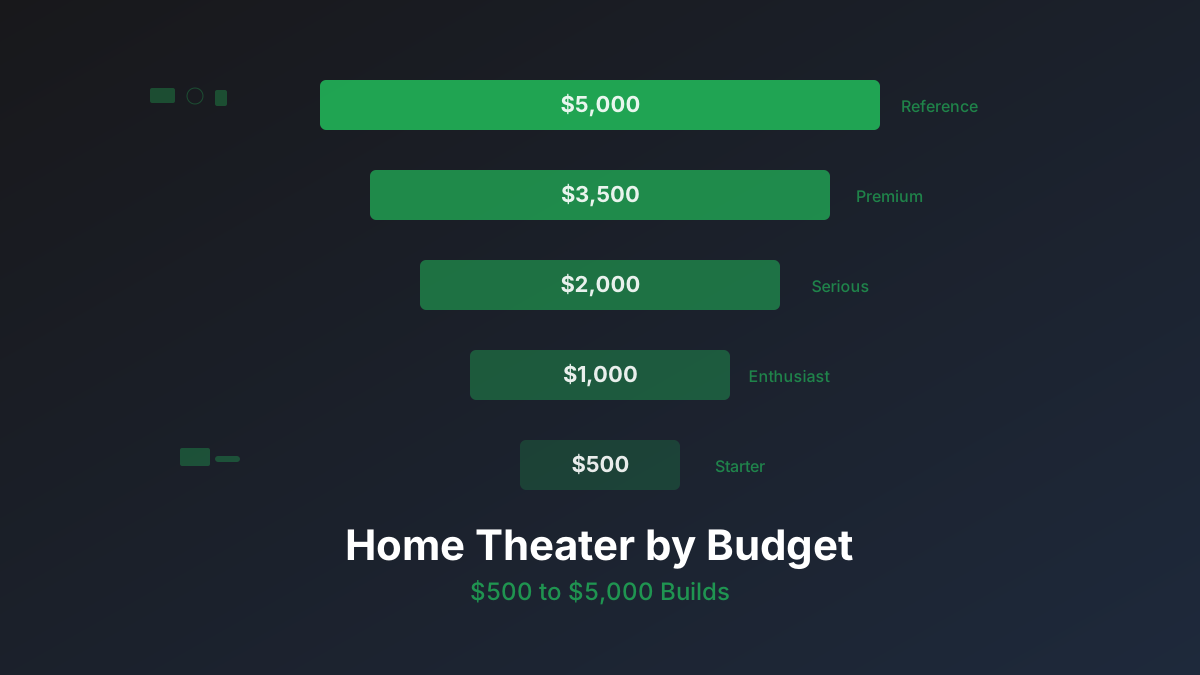
Quick Picks by Budget
- $500 (2.0 Starter): Hisense U7N 55" + Denon AVR-S670H refurb + Neumi BS5 pair. Real stereo, real AVR, 4K HDR.
- $1,000 (3.1 Core): Hisense U7N 65" + Denon AVR-S670H + Polk XT30 center + Neumi BS5 pair + Dayton SUB-1200. This is where home theater actually begins.
- $2,000 (5.1.2 Sweet Spot): LG C6 55" or Hisense U8N 65" + Denon AVR-X1800H + Polk Monitor XT full set + RSL Speedwoofer 10S MKII. Dolby Atmos. OLED. Done.
- $3,500 (7.1.2 Enthusiast): LG C6 65" + Denon AVR-X3800H + Klipsch RP series + SVS PB-2000 Pro. Plays loud, hits hard, looks serious.
- $5,000 (7.1.4 Reference): LG G6 65" + Denon AVR-X3800H + KEF Q Series + dual subs + 4 ceiling Atmos speakers. Diminishing returns start here, but what a place to stop.
$500 Build: 2.0 Starter System
Components
- TV: Hisense U7N 55" ($350). Excellent mini-LED panel with full-array local dimming, Dolby Vision, and solid HDR brightness. Best value display you can buy.
- AVR: Denon AVR-S670H ($250 refurbished) or Sony STR-AN1000 ($300 refurbished). The Denon is the default rec: HDMI 2.1, eARC, room correction, and enough power for bookshelf speakers. Buying refurb from a dealer like Accessories4Less gets you a warranty and saves $100+.
- Speakers: Neumi BS5 pair ($110) or Dayton Audio MK402X pair ($80). The Neumi BS5 punches absurdly above its weight. Neutral tuning, decent imaging, and they look fine on a shelf. The Dayton is $30 cheaper if you're truly squeezing every dollar.
Total: $510-540
What you get: real stereo separation that a soundbar cannot replicate, AVR processing (room correction, bass management, proper decoding), and a 55" 4K HDR display. Music sounds like music. Movie dialogue sits in front of you instead of underneath you.
What's missing: no subwoofer means no movie impact below 80Hz. No center channel means dialogue anchoring depends on your seating position. No surround means no spatial effects. This is a foundation, not a destination. But it's a foundation that sounds better than any $500 soundbar setup, and every piece carries forward when you upgrade.
Rob's take
The single most important thing about this $500 build is the AVR. A $250 refurb Denon gives you room correction, proper speaker management, and upgrade headroom for years. Buying a soundbar at this price locks you into a dead-end. The AVR is the foundation that every future upgrade plugs into.
$1,000 Build: 3.1 Core System
Components
- TV: Hisense U7N 65" ($700) or a used LG C4 55" ($700-800 if you find a deal). The jump to 65" makes a real difference at normal viewing distances. If you can snag a C4 in this range, take the OLED.
- AVR: Denon AVR-S670H ($250). Same as above. It has five channels of amplification, which is more than enough for 3.1.
- Center channel: Polk Monitor XT30 ($130). A dedicated center channel is the single biggest upgrade for movie watching. Dialogue locks to the screen regardless of where you sit. The XT30 voices well with the Neumi BS5 flanking it.
- Left/Right: Neumi BS5 pair ($110). Carried forward from the $500 build.
- Subwoofer: Monolith M-10 V2 ($250) or Dayton SUB-1200 ($170). The Monolith is the better sub with a 10" driver and more output. The Dayton is a budget legend that gets you real bass for the price of a nice dinner. Either one transforms the experience.
Total: $1,010-1,100
What you gain over $500: a center channel (dialogue clarity in any seating position), a subwoofer (explosions feel like explosions, music has weight), and a larger or better display. This is where home theater actually begins, because 3.1 covers the frequencies and spatial positions that matter most for movies.
The weak link: no surround channels means spatial effects still collapse to the front. A helicopter flying overhead in Dolby Atmos just comes from in front of you. That said, 3.1 done right sounds better than 5.1 done cheap with garbage speakers. Quality over quantity.
$2,000 Build: 5.1.2 Sweet Spot
Components
- TV: LG C6 55" (~$1,300) or Hisense U8N 65" ($1,000). The C6 is a current-gen OLED with per-pixel dimming and infinite contrast. If you watch in a dark room, OLED is the move. The U8N is a flagship mini-LED if you need the screen size or have ambient light.
- AVR: Denon AVR-X1800H ($500). Stepping up from the S670H gets you 7.2 channels (future-proofing for 7.1 or 5.1.2), Audyssey MultEQ XT room correction, better amplification (80W/ch), and two subwoofer outputs for dual subs later. Use our Receiver Match Calculator to verify this pairs well with your speaker picks.
- Front L/R: Polk Monitor XT20 pair ($200). A step up from the Neumi in clarity and dynamics.
- Center: Polk Monitor XT30 ($130). Timbre-matched to the XT20s, which matters for seamless panning across the front soundstage.
- Surrounds: Polk Monitor XT15 pair ($140). Compact bookshelves on stands or wall-mounted behind the seating position.
- Height channels: Polk OWM3 pair ($160) ceiling-mounted or angled on-wall, or budget in-ceiling speakers ($120/pair). Two height speakers give you basic Dolby Atmos with overhead effects.
- Subwoofer: RSL Speedwoofer 10S MKII ($400). One of the best subs under $500. Clean, musical bass that extends to the low 20s Hz in-room. Choosing a subwoofer is one of the most impactful decisions at this tier.
Total: $1,930-2,100
What you gain over $1,000: Dolby Atmos overhead effects, surround channels for rear spatial information, a significantly better subwoofer with real extension, OLED-quality display, and Audyssey room correction that genuinely improves bass response. This is the tier where movies envelop you rather than play at you.
The weak link: two height channels (5.1.2) gives you Atmos, but four (5.1.4 or 7.1.4) gives you better overhead coverage. The Polk XT series sounds good for the money but it's not going to compete with speakers at twice the price for detail and dynamics. And you have one subwoofer, which means bass nulls will exist in some seats.
Rob's take
$2,000 is where I tell most people to stop. You have OLED, Atmos, 5.1.2 surround, and a real subwoofer. The next $1,500 buys refinement: better speaker sensitivity, deeper bass, more surround channels. That's real, but it's not the life-changing jump from soundbar to separates, or from stereo to surround. If you have the budget, go further. If you're stretching, stop here and be happy.
$3,500 Build: 7.1.2 Enthusiast
Components
- TV: LG C6 65" (~$1,800) or LG G6 55" (~$2,200). The C6 65" is the sweet spot for most rooms. The G6 has higher peak brightness (MLA panel) if you have ambient light or want the wall-mount gallery aesthetic.
- AVR: Denon AVR-X3800H ($1,400) or Onkyo TX-RZ50 ($1,000). The X3800H is a 9.4 channel receiver with Dirac Live room correction, which is a meaningful upgrade over Audyssey for bass management. The Onkyo is $400 less with slightly less refined room correction but solid amplification. Use our Amplifier Power Calculator to check headroom with the Klipsch speakers.
- Front L/R: Klipsch Reference Premiere RP-500M II pair ($400). High-sensitivity (95dB) horn-loaded speakers that play loud and dynamic without straining the AVR. Klipsch's signature sound is lively and forward, which works brilliantly for action movies.
- Center: Klipsch RP-500C II ($250). Timbre-matched to the RP-500M. Dialogue cuts through even during loud action scenes.
- Surrounds: Klipsch RP-500M II, 2 additional pairs ($400 total for 4 speakers). Seven-channel surround means side and rear positions are covered, giving you much better spatial precision than 5-channel.
- Height: Klipsch RP-500SA II pair ($300). These are dedicated Atmos elevation speakers designed to mount on top of or near the front L/R. Alternatively, ceiling-mount speakers for better overhead imaging.
- Subwoofer: SVS PB-2000 Pro ($900). A 12" ported subwoofer that hits 17Hz in-room and plays to reference level in a medium room. This is where you start feeling bass in your chest, not just hearing it. SVS comparison if you're considering stepping up.
Total: $3,450-3,650
What you gain over $2,000: 7 surround channels (better spatial precision, rear effects), Klipsch high-sensitivity speakers that play louder and more dynamically with less power, Dirac Live room correction, and an SVS subwoofer that outperforms the RSL in output and extension. If you watch a lot of action movies or listen to music at moderate-to-high volumes, you'll hear the difference.
The weak link: two height speakers (7.1.2) instead of four (7.1.4). The Klipsch RP series is excellent for dynamics but some listeners find the horn-loaded tweeter fatiguing on bright recordings. If you primarily listen to acoustic music, the KEF Q series in the next tier may suit you better. One sub still means bass nulls at some seats, though the PB-2000 Pro's output partially compensates by overwhelming the room.
$5,000 Build: 7.1.4 Reference
Components
- TV: LG G6 65" (~$3,000) or Sony Bravia 9 III 65" (~$3,200). Flagship OLED territory. The G6 has the MLA panel for peak brightness. The Sony Bravia 9 III has the best motion processing and tone mapping in the business. Both are reference-quality displays.
- AVR: Denon AVR-X3800H ($1,400). Same as the $3,500 tier. At this budget you could stretch to the X4800H ($2,200), but honestly the X3800H's 9.4 channels and Dirac Live cover 7.1.4 without compromise.
- Front L/R: KEF Q350 pair ($600). The Uni-Q coaxial driver delivers remarkably coherent imaging. Point-source design means the sweet spot is wider than traditional speakers. Excellent for both movies and music.
- Center: KEF Q650c ($550). The Q650c is one of the best center channels under $1,000. Three-way design with dual 6.5" woofers handles dialogue with authority.
- Surrounds: KEF Q150 bookshelf, 2 pairs ($700 total). The Q150 uses the same Uni-Q driver as the Q350 in a more compact enclosure. Perfect for wall-mount or stand surround duty.
- Height: 4x ceiling-mount Atmos speakers ($400). Four overhead channels (7.1.4) give you the full Atmos dome. Objects pan smoothly overhead from front to back, which two height speakers can only approximate.
- Subwoofer: SVS PB-2000 Pro ($900) or dual RSL Speedwoofer 10S MKII ($800 for the pair). Dual subs smooth out room modes and eliminate the bass nulls that plague single-sub setups. Dual subs are worth it at this budget, and two RSLs often outperform one larger sub in practice because of the room mode cancellation.
Total: $4,850-5,250
What you gain over $3,500: four height channels for full Atmos overhead coverage, KEF's Uni-Q imaging (wider sweet spot, more natural sound), dual subwoofers for even bass response across all seats, and a flagship OLED. This is a reference home theater by any reasonable definition.
The weak link: at $5,000 you're past the point of obvious bang-for-buck upgrades. The next tier ($8,000-10,000) gets you dedicated amplification, room treatment, and flagship subwoofers (SVS PB-4000 or Monolith 16"), but the improvement curve has flattened. Most people won't hear the difference between this build and a $10,000 build without ABX testing.
Where Diminishing Returns Hit
The jump from $500 to $1,000 is enormous: you add a center channel and subwoofer. From $1,000 to $2,000 is still major: you add surround, height channels, OLED, and a real sub. From $2,000 to $3,500, improvements are audible but less dramatic: better dynamics, more surround channels, better room correction. From $3,500 to $5,000: better imaging, dual subs, full 7.1.4. Real improvements. Just smaller ones.
The math says $2,000 is the efficiency sweet spot. You're getting roughly 80% of a reference system's capability for 40% of the cost. The remaining 20% costs the other 60%. Whether that's worth it depends on how much time you spend in front of the system and how critically you listen.
One thing worth noting: room acoustics matter more than speaker price above the $2,000 tier. A $2,000 system in an acoustically treated room will outperform a $5,000 system in an untreated room with bare walls and hardwood floors. If you're at the $3,500+ level and haven't addressed acoustic treatment, that should be your next investment before upgrading speakers.
Every build above works with our home theater builder tool, which validates component compatibility and flags issues like impedance mismatches or insufficient AVR power. If you're mixing and matching different brands or swapping components, run your build through the compatibility checker before ordering.
About CinemaConfig
CinemaConfig helps you build a home theater that works. Our free system builder validates component compatibility, and our calculator tools handle the math behind viewing distance, amplifier power, room acoustics, and more.
Our content is based on manufacturer specifications and industry standards. For full details, see our affiliate disclosure.