The Best Bookshelf & Floorstanding Speakers for Home Theater (2026)
The Bowers & Wilkins 603 S3 ($2,700/pair) is the tower most home theater buyers should buy in 2026, and the Wharfedale Diamond 12.2i ($325/pair) is the bookshelf most buyers should buy if a sub is already in the room.
Speakers are the one component where the gap between $300 and $5,000 is genuinely audible, and also the one component where spending more stops paying off faster than the industry wants to admit. The 603 S3 is the inflection point in our testing. Below it, you're trading raw output and bass extension for cabinet size. Above it, you're trading dollars for diminishing increments of midrange refinement that mostly show up on acoustic recordings, not movies. The KEF Q7 Meta ($2,000/pair) is the credible alternative at the same tier if you sit in a wide arc and want the Uni-Q dispersion advantage. The Focal Aria Evo X No.2 ($4,798/pair) is the next real step up, and the gap is real, but it's a music gap more than a movie gap. If your room is small enough that a tower would be overkill, the Diamond 12.2i plus any half-decent subwoofer crossed at 80 Hz outperforms most $1,200 tower-only setups for a fraction of the price.
Five picks across four price points. The 603 S3 is the default. The Diamond 12.2i is the sub-$400 pick that will embarrass speakers costing three times as much when paired with a real sub. The Aria Evo X No.2 is where you start paying for a Beryllium-adjacent tweeter and a cabinet that doesn't ring under sustained 95 dB output.
How We Score
We score speakers on four dimensions: sensitivity (how loud they get per watt of amp power), low-end extension (the -3 dB point published by the manufacturer, cross-referenced against measured data where Audioholics or ASR has tested the model), driver configuration and cabinet build, and real-world owner ratings weighted by review count. Sensitivity is weighted heavily because it determines whether your AVR can actually drive the speaker to reference levels. A 91 dB speaker needs roughly half the amplifier power of an 88 dB speaker for the same SPL at the listening position. We don't weight cosmetic finish, brand pedigree, or list price. Our value score divides quality by street price, which is why a $325 Wharfedale and a $4,800 Focal can both rank in the top tier at their respective rungs.
What you get at each price point
Stereo speakers scale by room size and listening intent more than by ear sensitivity. The right tier is the one that matches the room you're putting them in.
$300–$500/pairBookshelf plus a sub does the work
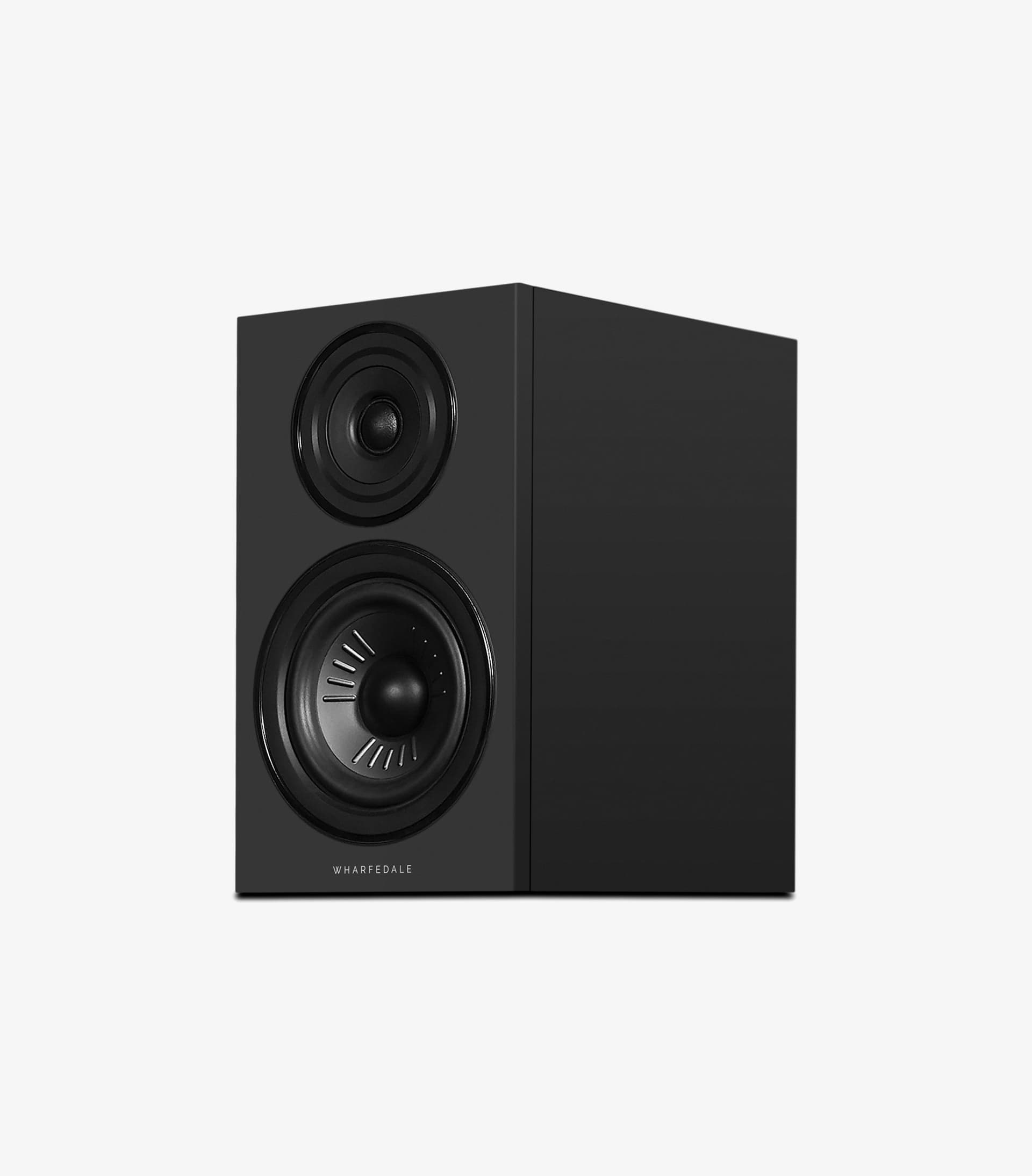
The Wharfedale Diamond 12.2i ($325/pair, 50 Hz @ -3 dB, 88 dB sensitivity, 8 Ω) is the pick. Cross it at 80 Hz to a competent subwoofer (SVS PB-1000 Pro, RSL Speedwoofer 12) and you have a system that outperforms most $1,000 towers used without a sub. The compromise is room size. Beyond about 2,000 cubic feet, the 12.2i runs out of midbass authority and you'll feel the gap that a tower would fill.
$1,500–$2,000/pairFirst real tower
The Wharfedale Evo 5.3 ($1,899/pair, 46 Hz @ -3 dB, AMT ribbon tweeter, 4 Ω) is the price-per-driver winner here. The 4 Ω load means a Denon AVR-X3800H or better is the right partner, not a mid-tier receiver. The KEF Q7 Meta ($2,000/pair) sits in the same bracket and trades the AMT's top-end air for the Uni-Q's wider sweet spot.
$2,500–$3,500/pairThe point where most buyers should stop
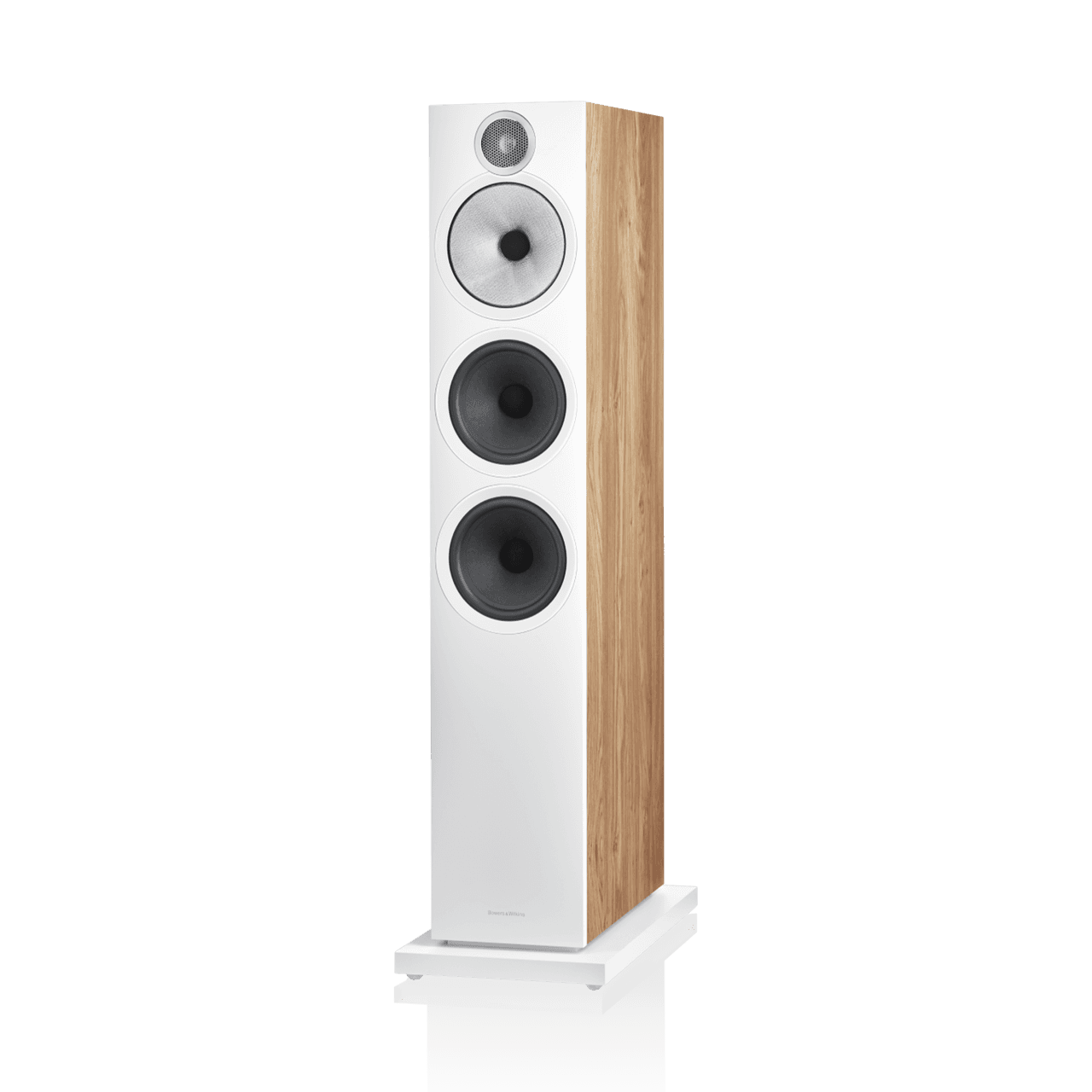
The B&W 603 S3 ($2,700/pair, 46 Hz @ -3 dB, 90 dB sensitivity, 8 Ω) is the default tower in this band. Twin 6.5" Continuum-cone bass drivers, the new Titanium Dome tweeter from the 700 Series, and a cabinet that genuinely doesn't ring at theater volume. Most people buying $5,000 speakers would be better served by the 603 S3 and putting the rest of the budget into a sub and treatment.
$4,500+/pairMusic-grade towers that also do movies
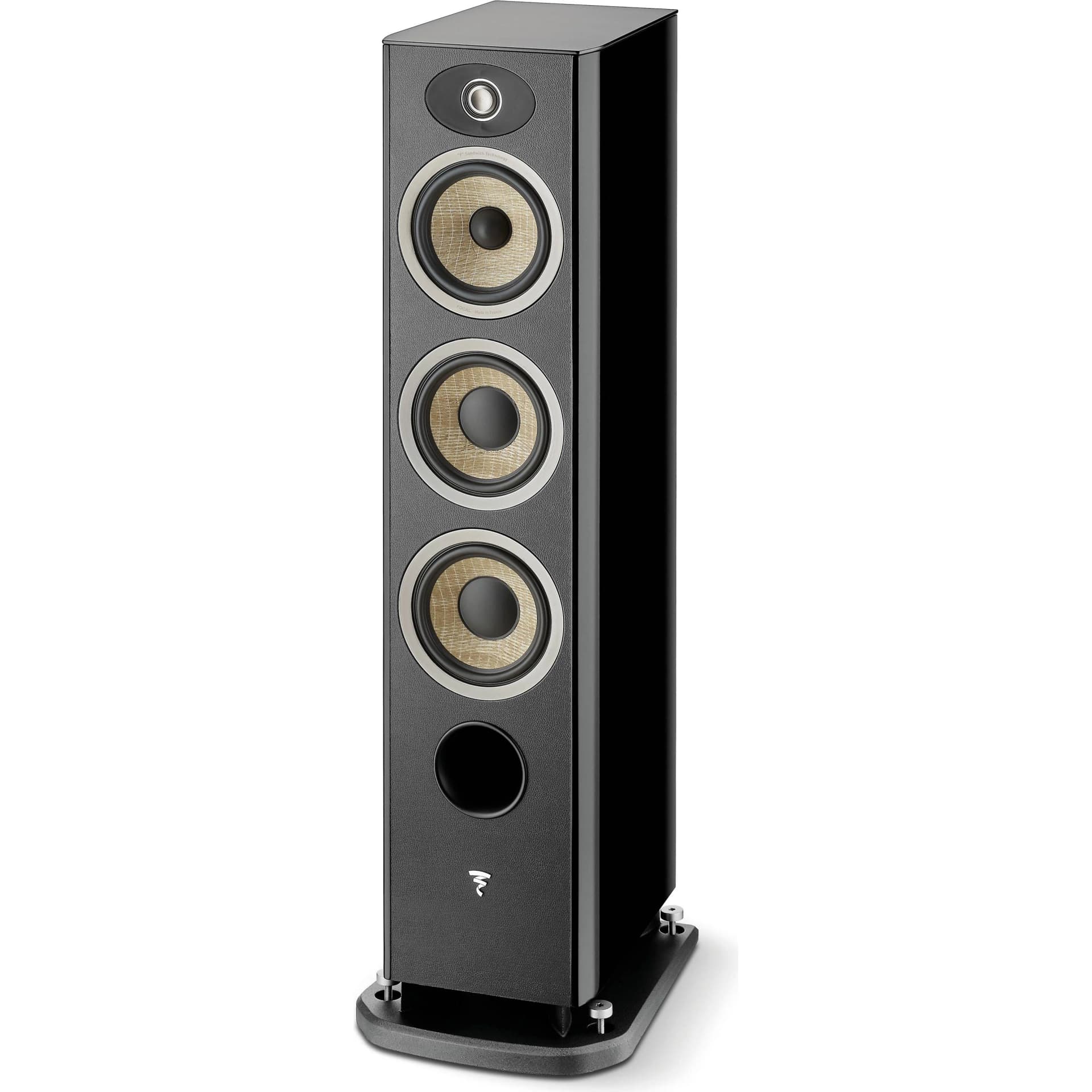
The Focal Aria Evo X No.2 ($4,798/pair, 45 Hz @ -3 dB, 91.5 dB sensitivity) is the rung where the tweeter starts to feel meaningfully different. The TAM aluminum-magnesium inverted dome is one tier below the Beryllium tweeter on the Kanta and Sopra lines, but the difference between it and the dome on the B&W 603 S3 is audible on string recordings at moderate volume. Diminishing returns above this point get steep fast.
Best OverallScore: 54/100
Bowers & Wilkins
603 S3-OAK
High sensitivity (90 dB)Deep bass extension (29 Hz)Extended high-frequency responseEasy to drive (8 ohm)
The Bowers & Wilkins 603 S3-OAK earns our top pick in the speaker category, offering High sensitivity (90 dB) and Deep bass extension (29 Hz) at $1,350.
The 603 S3 is B&W's 600 series flagship floorstander, the 3-way tower with twin 6.5-inch Continuum-cone woofers and the decoupled dome tweeter. Ninety dB sensitivity is unusually high for a tower at this tier, which means it runs comfortably on AVR amplification without needing a beefy outboard amp. The 29 Hz – 33 kHz extension is the spec to know; the low end reaches deeper than the 700-series 704 S3 (48 Hz) thanks to the larger woofers and cabinet volume. At its price tier the 603 S3 competes with the Focal Theva 3 and the KEF Q7 Meta; the B&W buy reason is the decoupled tweeter and the brand pedigree, the trade-off is wider cabinet width versus the slimmer KEF Q7 Meta. The Oak finish reads warmer than the Black, with visible wood grain that pairs with mid-century joinery rather than disappearing into a black-cabinet rack.
Trade-off: The 603 S3 is the safe pick, not the exciting one. The Continuum cone is a quietly competent driver, not a dramatic one. If you want a speaker that has a voice, that does something audibly distinctive on the first track you play, the KEF Q7 Meta or the Wharfedale Evo 5.3 will land harder on demo day. The B&W will still be the one you prefer six months in.
For the best bang for your buck, the Wharfedale DIAMOND 12.2I-ALL-BLACK stands out in the speaker category, offering Good sensitivity (88 dB) and Easy to drive (8 ohm) at $325.
The Diamond 12.2i is the largest bookshelf in the 12i line, with a 6-inch woofer and 50 Hz extension that puts it close to a sub-optional design for stereo music duty. The 2,000 Hz crossover is more conventional than the higher crossovers on the smaller 12i bookshelves, putting traditional midrange in the woofer rather than the soft-dome tweeter. At its price tier this is a credible alternative to the Q Acoustics 3030i and the Elac Debut Reference DBR-62; the Diamond 12.2i pitch is the brand pedigree and a measured neutral voicing. For Atmos surrounds in a budget 5.1.4, the 12.2i is a reasonable matched pick.
Trade-off: The Diamond 12.2i is a bookshelf. It has a 6.5" woofer and it rolls off at 50 Hz. Without a subwoofer, this is a small-room music speaker, not a home theater LCR. The buy reason is the price-per-quality ratio when paired with a real sub. Naked, it's not the recommendation.
High sensitivity (93 dB)Deep bass extension (38 Hz)Easy to drive (8 ohm)Bi-amp capable
The Klipsch F-1 proves you don't need to break the bank in the speaker category, offering High sensitivity (93 dB) and Deep bass extension (38 Hz) at $275.
The F-1 is the smallest tower in Klipsch's previous-generation Synergy F-series, an entry-tier 6.5-inch single-woofer design with a horn-loaded compression tweeter. The F-series predates the current Reference Premiere II line and the older Reference (R-600F-class) range; this is the Klipsch tower that lived on big-box-store shelves at the $400-pair price point in the early 2010s. At 93 dB sensitivity it remains amp-friendly with any AVR. The 38 Hz low-end spec is optimistic for a single 6.5-inch in a ported cabinet; in-room response settles in the high-50s. As current production these are out of stock in most channels; on the secondary market they're worth grabbing if the price is right and the buyer doesn't need the current Reference R-600F's refined crossover.
High sensitivity (91.5 dB)Extended high-frequency responseEasy to drive (8 ohm)3-way design
The Focal Aria Evo X No.2-BLACK HIGH GLOSS represents the pinnacle in the speaker category, offering High sensitivity (91.5 dB) and Extended high-frequency response at $4,798.
The Aria Evo X No.2 is the entry-floorstander in Focal's Aria Evo X line (the Aria replacement that launched in 2024), with Slatefiber drivers and the aluminum-magnesium TAM tweeter. Ninety-one-point-five dB sensitivity into 8 Ω is unusually efficient at this tier, which means a 50 W per channel receiver drives it to reference levels without strain. At its $3,500 a pair price it competes with the B&W 603 S3 and the KEF R5 Meta; the Focal buy reason is the high sensitivity and the TAM tweeter (one tier below the Beryllium tweeter on the Kanta and Sopra), the trade-off versus the B&W is wider dispersion at the cost of the B&W's narrower-but-more-consistent off-axis behavior. The Black High Gloss finish reads modern against piano-key joinery; the wood-veneer alternatives pair with traditional rooms.
Trade-off: The Aria Evo X No.2 wants 40–250 W of clean amplification and is happier with a real outboard amp than with an AVR's internal stages, even on a 9-channel flagship. If you're not willing to add an amp later, the 603 S3 is honestly the better practical pick because B&W has tuned the 603 line specifically to run well on receiver amplification.
Should I buy bookshelf speakers or floorstanding towers?
Towers if your room is over about 2,000 cubic feet, you don't want to rely on a subwoofer for everything below 80 Hz, or you listen to music as much as you watch movies. Bookshelves if you have a subwoofer (or plan to), if your room is under 2,000 cubic feet, or if a tower's footprint creates a placement problem. A good bookshelf plus a real sub almost always beats a similarly priced tower with no sub for home theater specifically, because movie low-frequency effects live below where most towers reach anyway.
What sensitivity do I need to match a typical AVR?
Most mid-tier AVRs (Denon AVR-X3800H, Marantz Cinema 50) put out 90–105 watts per channel into 8 ohms with two channels driven, less with all channels driven. A speaker rated 88 dB sensitivity will hit reference levels on that amp in a typical room. A speaker rated 91 dB needs roughly half the power for the same SPL. Below 86 dB sensitivity or below 4 ohms minimum impedance, you start needing an external amp to drive the speaker to its full potential, especially at theater volumes.
Is a 4 ohm speaker safe on a regular AVR?
Generally yes for the mid-tier and up (Denon AVR-X3800H and similar, anything Marantz, all the THX-certified receivers), but the receiver may run hotter and won't deliver its rated wattage. Entry-level AVRs (Yamaha RX-V4A tier, Sony STR-DH series) can struggle and trigger thermal protection during long sustained-loud passages. The Wharfedale Evo and Elysian towers, the KEF Q7 Meta, and most Focals are 4 Ω nominal. If you're buying one of those, factor a $700+ AVR or a separate amplifier into the budget.
Do I need to buy front speakers and surrounds from the same brand?
For the front left, center, and front right, yes. Timbre matching across those three channels is what makes dialogue and pans sound coherent. For surrounds and Atmos heights, brand matching matters less because those channels carry effects, not localized sound. A B&W 603 S3 front pair with B&W HTM6 S3 center and KEF Q150 surrounds works fine. A KEF center with B&W mains does not.
How does the KEF Q7 Meta compare to the B&W 603 S3?
The Q7 Meta has wider dispersion thanks to the Uni-Q point-source design, which means more seats in the room get a coherent stereo image. The 603 S3 has narrower-but-more-consistent off-axis response, more midbass authority from the dual 6.5" Continuum cones, and runs more comfortably on AVR amplification (8 Ω vs the KEF's 4 Ω). For a single sweet-spot listener doing mostly music, the KEF is the more interesting speaker. For a multi-seat home theater, the B&W is the more pragmatic one.
We rely on manufacturer-published specs plus Audioholics measurements for cross-referencing. We have not personally anechoic-chamber-measured any of these speakers, and CEA-2034 spinorama data is unavailable for the Wharfedale Evo 5.3 and the Aria Evo X No.2 at the time of writing. If you're the kind of buyer who wants Klippel NFS measurements before committing, ASR has tested the older Aria 906 and the KEF Q-series, but neither the Evo X No.2 nor the Q7 Meta specifically. The B&W 603 S3 listening impressions in this guide track the published Audioholics review of the 600 Series S3 generation; we have not independently measured the specific 603 S3.
The interesting question for 2026 is whether the next 600 Series refresh moves to a Continuum 2 cone (the 800 D5 generation has already debuted it) and whether KEF brings 13th-gen Uni-Q down to the Q line. Both would compress this entire bracket downward by about a year. If you can wait until late 2026, the Q9 Meta is rumored. If you can't, the 603 S3 is not going to feel obsolete the day a new one ships.
CinemaConfig may receive compensation for purchases made at participating retailers linked on this site. This compensation does not affect what products or prices are displayed, or the order of prices listed. See our affiliate disclosure.