Dolby Atmos vs DTS:X, TrueHD vs DTS-HD: What Actually Differs
The alphabet soup of audio codecs is one of the most confusing aspects of home theater. Both Dolby and DTS slap their branding on everything from $30 soundbars to $50,000 cinema processors. This guide sorts through the confusion, explains the real technical differences (they are smaller than you think), and tells you what actually matters.
The Two Companies
Dolby Laboratories created Dolby Digital, Dolby TrueHD, and Dolby Atmos. Dolby is the more widely recognized brand with more content available.
DTS (now part of Xperi) created DTS Digital Surround, DTS-HD Master Audio, and DTS:X. DTS has traditionally been the underdog but its formats are technically competitive.
Every modern AVR decodes both companies' full format lineups. You do not need to choose.
Rob's take
The lossy-vs-lossless distinction is the only audio format decision that matters. Whether the lossless track is TrueHD or DTS-HD Master Audio is irrelevant — both are bit-perfect. Spend your energy on getting lossless sources (UHD Blu-ray or files ripped from disc) rather than comparing codec logos. The brand name on the badge tells you almost nothing about how it sounds.
Lossy vs. Lossless: The Only Distinction That Matters
Lossy compression discards audio data the algorithm determines is inaudible. Like JPEG for images. Good enough for most purposes, but information is permanently lost.
Lossless compression reduces file size without discarding data. Like PNG for images. Bit-for-bit identical when decoded.
The meaningful quality distinction is between lossy and lossless, not between Dolby and DTS.
Format Lineup: Dolby
Dolby Digital (AC-3)
The original. 1992. Lossy, up to 5.1 channels, 640 kbps maximum. The baseline surround format that virtually all content supports.
Dolby Digital Plus (E-AC-3)
Updated lossy codec with higher bitrates (up to 6.1 Mbps). The primary format for streaming services. When Netflix delivers Atmos, it is DD+ with Atmos metadata.
Dolby TrueHD
Dolby's lossless codec. Found on Blu-ray and UHD Blu-ray. Supports up to 7.1 channels at full 24-bit/96kHz. Studio-grade audio in your living room.
Dolby Atmos
Not a standalone codec. Atmos is a metadata layer on top of either DD+ (streaming, lossy) or TrueHD (Blu-ray, lossless). It describes audio objects with 3D positional information. Our Atmos explainer covers the full picture.
Format Lineup: DTS
DTS Digital Surround
DTS's original lossy format. Higher bitrate than Dolby Digital (up to 1.5 Mbps vs. 640 kbps). In practice, the perceptual difference from DD is subtle.
DTS-HD Master Audio
DTS's lossless codec, directly comparable to Dolby TrueHD. Found on Blu-ray and UHD Blu-ray. Perceptually indistinguishable from TrueHD in controlled tests. Both deliver bit-perfect audio.
DTS:X
DTS's object-based 3D audio, comparable to Dolby Atmos. DTS:X adapts to any speaker layout without requiring specific configurations. Content availability is the real differentiator: far more content is mixed in Atmos than DTS:X.
Which Format Sounds Better?
Within the same compression tier, the differences are negligible. Dolby TrueHD and DTS-HD Master Audio are both lossless. They both reconstruct the original audio perfectly. There is no quality difference because both deliver bit-perfect audio.
The meaningful quality distinction is between lossy and lossless. TrueHD on a Blu-ray sounds better than DD+ on a stream because lossless is better than lossy, not because of the brand name.
What Your AVR Does
Your AVR decodes all formats automatically. The content determines the format and the receiver handles it. Set your Blu-ray player's audio output to "bitstream" to pass raw encoded audio to the AVR. For streaming devices, ensure Atmos is enabled. The streaming device guide covers which devices pass which formats.
Format Compatibility Checklist
- Source device must support the format.
- HDMI connection must have enough bandwidth (standard HDMI is fine for all audio formats). See the HDMI cable checker.
- AVR must decode the format (any modern AVR handles all listed formats).
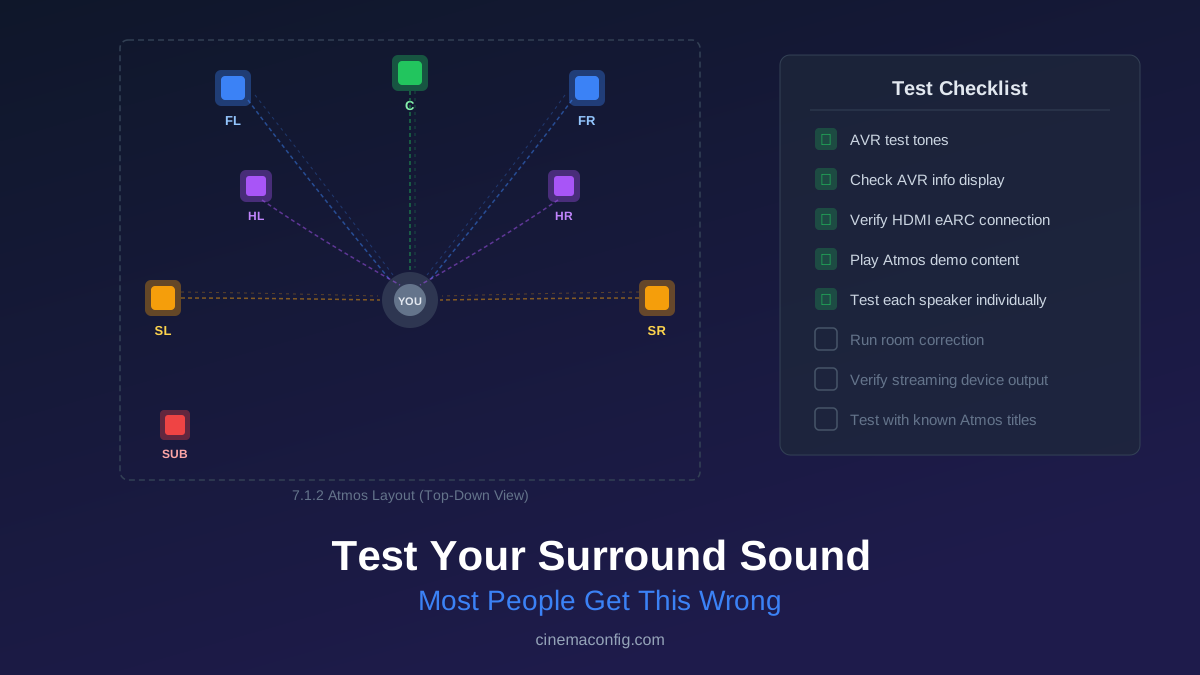
- Speaker configuration must match what the format offers.
CinemaConfig's builder validates this entire chain. Add your source device, AVR, and speakers, and it checks that every format your content carries can reach your speakers intact.
The Bottom Line
Do not stress about Dolby vs. DTS. Both are supported by every modern AVR. Focus on getting lossless audio when possible (UHD Blu-ray for reference, streaming for convenience), set up your system correctly with proper room correction and speaker placement, and let the receiver handle the codec details. The format matters far less than the quality of the speakers, the sub, and the room.
About CinemaConfig
CinemaConfig helps you build a home theater that works. Our free system builder validates component compatibility, and our calculator tools handle the math behind viewing distance, amplifier power, room acoustics, and more.
Our content is based on manufacturer specifications and industry standards. For full details, see our affiliate disclosure.