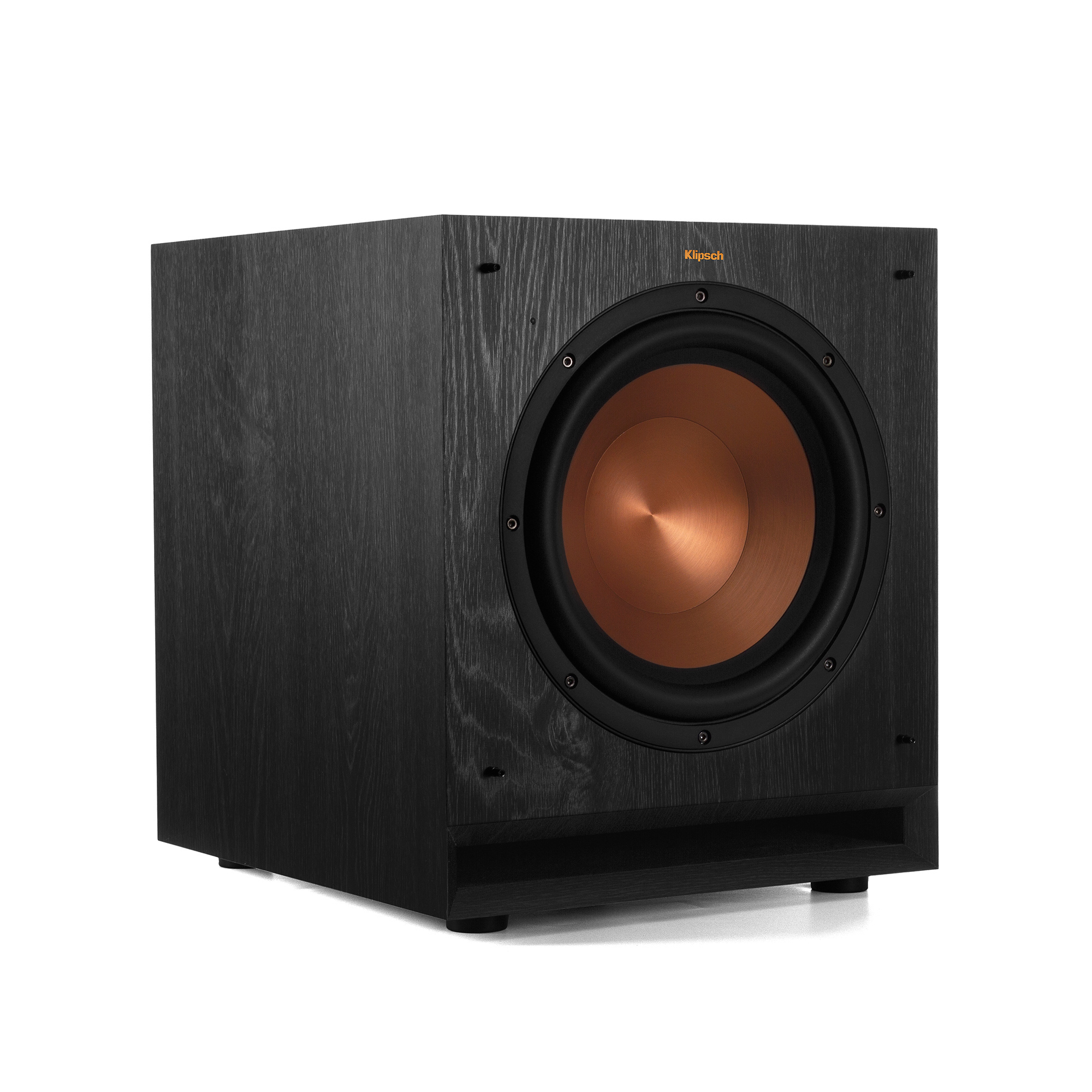
Klipsch SPL-100-EBONY vs MartinLogan ABYSS 10-SATIN-BLACK
Prices updated hourly. Check retailer for current availability.
Choosing between the Klipsch SPL-100-EBONY and MartinLogan ABYSS 10-SATIN-BLACK? Both compete in the Subwoofer segment. Here’s how they compare across the specs that matter most for your home theater.
Pricing for both models is currently unavailable. Check the retailer links below for current deals.
Looking at overall performance dimensions: The Klipsch SPL-100-EBONY scores higher in form factor. The MartinLogan ABYSS 10-SATIN-BLACK leads in audio quality, volume/SPL, room fit. They score similarly in value.
Key subwoofer differences include ported vs sealed enclosure designs, and the MartinLogan ABYSS 10-SATIN-BLACK digs deeper at 22 Hz (-3dB) vs 27 Hz. Sealed subs are tighter and more accurate, better for music. Ported subs play louder and dig deeper for the same driver/amp, better for movies. Some subs offer both via a removable port plug. A lower number means deeper bass — the rumble in explosions, the weight of a pipe organ. Below 20 Hz you feel it more than hear it.
The MartinLogan ABYSS 10-SATIN-BLACK holds an advantage across more performance dimensions, but the Klipsch SPL-100-EBONY may still be the better pick depending on which specs matter most to your setup. See the detailed comparison table below for the full breakdown.
For most home theaters, the MartinLogan ABYSS 10-SATIN-BLACK is the stronger choice — it leads in 3 of 5 scored dimensions. The Klipsch SPL-100-EBONY makes more sense if you prioritize the 1 dimension where it leads.
Performance Overview
Scores based on specs and category benchmarks (0–100 scale)
Detailed Specifications
| Specification | ||
|---|---|---|
| Price | N/A | N/A |
| Driver Size | 10" | 10" |
| RMS Watts | 200W | 800W |
| -3dB Extension | 27Hz | 22Hz |
| -6dB Extension | — | — |
| Phase Control | Yes | Yes |
| LFE Input | Yes | Yes |
| Line Input | Yes | Yes |
| XLR Input | No | Yes |
| App Control | No | Yes |
| Passive | No | No |
| Enclosure | ported | sealed |

Key Differences
- RMS Watts: Klipsch SPL-100-EBONY at 200W vs MartinLogan ABYSS 10-SATIN-BLACK at 800W. More sustained power means the sub maintains authority at high volumes without compression. RMS matters more than peak — it's the power available all the time, not just in bursts.
- Enclosure: Klipsch SPL-100-EBONY at ported vs MartinLogan ABYSS 10-SATIN-BLACK at sealed. Sealed subs are tighter and more accurate, better for music. Ported subs play louder and dig deeper for the same driver/amp, better for movies. Some subs offer both via a removable port plug.
- -3dB Extension: Klipsch SPL-100-EBONY at 27Hz vs MartinLogan ABYSS 10-SATIN-BLACK at 22Hz. A lower number means deeper bass — the rumble in explosions, the weight of a pipe organ. Below 20 Hz you feel it more than hear it.
- XLR Input: Klipsch SPL-100-EBONY at No vs MartinLogan ABYSS 10-SATIN-BLACK at Yes
- App Control: Klipsch SPL-100-EBONY at No vs MartinLogan ABYSS 10-SATIN-BLACK at Yes. App control lets you fine-tune the sub from your listening position instead of crawling behind it to adjust knobs. Some apps (SVS, REL) include measurement tools.
Which Should You Choose?
Choose MartinLogan ABYSS 10-SATIN-BLACK if you want:
- + better rms watts — more sustained power means the sub maintains authority at high volumes without compression
- + better -3db extension — a lower number means deeper bass — the rumble in explosions, the weight of a pipe organ
See Where These Rank
Check our editorial rankings to see how Klipsch SPL-100-EBONY and MartinLogan ABYSS 10-SATIN-BLACK compare to the rest of the field.
Best Subwoofer RankingsRelated Calculators
Specifications sourced from manufacturer datasheets and verified against retailer listings. Prices updated hourly from authorized retailers. Scoring uses our open methodology — products are never ranked, promoted, or suppressed based on affiliate commission rates.
Related Comparisons

Klipsch SPL-100-EBONY
vs Bowers & Wilkins 749ISW3

MartinLogan ABYSS 10-SATIN-BLACK
vs Bowers & Wilkins 749ISW3

Klipsch SPL-100-EBONY
vs JBL STAGEA120P
MartinLogan ABYSS 10-SATIN-BLACK
vs JBL STAGEA120P
Klipsch SPL-100-EBONY
vs OSD Audio FORZA-8
MartinLogan ABYSS 10-SATIN-BLACK
vs OSD Audio FORZA-8
CinemaConfig may receive compensation for purchases made at participating retailers linked on this site. This compensation does not affect what products or prices are displayed, or the order of prices listed. Learn more