The Best 4K UHD Blu-ray Players for Home Theater (2026)
For almost everyone still buying discs in 2026, the Panasonic DP-UB820 (around $549 MSRP, often $399 street) is the player. The audiophile step-up is the Panasonic DP-UB9000P1K at roughly $1,199, and the universal flagship for people with a real SACD shelf is the Magnetar UDP900 at $2,499.
Be honest about the category first. 4K UHD Blu-ray is the last physical media format, the major studios are releasing fewer titles every year, and most people reading a buying guide for a disc player already own one and are looking for confirmation that the UB820 is still the answer. It is. Panasonic's HCX processor plus the HDR Optimizer plus full Dolby Vision and HDR10+ support on disc playback means the UB820 is the one player that does not force you to pick which HDR format your library is allowed to use. Sony's UBP-X800M2 is the obvious competitor at a lower price point and a fine SACD spinner, but it does not support HDR10+ at all and its Dolby Vision implementation requires manually toggling a setup-menu flag that breaks any disc not encoded with Dolby Vision when left on. For a $300 player that omission is the story. Above the UB820, the buy reasons get narrow: balanced XLR analog outputs for two-channel music, multi-channel analog out for a pre-HDMI receiver, true universal disc support that includes SACD and DVD-Audio. If none of those describe your rack, the UB820 is the end of the shopping list.
Three picks, one default and two specialist step-ups. The UB820 gets most of the space below because it is the player most readers will actually own. The UB9000 and the Magnetar UDP900 cover the audiophile and universal-disc niches honestly, including the part where most buyers do not need either one.
How We Score
We score 4K UHD players on HDR format coverage, disc compatibility, audio output flexibility, and build. HDR coverage is weighted hardest because the entire reason to own a 4K UHD player in 2026 is that streaming compresses HDR aggressively and disc playback does not. A player that drops Dolby Vision or HDR10+ on disc loses points proportional to how much of your library uses the missing format. Disc compatibility counts SACD, DVD-Audio, region-free capability, and CD playback quality for buyers who use the player as a music source. Audio output flexibility counts analog 7.1 out, balanced XLR stereo, and dual HDMI for routing audio to an older AVR while video goes direct to the TV. We do not weight streaming apps, because anyone serious about disc playback is using a separate streamer.
What you get at each price point
Three tiers, each step up has a real and narrow reason to exist.
$200–$300The cheap-and-flawed tier
Sony UBP-X800M2 or the entry Panasonic DP-UB420. Both play 4K UHD discs, both lack the full HDR matrix in different ways. The Sony skips HDR10+, the UB420 skips on-disc Dolby Vision in the US market. Pick this tier only if the budget is hard-capped and the TV uses one HDR format you can confirm the player supports.
$400–$600The Panasonic UB820 default
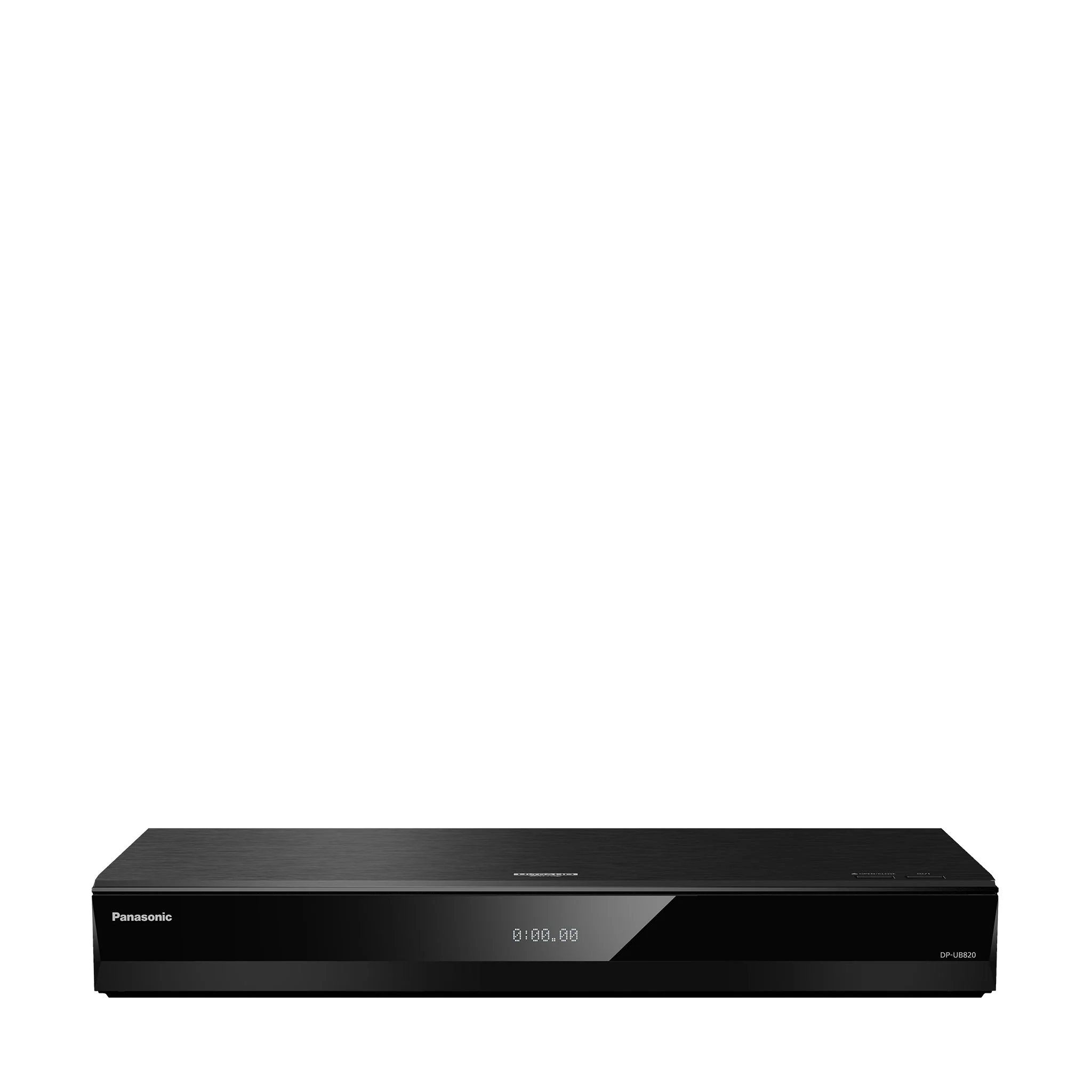
The DP-UB820 at $549 MSRP (frequently $399-449 at retail). HDR10, HDR10+, Dolby Vision, HLG, all on disc. Twin HDMI for separating audio and video routing. 7.1-channel analog output and a 192-kHz / 32-bit 4-DAC. This is where the shopping ends for 95% of disc buyers.
$1,200–$2,500+Audiophile and universal flagships
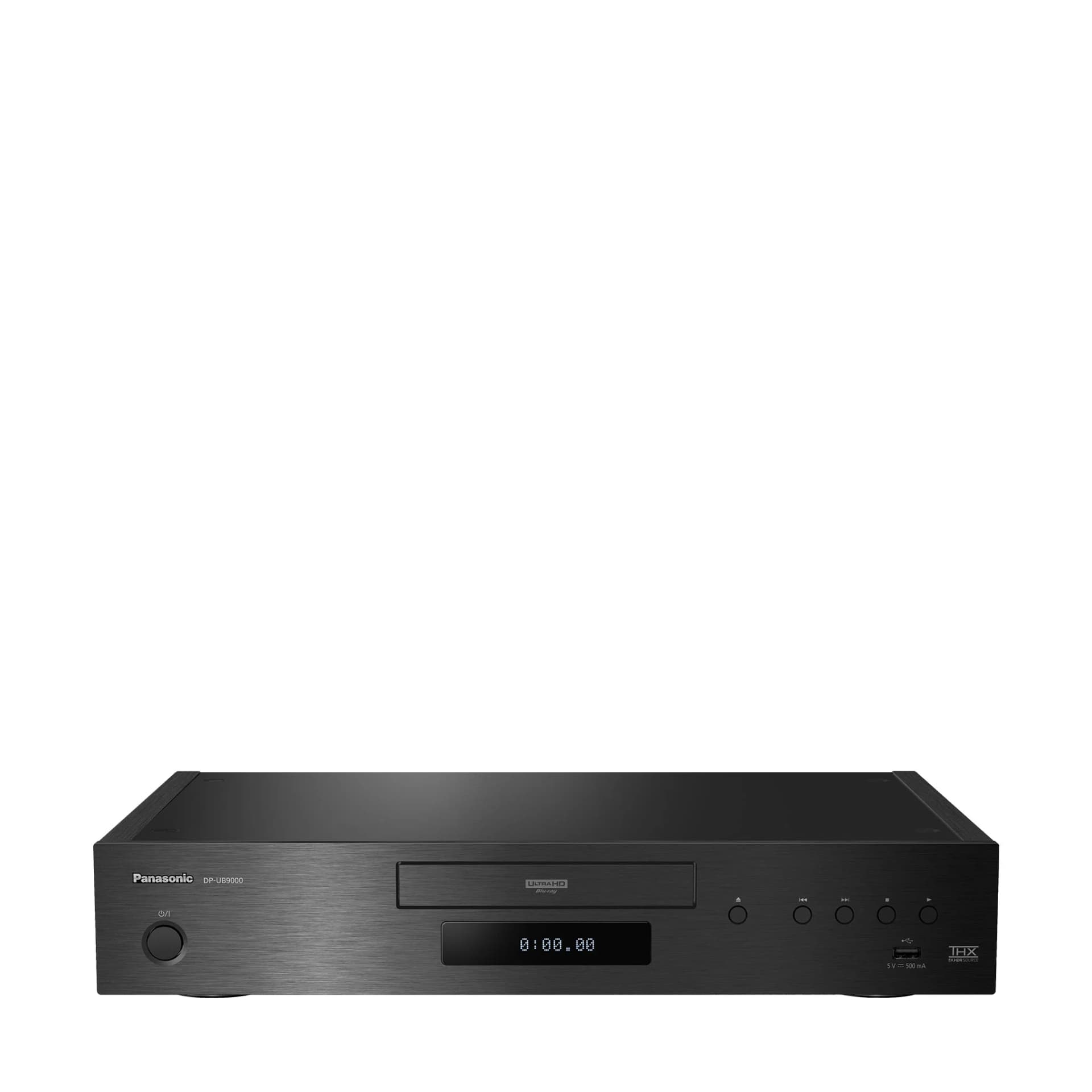
Panasonic DP-UB9000P1K at $1,199 for balanced XLR stereo, a dedicated audio power supply, and the same HDR matrix as the UB820 in a heavier chassis. The Magnetar UDP900 at $2,499 for a true universal player with SACD, DVD-Audio, ESS Sabre ESS9038PRO and ESS9028PRO DACs, 7.1 analog out, and a 34-pound chassis. Buy only if your two-channel rig or your SACD library justifies it.
Best OverallScore: 60/100
Panasonic
DP-UB820
The Panasonic DP-UB820 earns our top pick in this category at $549.99.
The DP-UB820 is Panasonic's mid-tier 4K UHD Blu-ray player, the model that supports the full HDR matrix (HDR10, HDR10+, Dolby Vision, HLG) and is widely regarded by AV reviewers as the best 4K UHD player below the audiophile UB9000 tier. HDR Optimizer tone-maps HDR10 signals to the connected display's peak brightness, dual HDMI outputs let the audio signal route to an older AVR while video goes direct to the TV. At ~$499 MSRP it competes with the Sony UBP-X800M2 ($299, no Dolby Vision support on UHD discs) and the Pioneer Elite UDP-LX500 ($999); the Panasonic buy reason is the Dolby Vision support on disc playback that Sony omits and the HDR Optimizer, the trade-off is the streaming-app library that's narrower than the Sony.
Trade-off: The UB820 is the player to buy because it is the only sub-$600 deck that supports every consumer HDR format on disc playback, including the two formats that are genuinely incompatible with each other in studio practice (HDR10+ and Dolby Vision). What Hi-Fi awarded it five stars and a 2019-and-onward best-buy nod, and the player is still in production six years later because nothing in the category has unseated it. The honest trade-off is the streaming-app suite, which is narrower and slower than the Sony's. The other honest trade-off is the disc-load speed, which is roughly 12-15 seconds to a menu on a UHD title and feels slow if you remember PS3-era Blu-ray load times. For disc playback both of those are the wrong things to optimize for. Buy a $40 streaming stick for the apps and let the UB820 do what it is good at.
For the best bang for your buck, the Sony UBP-X700U stands out in this category at $199.
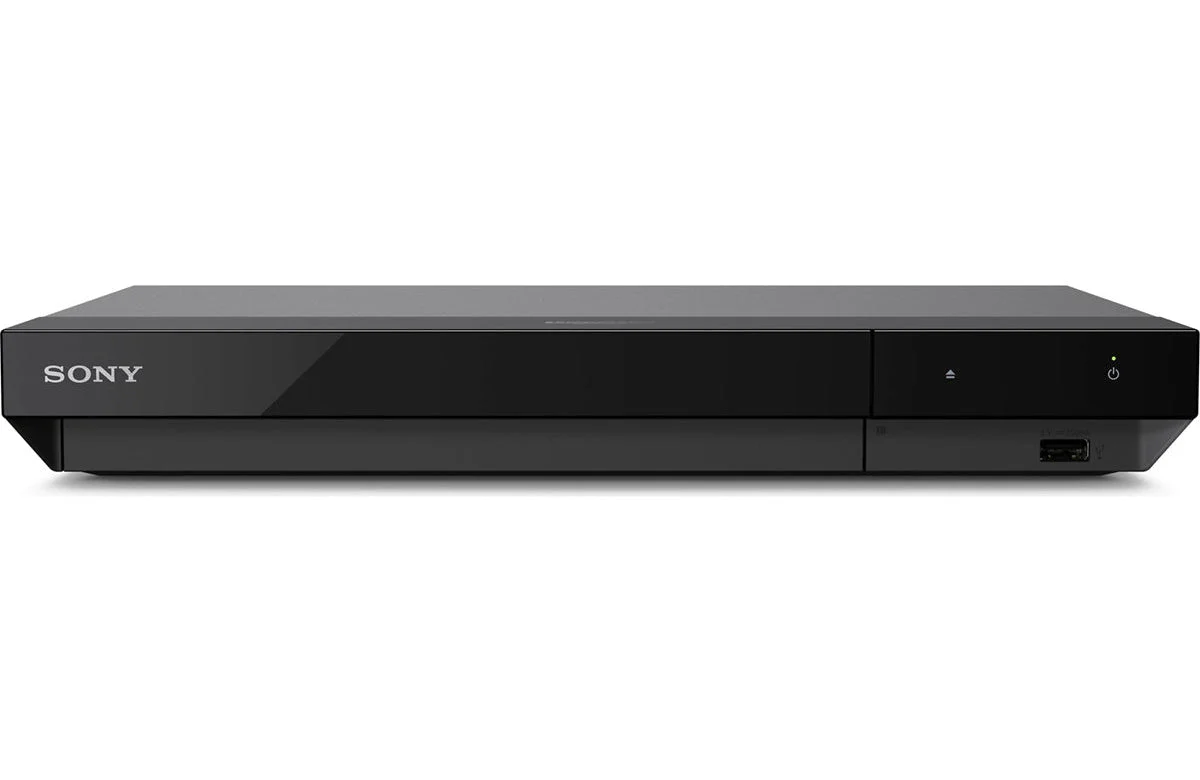
The UBP-X700U is Sony's mid-tier 4K UHD Blu-ray player, with Dolby Vision and HDR10 support but no HDR10+ (Dolby Vision is the more important format on Sony hardware anyway, given Sony's display calibration partnership). HDMI 2.0a output, full Dolby Atmos and DTS:X passthrough, no balanced analog outputs, no internal DAC for audiophile two-channel use. At its $200-250 street price it competes with the Panasonic UB-820, which is the better disc-loader build and slightly faster on disc reads; the UBP-X700U is the right pick when the system is otherwise Sony and the ecosystem integration matters. For a pure player choice without ecosystem ties, the Panasonic UB-820 is the consensus better buy.
Trade-off: The Sony UBP-X800M2 at around $299 is a very capable SACD and DVD-Audio spinner with seamless DSD-over-HDMI handling, which is the real reason audio-first buyers still consider it. The video story is where it falls apart. No HDR10+ at all, and the Dolby Vision implementation that Sony shipped requires turning on Dolby Vision Output from the setup menu before playing a DV disc and turning it off again for any non-DV content. Leave it on, and any HDR10 or HDR10+ disc gets treated as Dolby Vision by the player. Reviewers have called this a UX bug since launch and Sony has not fixed it. For $100 more, the UB820 has none of these problems. The only honest reason to pick the X800M2 in 2026 is an existing Sony-stack ecosystem play.
The Sony DVP-SR510H proves you don't need to break the bank in this category at $62.
The DVP-SR510H is Sony's basic DVD-only player, no Blu-ray support at all. It exists in the catalog for buyers replacing a dead DVD player on a decade-old TV that can't accept a 4K HDMI signal anyway, where the use case is a kids' room or a bedroom system playing the existing DVD library. At its sub-$50 street price it has effectively no audiophile or videophile case to make. The Panasonic DMP-BD94 adds Blu-ray for under $100 if the disc library will grow at all; the SR510H is a DVD-replacement appliance, not a home-theater component.
The Panasonic DP-UB9000P1K represents the pinnacle in this category at $1,199.99.
The DP-UB9000 P1K is Panasonic's audiophile-tier 4K UHD Blu-ray flagship, the model that pairs the same HDR matrix support as the UB820 with discrete high-grade DACs, balanced XLR stereo outputs, and a dedicated power supply for analog audio output that bypasses the AVR for stereo music playback. HDR Optimizer plus the same Dolby Vision disc support, dual HDMI for audio/video routing flexibility. At ~$999 MSRP it competes with the Pioneer Elite UDP-LX800 ($2,500) and the Cambridge Audio CXUHD ($1,300); the Panasonic buy reason is the analog audio path quality at this price that competitors charge meaningfully more for, the trade-off versus the Pioneer LX800 is the chassis build and the audiophile cachet.
Trade-off: The DP-UB9000P1K and the Magnetar UDP900 do not compete with each other. The UB9000 is the UB820 with an upgraded analog audio path, a dedicated audio power supply, balanced XLR stereo, and a heavier chassis for isolation. It is the right pick when you use the player as your primary source for two-channel music and route stereo via XLR to a separate preamp. The Magnetar is something else. ESS9038PRO and ESS9028PRO DACs, 7.1-channel RCA analog out for legacy multi-channel preamps with no HDMI, full universal disc support including SACD and DVD-Audio, and a 34-pound chassis. The audience for the Magnetar is small and specific: people running pre-HDMI processors like the EAD TheaterMaster Ovation or older Krells, or people with a serious SACD shelf that the UB820 cannot play. If neither describes you, you do not need this player. The TechHive review of the UDP800 (the cheaper sibling) frames the appeal honestly as 'a media hub for people who still buy media,' which is the right frame for the whole Magnetar line.
Do I actually need a 4K UHD Blu-ray player in 2026?
Only if you care about the picture-quality gap between disc and streaming, which is real and measurable. A 4K UHD Blu-ray runs at roughly 80-128 Mbps with full 10-bit color and uncompressed Dolby Atmos. Netflix 4K tops out around 15 Mbps with lossy audio. On a calibrated OLED in a dark room the difference is obvious within the first dark scene. If you do most of your watching on a phone or a living-room LCD with the lights on, the difference is smaller and you probably do not need a player at all.
Why is the Panasonic UB820 better than the Sony UBP-X800M2?
Two reasons. The UB820 supports HDR10+ on disc and the Sony does not, which matters for any Universal or Warner Bros title in the format. The UB820 also handles Dolby Vision on disc automatically with no setup-menu toggle, where the Sony requires manually enabling Dolby Vision output before each DV disc and disabling it again for any HDR10 disc. The Sony is still a better SACD player and the build feels slightly nicer, but as a video deck the UB820 wins.
Is the Panasonic UB9000 worth the price step over the UB820?
Only if you use the player as your primary two-channel music source and you route stereo through the balanced XLR outputs to a separate preamp or integrated. The video path is identical to the UB820. The HDR matrix is identical. The chassis is heavier and quieter, the analog audio circuit has a dedicated power supply and a 192-kHz / 32-bit 4-DAC, and the XLR outputs are the actual feature you are paying for. If your music listening is digital streaming through HDMI, you are paying $700 for a heavier box.
What about the Magnetar UDP800 or UDP900? Are they overkill?
For 90 percent of buyers, yes. The Magnetar's case is real universal disc support (SACD, DVD-Audio, CD as a serious music source) plus 7.1-channel analog out for pre-HDMI receivers and processors. If you have a Krell, an EAD, a Theta, or any other pre-HDMI multi-channel preamp without a useful HDMI input, the Magnetar's analog 7.1 out is one of the only modern ways to get UHD audio into that processor. If you have a modern AVR with HDMI 2.1, the UB820 does the same job for a fifth of the price.
Are any of these players region-free?
Stock from Panasonic, Sony, and the major US retailers is region-locked. The Magnetar UDP800 ships in both region-coded and region-free variants from authorized dealers, with the region-free version typically running about $110 more than the locked one. For the Panasonic models, third-party sellers like 220-electronics modify region-free firmware after purchase, which voids the manufacturer warranty but is the standard route for collectors with PAL and Region B discs. Confirm region coding with the dealer before buying if it matters to you.
How much does HDR Optimizer actually matter?
It matters most on TVs that cannot hit 1,000 nits of peak HDR. The HDR Optimizer reads the player's user-set display-peak-brightness value and tone-maps the HDR10 signal so highlights do not clip. On a 4,000-nit Samsung S95F it is irrelevant because the TV does its own dynamic tone mapping at full brightness. On a 700-nit Sony A80L or a budget LG B-series the HDR Optimizer is one of the more visible video-quality features in the category. Both the UB820 and the UB9000 carry it.
We have not run our own bench measurements on the analog audio path of any player here. The UB9000 versus Magnetar comparison in particular comes down to subjective two-channel listening preference, ESS Sabre voicing versus Panasonic's discrete approach, and rack constraints that vary by build. Audioholics and SoundStage! Hi-Fi have published listening impressions on the UDP900 that we trust more than our own ears for that specific comparison. We are also less confident in long-term street pricing on the UB820 than the rest of the post because Panasonic has cycled the model in and out of stock at major US retailers for years and the $399-549 range is wider than we like.
The interesting question for 2027 is not which 4K UHD player to buy. It is whether the format itself gets a successor. Studios released roughly 100 4K UHD titles in 2024 versus 250-plus in 2019, and the surviving disc audience is the audience that already owns a UB820. If you do not own one yet and you still want one, buy it now.
CinemaConfig may receive compensation for purchases made at participating retailers linked on this site. This compensation does not affect what products or prices are displayed, or the order of prices listed. See our affiliate disclosure.