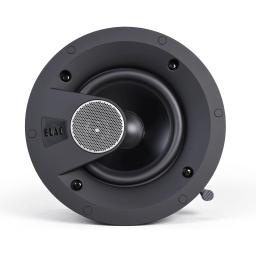
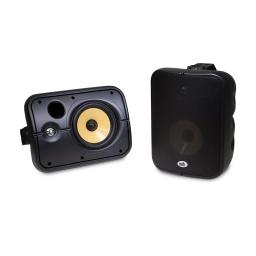
ELAC 970ICV62W vs PSB CS1000
Prices updated hourly. Check retailer for current availability.
Choosing between the ELAC 970ICV62W and PSB CS1000? Both compete in the Speaker (L/R) segment. Here’s how they compare across the specs that matter most for your home theater.
Pricing for both models is currently unavailable. Check the retailer links below for current deals.
Looking at overall performance dimensions: The ELAC 970ICV62W scores higher in value. The PSB CS1000 leads in audio quality, volume/SPL, form factor, room fit.
For speaker performance, the ELAC 970ICV62W is more sensitive at 87 dB vs 86 dB, and impedances of 6Ω vs 8Ω. Higher sensitivity means your receiver works less hard, leaving more headroom for dynamic peaks in movie soundtracks. A speaker rated 3 dB higher in sensitivity needs half the amplifier power to reach the same volume. Lower impedance draws more current from your receiver. A 4-ohm speaker needs a receiver rated for that load, or you risk thermal shutdown during loud passages.
The PSB CS1000 holds an advantage across more performance dimensions, but the ELAC 970ICV62W may still be the better pick depending on which specs matter most to your setup. See the detailed comparison table below for the full breakdown.
For most home theaters, the PSB CS1000 is the stronger choice — it leads in 4 of 5 scored dimensions. The ELAC 970ICV62W makes more sense if you prioritize the 1 dimension where it leads.
Performance Overview
Scores based on specs and category benchmarks (0–100 scale)
ELAC 970ICV62W
PSB CS1000
Detailed Specifications
| Specification | ||
|---|---|---|
| Price | N/A | N/A |
| Driver Config | 2-way | 2-way |
| Sensitivity | 87dB | 86dB |
| Impedance | 6Ω | 8Ω |
| Freq Response Low | 45Hz | 45Hz |
| Freq Response High | 20000Hz | 23000Hz |
| Crossover | 2100Hz | 2200Hz |
| Bi-Amp Capable | No | No |
| Rec. Power Min | 30W | 20W |
| Rec. Power Max | 120W | 150W |
| Mounting Type | in-ceiling | tower |
| Mounting Depth | — | — |
| Cutout Diameter | — | — |
| Cutout Width | — | — |
| Cutout Height | — | — |
| Wall Thickness Min | — | — |
| Wall Thickness Max | — | — |
| Back Box Included | No | No |
| Back Box Required | No | No |
| Mounting Mechanism | — | — |
| Installation Type | — | — |
| Stud Spacing | — | — |
| Paintable Grille | Yes | No |
| Magnetic Grille | Yes | No |
| Grille Shape | — | — |
| Connector Type | — | — |
| Wire Gauge Max | — | — |
| Angle Adjustable | No | No |
| Pivot Angle | — | — |
| Treble Attenuation Switch | No | No |
| LCR Capable | No | No |
| Coaxial | No | No |
| IP Rating | — | — |
| Moisture Resistant | No | No |
| UV Resistant | No | No |
| Salt Spray Rated | No | No |
| Enclosure Material | — | — |
| Grille Material | — | — |
| Bracket Type | — | — |
| Bracket Included | No | No |
| Dual Voice Coil (SDI) | No | No |
Key Differences
- Rec. Power Min: ELAC 970ICV62W at 30W vs PSB CS1000 at 20W
- Impedance: ELAC 970ICV62W at 6Ω vs PSB CS1000 at 8Ω. Lower impedance draws more current from your receiver. A 4-ohm speaker needs a receiver rated for that load, or you risk thermal shutdown during loud passages.
- Rec. Power Max: ELAC 970ICV62W at 120W vs PSB CS1000 at 150W
- Freq Response High: ELAC 970ICV62W at 20000Hz vs PSB CS1000 at 23000Hz
- Crossover: ELAC 970ICV62W at 2100Hz vs PSB CS1000 at 2200Hz
Which Should You Choose?
Choose ELAC 970ICV62W if you want:
- + better sensitivity — higher sensitivity means your receiver works less hard, leaving more headroom for dynamic peaks in movie soundtracks
See Where These Rank
Check our editorial rankings to see how ELAC 970ICV62W and PSB CS1000 compare to the rest of the field.
Best Speaker (L/R) RankingsRelated Calculators
Specifications sourced from manufacturer datasheets and verified against retailer listings. Prices updated hourly from authorized retailers. Scoring uses our open methodology — products are never ranked, promoted, or suppressed based on affiliate commission rates.
Related Comparisons


CinemaConfig may receive compensation for purchases made at participating retailers linked on this site. This compensation does not affect what products or prices are displayed, or the order of prices listed. See our affiliate disclosure.