JVC DLA-NZ500 vs Samsung The Premiere LPU9D
Prices updated hourly. Check retailer for current availability.
Choosing between the JVC DLA-NZ500 and Samsung The Premiere LPU9D? Both compete in the Projector segment. Here’s how they compare across the specs that matter most for your home theater.
Pricing for both models is currently unavailable. Check the retailer links below for current deals.
Looking at overall performance dimensions: The JVC DLA-NZ500 scores higher in gaming performance. The Samsung The Premiere LPU9D leads in video quality, form factor, room fit. They score similarly in value, ease of use.
The Samsung The Premiere LPU9D offers higher brightness at 3450 ANSI lumens vs 2000, and different projection technologies (D-ILA vs DLP). More lumens means a brighter image, critical if you can't fully darken your room. Below 2000 lumens needs a dedicated dark room; 3000+ handles ambient light. In a dedicated dark room, contrast ratio and color accuracy may matter more than raw brightness.
The Samsung The Premiere LPU9D holds an advantage across more performance dimensions, but the JVC DLA-NZ500 may still be the better pick depending on which specs matter most to your setup. See the detailed comparison table below for the full breakdown.
For most home theaters, the Samsung The Premiere LPU9D is the stronger choice — it leads in 3 of 6 scored dimensions. The JVC DLA-NZ500 makes more sense if you prioritize the 1 dimension where it leads.
Performance Overview
Scores based on specs and category benchmarks (0–100 scale)
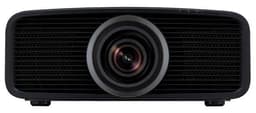
JVC D-ILA Native 4K Projector
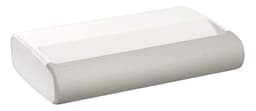
Samsung The Premiere LPU9D
Detailed Specifications
| Specification | ||
|---|---|---|
| Price | N/A | N/A |
| Native Resolution | 4K | 4K |
| Technology | D-ILA | DLP |
| Throw Ratio Min | 1.26 | 0.19 |
| Throw Ratio Max | 2.01 | 0.19 |
| Lens Shift V | 70% | — |
| Lens Shift H | 28% | — |
| ANSI Lumens | 2000 | 3450 |
| CLO Lumens | — | — |
| Contrast Ratio | 40000:1 | 2000000:1 |
| HDR Support | HDR10+ | HDR10+ |
| Input Lag | 34ms | 57ms |
| Lamp Life | 20000hrs | 20000hrs |
| Light Source | laser_phosphor | rgb_laser |
| Lens Quality | — | — |
| Tone Mapping | — | — |
| Ultra Short Throw | No | Yes |
| Chip Size | 0.69" | 0.66" |
| Color Depth | 12bit | 10bit |
| Zoom Ratio | 1.6 | — |
| Zoom Type | Motorized | Fixed |
| Focus Type | Motorized | Manual |
| Noise (Normal) | 24dB | 33dB |
| Noise (Eco) | — | — |
| Power Draw | 280W | 410W |
| HDMI Inputs | 2 | 3 |
| HDMI Version | 2.1 | 2.1 |
| 3D Support | No | No |
| Built-in Speaker | No | Yes |
| Speaker Power | — | 40W |
| Wi-Fi | No | Yes |
| Bluetooth | No | No |
| Streaming Apps | No | Yes |
| Lens Memory | Yes | No |
| 12V Trigger | No | No |
| Ethernet | Yes | Yes |
| Frame Interpolation | Yes | No |
| Native Aspect | 16:9 | 16:9 |
Key Differences
- Contrast Ratio: JVC DLA-NZ500 at 40000:1 vs Samsung The Premiere LPU9D at 2000000:1
- Throw Ratio Max: JVC DLA-NZ500 at 2.01 vs Samsung The Premiere LPU9D at 0.19
- Throw Ratio Min: JVC DLA-NZ500 at 1.26 vs Samsung The Premiere LPU9D at 0.19
- Technology: JVC DLA-NZ500 at D-ILA vs Samsung The Premiere LPU9D at DLP
- ANSI Lumens: JVC DLA-NZ500 at 2000 vs Samsung The Premiere LPU9D at 3450. More lumens means a brighter image, critical if you can't fully darken your room. Below 2000 lumens needs a dedicated dark room; 3000+ handles ambient light.
Which Should You Choose?
Choose JVC DLA-NZ500 if you want:
- + better input lag — sub-20ms is excellent for gaming
- + better noise (normal)
- + better power draw
Choose Samsung The Premiere LPU9D if you want:
- + better throw ratio min
- + better ansi lumens — more lumens means a brighter image, critical if you can't fully darken your room
- + better contrast ratio
See Where These Rank
Check our editorial rankings to see how JVC DLA-NZ500 and Samsung The Premiere LPU9D compare to the rest of the field.
Best Projector RankingsRelated Calculators
Specifications sourced from manufacturer datasheets and verified against retailer listings. Prices updated hourly from authorized retailers. Scoring uses our open methodology — products are never ranked, promoted, or suppressed based on affiliate commission rates.
Related Comparisons


CinemaConfig may receive compensation for purchases made at participating retailers linked on this site. This compensation does not affect what products or prices are displayed, or the order of prices listed. See our affiliate disclosure.