The Best TVs for Home Theater (2026): OLED, QD-OLED and Mini-LED Picks
For most home theater rooms in 2026 the LG C5 OLED (around $1,500 at 55 inches, $1,800 at 65) is still the right TV, and the Samsung S95F QD-OLED is the one to step up to if your room has real windows.
The interesting fight this year is no longer OLED versus LCD. It is OLED versus QD-OLED with a matte coating, and Mini-LED grinding the price floor down to where the LG C5 lives. The C5 measures around 1,180 nits peak HDR in Filmmaker Mode per TechRadar, which is plenty in a controlled room and not enough in a sun-lit one. The Samsung S95F changes that math. RTINGS' real-scene peak HDR measurement on the S95F sits in the ~2,300 nit range on a 10% window (substantially above the C5's ~1,200), and the matte anti-glare layer is what Samsung had UL Solutions independently certify as Glare Free under UGR thresholds. Numbers like those used to belong to flagship LCDs. On the budget side, the Hisense U6N puts a Mini-LED backlight under a Dolby Vision panel at the price tier where Samsung still ships direct-lit LCDs (the Q6F at 55 inches has no Mini-LED backlight at all). It is a 60 Hz panel with no VRR, so the value pitch lands for movies and falls apart for gaming.
Five picks, with budget on one end and a $3,000-class QD-OLED on the other. The C5 gets the most space below because it is the TV most readers will actually buy. The U6N and the S95F bracket it on price; the Sony A80L is here because the post-A95L closeout pricing makes a 2023 OLED interesting again; the U8N exists for the bright-room buyer who wants Mini-LED nits without OLED money.
How We Score
We score TVs on contrast, motion handling, HDR capability, connectivity and user ratings, with contrast and HDR weighted hardest because in a dim room the OLED-versus-LED gap is visible inside three seconds of any dark scene. Contrast covers panel type and measured peak brightness, not marketing nits. Motion handling counts native refresh rate and VRR. HDR scores supported formats (Dolby Vision plus HDR10+ beats HDR10+ alone) and 10-percent-window brightness from RTINGS where available. Connectivity counts HDMI 2.1 ports because a multi-console plus receiver setup will hit the four-port wall fast. We do not give gaming features a top-level weight because most home theater viewing is still passive content, and we adjust for street price, not MSRP.
What you get at each price point
Four tiers, each step up has a clear marginal benefit and a clear cost.
$450–$700Mini-LED at last
Buys a 55- or 65-inch Hisense U6N with a Mini-LED backlight, Dolby Vision plus HDR10+, and Google TV. The catch is 60 Hz with no VRR. This is bedroom and secondary-TV territory, not a gaming room.
$900–$1,400Bright-room Mini-LED
A 65-inch Hisense U8N (around $1,000 street) gets you 144 Hz, Mini-LED with hundreds of dimming zones, full HDMI 2.1, and roughly 2,180 nits peak HDR per Tom's Guide measurement. For sports and bright rooms this beats a same-price OLED.
$1,500–$2,500The OLED sweet spot
LG C5, Sony A80L closeout, or Samsung S90F. Pixel-level dimming, 120 Hz native, four HDMI 2.1 ports on the C5. This is where most home theaters should land in 2026.
$3,000+Anti-glare flagships
Samsung S95F or LG G5. Step up only if the room has windows you cannot fully control or you want the 4.2.2 bezel audio that makes a soundbar feel optional. The S95F's matte coating is the actual reason to spend the extra money, not the brightness number.
Best OverallScore: 57/100
LG
OLED65C5PUA
WOLED panelDolby Vision HDR120 Hz refresh rateFull gaming feature set
The LG OLED65C5PUA earns our top pick among TVs for home theater, offering WOLED panel and Dolby Vision HDR at $1,499.99.
The C5 is LG's mid-tier 2025 WOLED, the panel where the α9 Gen8 processor and four full-bandwidth HDMI 2.1 ports (the B5 has the same port count but a smaller α8 processor) sit one rung below the G5's MLA-enhanced "evo" panel. Pixel-level dimming, 120 Hz native, full VRR and G-Sync compatibility, Dolby Vision plus HDR10. At its street price it competes with the Sony BRAVIA 8 II and the Samsung S90F; the LG buy reason is webOS 25 and four HDMI 2.1 ports on every chassis size, the trade-off versus the G5 is the missing MLA brightness lift. The 65-inch is the most-bought C-series size.
Trade-off: The LG C5 is the right TV for most rooms because the LG webOS smart platform is now on its 25th generation, all four HDMI ports run at full 2.1 bandwidth, and the α9 Gen8 processor handles upscaling in a way the B5's α8 Gen2 does not. The trade-off is brightness. At about 1,180 nits in Filmmaker Mode (TechRadar) the C5 will get washed out under a south-facing window in the afternoon. If your room cannot do shades, do not buy a C5, buy an S95F or a U8N. If your room can do shades, stop reading.
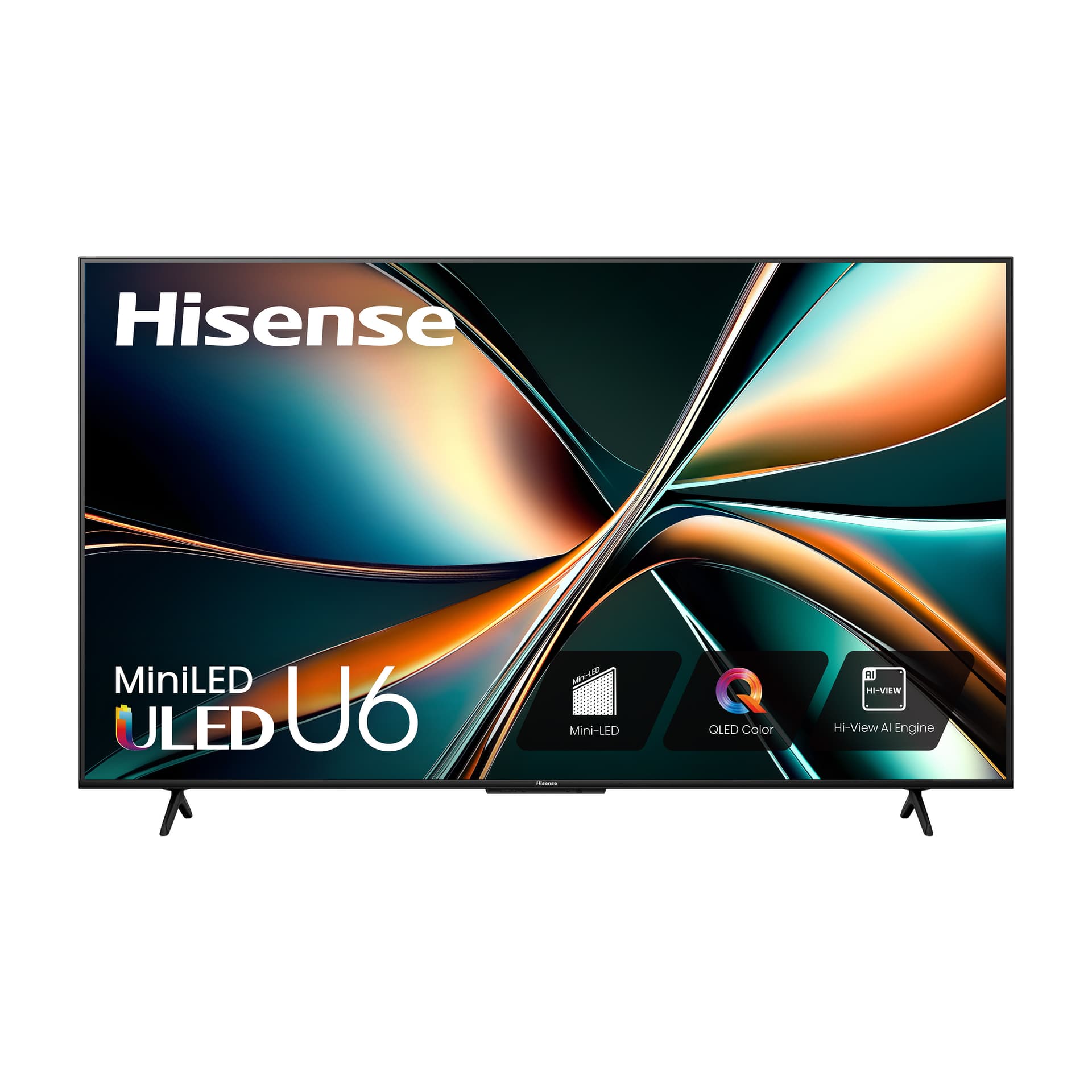
For the best bang for your buck, the Hisense 55U6N stands out among TVs for home theater, offering Dolby Vision HDR and 4 HDR formats at $529.
The U6N is Hisense's entry 2024 Mini-LED, the panel that brings Mini-LED backlighting to a price tier where Samsung and LG still ship direct-lit LCDs (the Samsung Q6F at 55 inches is direct-lit, not Mini-LED). 60 Hz refresh rate (no VRR), Dolby Vision plus HDR10+, Google TV with native Chromecast, 20 W Atmos. At its street price it competes with the Samsung Q6F and the TCL QM6K; the Hisense buy reason is Mini-LED at this price and dual HDR format support (Dolby Vision plus HDR10+, where Samsung supports only HDR10+), the trade-off is 60 Hz which rules out high-refresh gaming. Bedroom and secondary-TV territory at this size.
Trade-off: The Hisense U6N is genuinely a Mini-LED TV at a price tier where Samsung's Q6F still uses a direct-lit backlight, and that gap is visible in any scene with a bright object on a dark background. The honest trade-off is the 60 Hz panel. There is no VRR, no 120 Hz console mode, and no 144 Hz PC mode. For a movie-only secondary set it is the obvious pick; for any room with a current-gen console attached it is the wrong tier and the U8N is what you actually want.
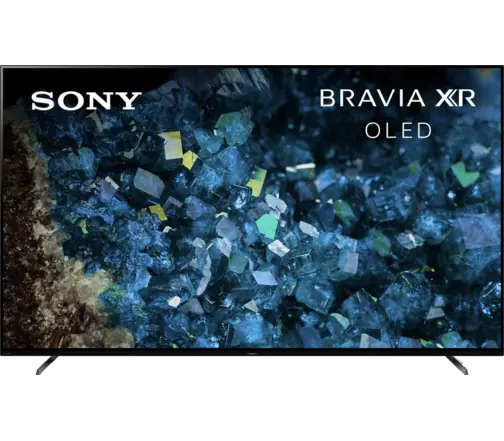
The Sony XR65A80L proves you don't need to break the bank among TVs for home theater, offering WOLED panel and 120 Hz refresh rate at $2,599.99.
The A80L is Sony's 2023 mid-tier WOLED, the panel where the Cognitive Processor XR pairs with Sony's Acoustic Surface technology that vibrates the screen itself as the speaker. Pixel-level dimming, 120 Hz native, full VRR and ALLM gaming features, Dolby Vision, Google TV with native Chromecast and Apple AirPlay 2. At its current discount it competes with the LG C4 and the Samsung S90D; the Sony buy reason is the Cognitive Processor's tone-mapping and the Acoustic Surface speaker that makes dialogue sound like it's coming from the actor's mouth, the trade-off is the older 2023 release versus the LG C5 and Samsung S95F. The 65-inch is the most-bought A80L size.
Trade-off: The Sony A80L is here on a closeout. It is a 2023 panel that Sony's Cognitive Processor XR still handles motion better than anyone, and the Acoustic Surface Audio+ implementation vibrates the screen as three actuators (plus two regular woofers) so dialogue tracks the on-screen mouth in a way a soundbar cannot match. The trade-off is peak brightness: RTINGS-class measurements come in around 700 nits on a 10-percent HDR window, which is less than half of the C5 and less than a quarter of the S95F. In a dark room, fine. Anywhere else, the C5 wins.
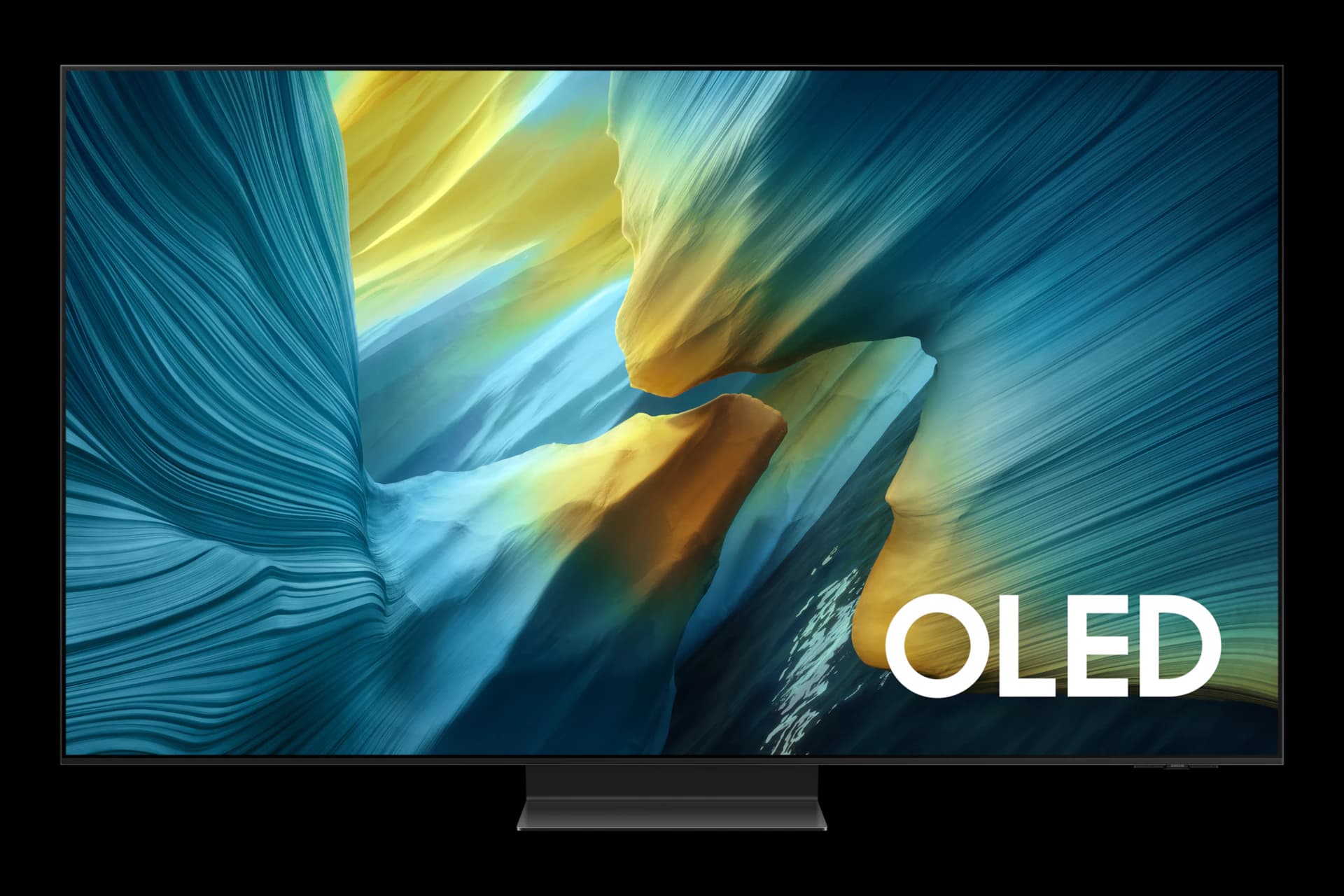
The Samsung QN77S95FAFXZA represents the pinnacle among TVs for home theater, offering QD-OLED panel and 120 Hz refresh rate at $2,999.99.
The S95F is Samsung's 2025 flagship QD-OLED, the panel where the third-gen NQ4 AI processor pairs with Samsung's most aggressive anti-reflection coating and a 4.2.2-channel speaker built into the bezel. Pixel-level dimming, 120 Hz, full VRR and ALLM, four HDMI 2.1 ports, Tizen with Q-Symphony for soundbar pairing. At its launch price it competes with the Sony BRAVIA 8 II QD-OLED and the LG G5; the Samsung buy reason is the anti-reflection coating that genuinely solves bright-room glare and the OLED-class 70 W audio array, the trade-off is no Dolby Vision support (Samsung still ships HDR10+ only). The 77-inch is the right S95F size for a 12-foot viewing distance.
Trade-off: The Samsung S95F is the right TV for a bright room and the wrong TV if you watch a lot of Dolby Vision content, because Samsung still refuses to license Dolby Vision and only ships HDR10+. Almost everything streams in both formats, so the catch is more theoretical than practical for most buyers. The real reason to spend this much is the matte anti-reflection layer (UL-certified Glare Free under three different UGR thresholds), which solves a problem no OLED with a glossy finish has ever solved.
In a light-controlled room, OLED. Pixel-level dimming means perfect black, which is the single biggest visible upgrade in a dark room. In a room with uncontrollable daylight, Mini-LED. A bright Mini-LED like the Hisense U8N pushes past 2,000 nits and stays watchable in conditions where an OLED looks washed out. Most home theater rooms can be made dark enough that OLED wins; most living rooms cannot.
Why does the Samsung S95F cost so much more than the LG C5?
Two reasons. The S95F is a QD-OLED panel (quantum dots on top of OLED) rather than the LG WOLED design, so colors are more saturated and brightness on a 10-percent window is roughly double. The bigger reason is the matte anti-glare coating Samsung paired with the panel. RTINGS, FlatpanelsHD and TechRadar all flag it as the most effective bright-room treatment on any OLED, and it adds real manufacturing cost. If your room is dark, you are paying for something you will not see.
What size TV should I buy for a 12-foot viewing distance?
At 12 feet most home theater installers will land on 75 inches as the floor and 83 to 85 inches as the natural size. The SMPTE 30-degree recommendation puts a 77-inch 4K panel at roughly the right field of view for 12 feet, which is why the 77-inch C5 is a popular size at that distance. Going larger is fine, going smaller starts to feel like a regular living-room TV in a dedicated room.
Do I need HDMI 2.1 if I do not own a current-gen console?
Not strictly. HDMI 2.1 buys you 4K/120, VRR and ALLM, which matter for PS5, Xbox Series X, and high-end PCs. For a pure movies-and-streaming setup HDMI 2.0 is fine. But four full HDMI 2.1 ports on the LG C5 cost nothing extra at this point, so there is no reason to actively avoid a 2.1 TV. Where it matters is on entry SKUs: the Samsung Q6F ships with one HDMI 2.1 port at most, and the Q8F has four. Confirm the port count before you buy.
Should I buy the C5 or wait for the C6?
If you are reading this before the C6 ships at full availability, wait. TechRadar's side-by-side preview suggests the C6 lifts brightness meaningfully on a panel that needed it. If the C6 has already launched and the C5 has dropped more than 20 percent, the C5 is the value play. The pattern repeats every year: prior-generation OLEDs at a real discount usually beat new-generation OLEDs at MSRP on a dollars-per-pixel basis.
We have not run our own lab measurements on any of these panels. Every brightness number above comes from a third-party measurement (RTINGS, TechRadar, Tom's Guide, FlatpanelsHD), and the C5 figures in particular vary across reviewers between roughly 1,000 and 1,200 nits depending on window size and picture mode. We are less confident in the Sony A80L's 700-nit figure than in the others because the closeout pricing means inventory at retail is mixed across the 2023 and 2024 stock and panel-source variance is real on a discontinued line.
The interesting question for 2027 is whether LG's Tandem OLED tech (currently on the G6) trickles down into the C-series, and whether Samsung answers it with a fourth-gen QD-OLED that closes the Dolby Vision gap. Until one of those ships, the C5 is going to keep being the answer.
CinemaConfig may receive compensation for purchases made at participating retailers linked on this site. This compensation does not affect what products or prices are displayed, or the order of prices listed. See our affiliate disclosure.