The Best Speaker Wire for Home Theater (2026)
Speaker wire is the easiest spend on the page and the one buyers waste the most money on. The physics is settled. Below the audible threshold, what matters is conductor cross-section (gauge), conductor material (oxygen-free copper versus copper-clad aluminum), and the jacket rating for where you're running it. Everything above that, the braid geometry, the dielectric bias, the silver versus copper conductor purity story, is the part of the cable industry that nobody at the engineering level defends in a controlled listening test.
Two questions decide the buy. First, how long is the run from the AVR to the farthest speaker, and what's the speaker's nominal impedance? A 15-foot run to an 8-ohm bookshelf works with 16 AWG. A 50-foot run to a 4-ohm tower needs 12 AWG to keep the voltage drop under the audible threshold (the CinemaConfig speaker wire calculator works the actual math from your run length and speaker impedance). Second, are you running through walls, ceilings, or under carpet? If yes, the jacket needs a CL2 or CL3 rating per the National Electric Code, and that's not optional; it's the fire-code requirement that makes the install legal and your homeowner's insurance valid.
How We Score
What you get at each price point
- $15–$40 per 100 ftBulk OFC, the right answer for most installsMediabridge 14 AWG OFC, Monoprice 12 AWG OFC, Liberty AV in-wall bulk. CL2 jackets on the in-wall versions. This tier is where the buy decision should land for any standard living-room or media-room install.
- $50–$200 per pair, terminatedStudio-grade base cable, US-terminatedBlue Jeans Cable Ten (Belden 5T00UP base, welded banana terminations), Kimber 8PR by the foot. You're paying for the welded terminations and the assembled-in-USA build, not for a measurable signal advantage over the bulk tier.
- $300–$1,500 per pairAudiophile entry, where the brand story startsAudioQuest Rocket 11 through Rocket 88, Kimber 12TC, Cardas Quadlink. Long-grain copper, braided or star-quad geometries, sometimes a battery-bias dielectric layer. The construction differences are real. The audible-difference question over a 12 AWG OFC at the same length is not demonstrated in any controlled test we trust.
- $3,000+Flagship cable, brand-consistency tierAudioQuest William Tell, Robin Hood, FireBird, Dragon. Nordost Odin 2, Cardas Clear Beyond. The buyer at this level is matching a system tier, not buying signal improvement. If this section sounds skeptical, that's the editorial position.
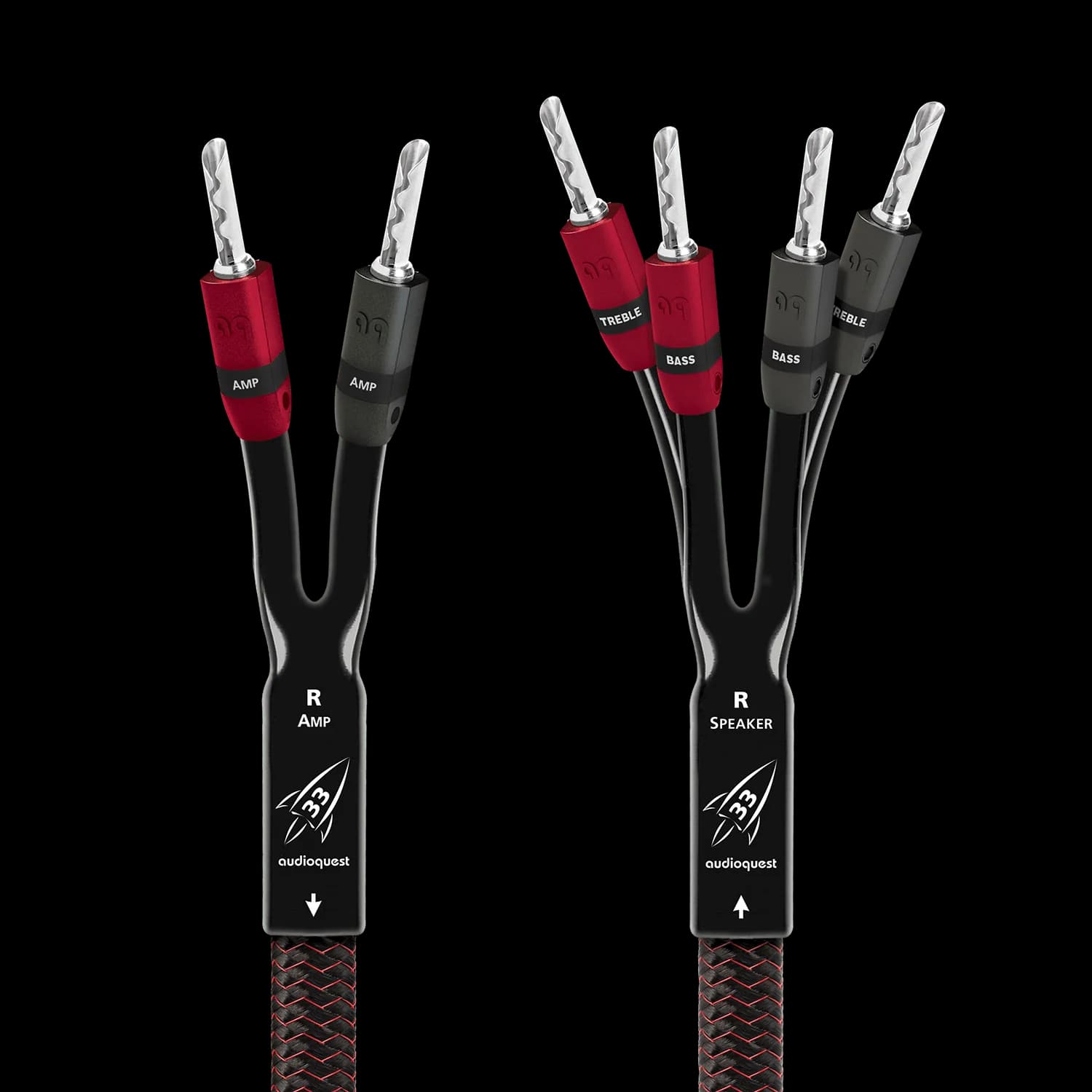
AudioQuest
Rocket 33 Single-BiWire
The AudioQuest Rocket 33 Single-BiWire earns our top pick in this category at $869.95. The Single-BiWire Rocket 33 splits the cable internally to feed two binding-post pairs at the speaker (separate HF and LF feeds from a single amp output). This addresses biwire-capable speakers without running two full cable runs from the amp. The biwire benefit at this conductor tier is small in measurement but real in some speakers' crossovers; the buyer who already has biwire-capable speakers and an AudioQuest-tiered system is the audience. Mediabridge does not build internal biwire variants at this tier.
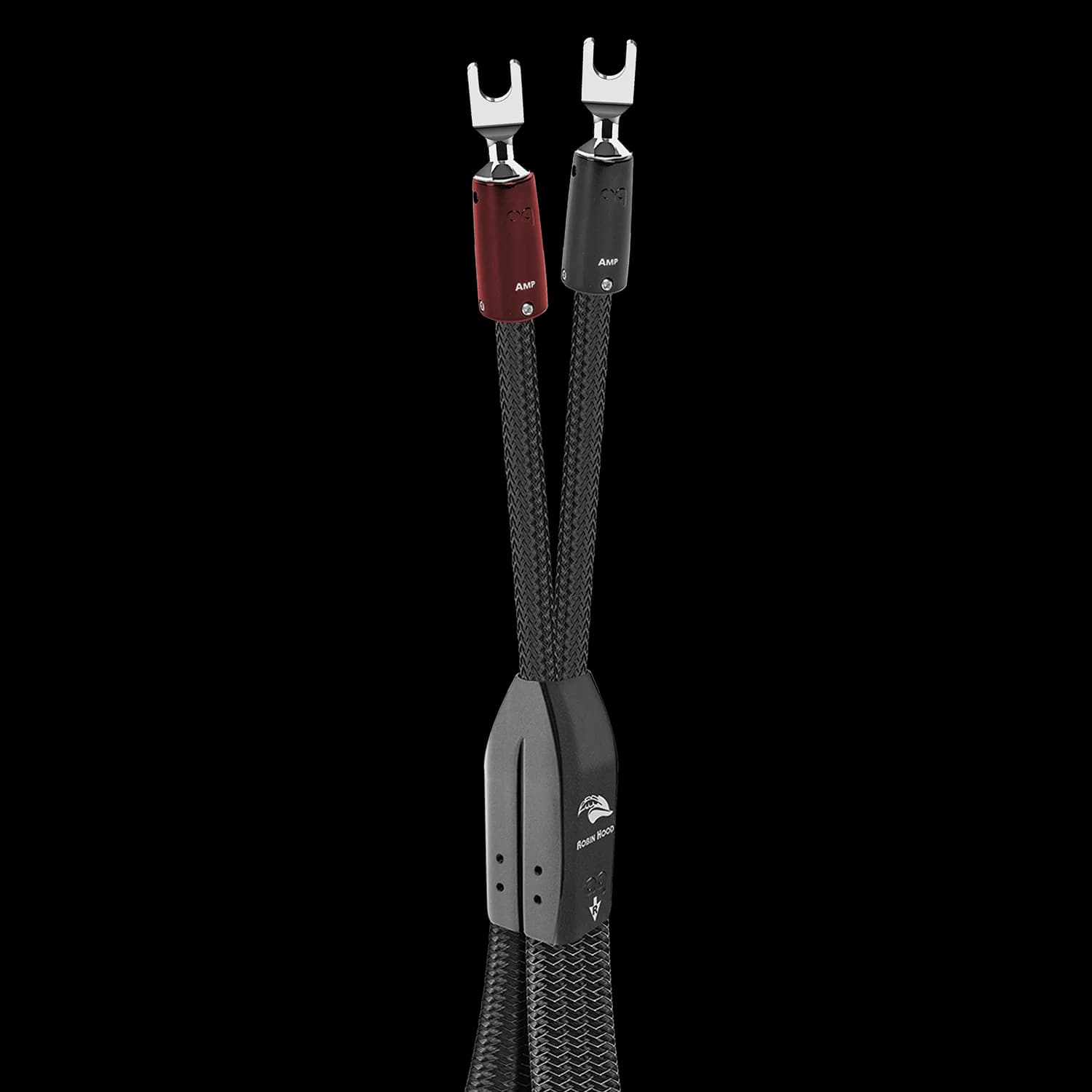
AudioQuest
Robin Hood SILVER
For the best bang for your buck, the AudioQuest Robin Hood SILVER stands out in this category at $8,497.5. The Robin Hood SILVER sits above the Rocket line and below the William Tell, with Perfect-Surface Silver conductors (versus the Long-Grain Copper of Rocket). At this tier the conductor metallurgy is the AudioQuest brand story; the measurable difference at speaker-level voltage and current is below the audible threshold of any reasonable speaker setup. Comparable cables in this price band are the Cardas Clear Reflection and Nordost Heimdall 2 speaker cables; the Robin Hood's value is the build and the brand-tier consistency rather than measurable signal advantage.
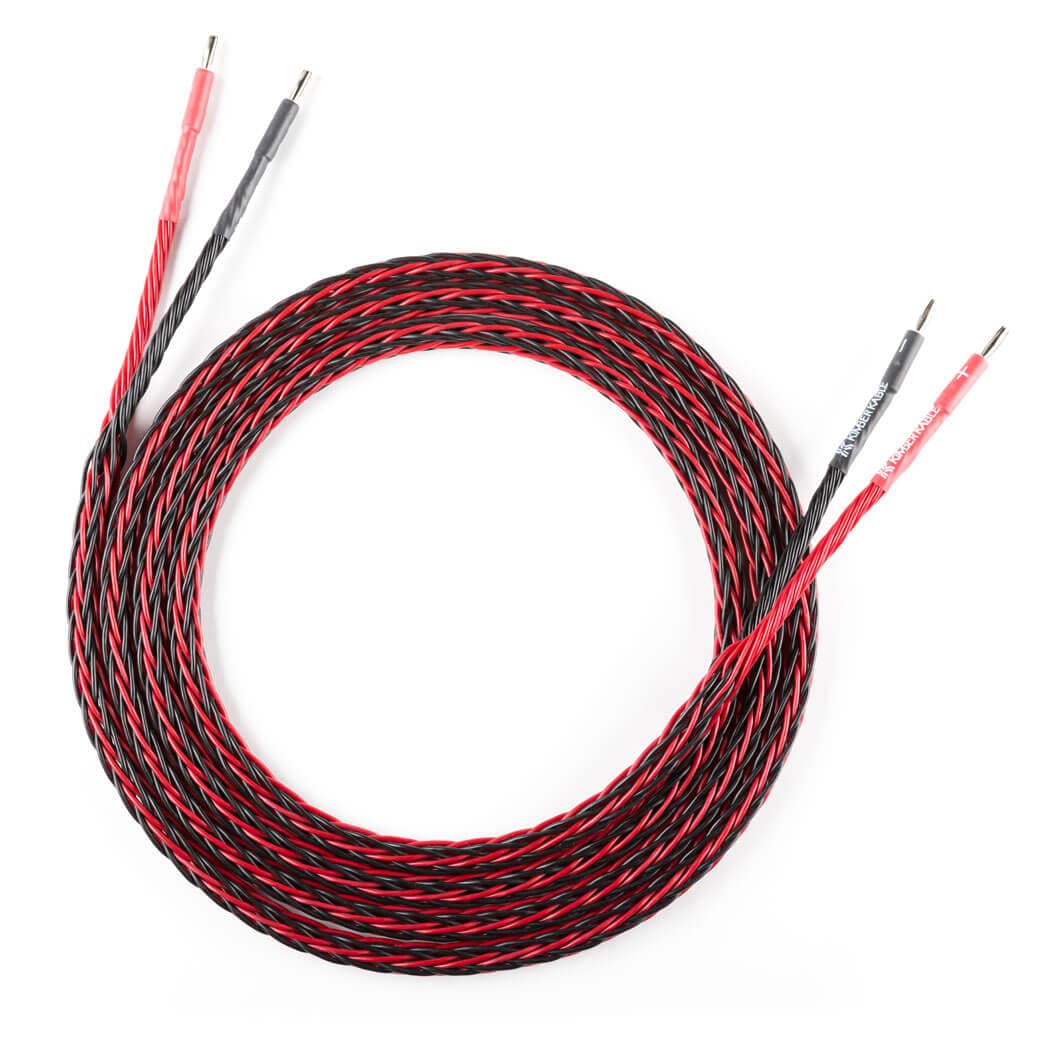
Kimber Kable
8PR
The Kimber Kable 8PR proves you don't need to break the bank in this category at $7.29. The 8PR is Kimber's entry-tier braided speaker cable, an 8-conductor design where the braid geometry is the construction detail Kimber's reputation rests on rather than any audible-difference claim. Versus a standard 12-AWG zip cord, the braided construction is mechanically heavier, terminates more cleanly into binding posts, and resists pull-through under cabinet door tension. The honest framing on speaker wire is that AWG and copper purity are the specs that matter; for buyers running a Kimber-tiered system the 8PR maintains visual consistency, while Blue Jeans Cable's 12-AWG terminated runs hold the same signal spec for less.
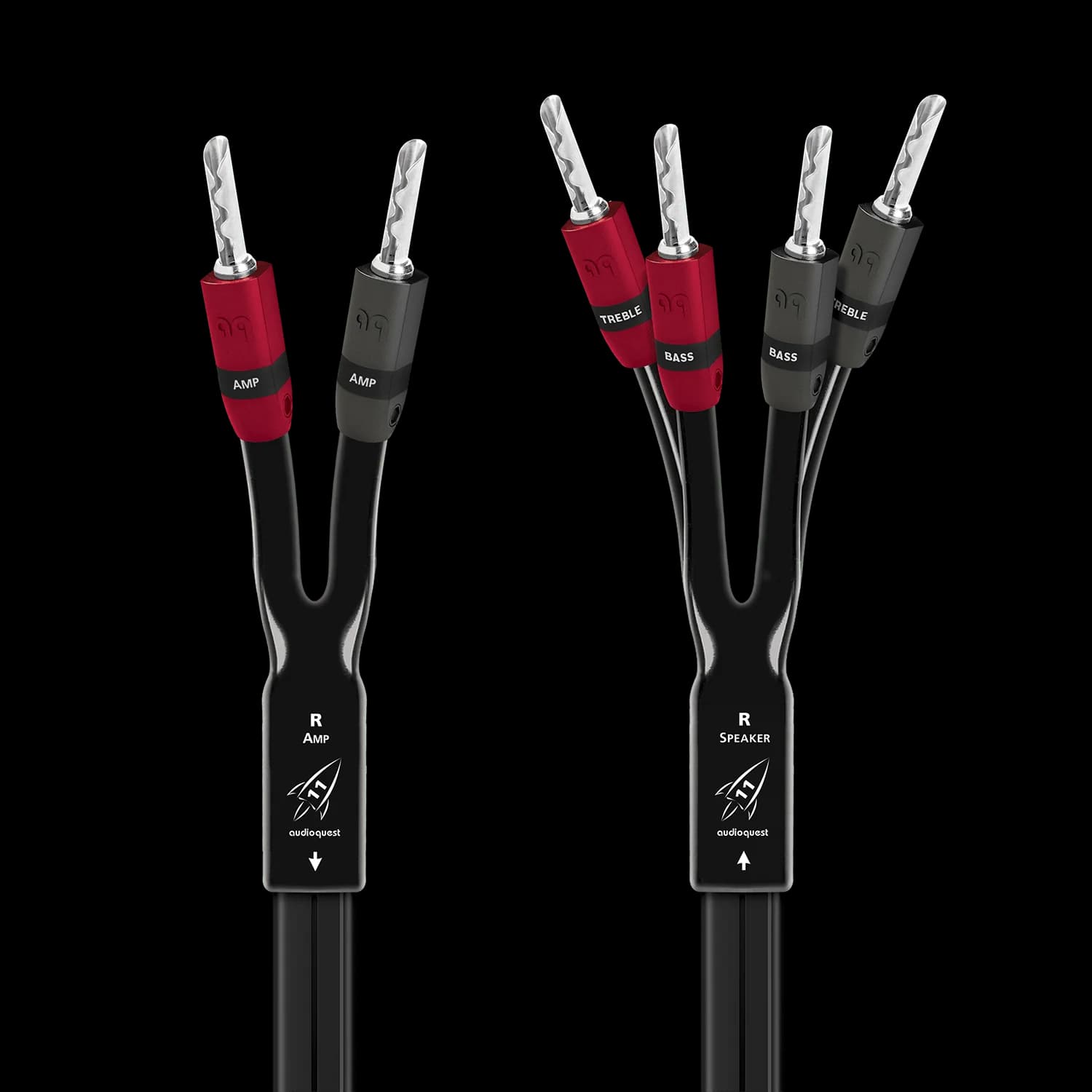
AudioQuest
Rocket 11 Single-BiWire
The AudioQuest Rocket 11 Single-BiWire represents the pinnacle in this category at $479.95. The Rocket 11 Single-BiWire is AudioQuest's third-tier speaker cable in the Rocket line, with Long-Grain Copper conductors and the Single-BiWire termination geometry that splits the spade at the speaker end into separate high-frequency and low-frequency runs while keeping a single termination at the amp end. The Single-BiWire feature only matters for speakers with separate HF/LF binding posts (most AudioQuest Rocket-targeted speakers in the $1,500-and-up range provide them); for single-binding-post speakers, the Rocket 11 in non-biwire termination performs identically. At its price the comparison is the Kimber Kable 8VS and the Cardas Quadlink 5C; the AudioQuest tier-mapping is the most-published of the three.
Frequently Asked Questions
What gauge speaker wire do I need?
Is oxygen-free copper actually better than copper-clad aluminum?
Do I need CL2 or CL3 rated wire for in-wall speaker installation?
Are banana plugs better than bare wire?
Does expensive audiophile speaker wire actually sound better?
How long can a speaker wire run be before signal loss matters?
CinemaConfig may receive compensation for purchases made at participating retailers linked on this site. This compensation does not affect what products or prices are displayed, or the order of prices listed. See our affiliate disclosure.