The Best Power Conditioners for Home Theater (2026)
Power conditioning is one of the most confused categories in home theater because the marketing layer hides a real engineering distinction underneath. Surge protection is real and matters. Battery backup for projector shutdown during a brownout is real and matters. The audiophile claim that cleaning the AC line gives you a 'blacker background' and 'improved soundstage' on a $1,200 AVR fed from suburban grid power is, with rare exceptions, marketing. The dividing line is the topology. Most cheap power strips, even ones marketed as 'audio-grade surge protectors,' use sacrificial MOV (metal oxide varistor) clamps that degrade with each surge and eventually fail open with no warning. Furman's SMP (Series Multi-Stage Protection) uses a different circuit that does not degrade across surge events and carries an effectively unlimited joule rating because the protection element does not sacrifice itself to absorb a hit. That is the spec line that actually matters.
Three other picks below cover the cases the PST-8D does not. The Furman M-8x AR ($799.95) adds active voltage regulation in the 95-125 V band for installs on rural or generator-fed lines. The Furman F1500-UPS ($2,299.95) is the projector-shutdown answer because it programs IR shutdown commands during a blackout and saves lamp/laser engine life. The Furman P-1800 AR ($1,499.95) sits in the rack tier for amplifier racks that need high-current headroom plus regulation.
How We Score
What you get at each price point
- Under $50Avoid this entire tier for AVGeneric surge strips with a joule rating in the 1,000-2,000 range and MOV-only protection. They work until they do not, and they fail open without indication. Acceptable for a lamp or a charging brick, not for an AVR.
- $200–$400SMP entry, the right starting pointFurman PST-8D territory. SMP series-mode topology, LiFT noise filtering, EVS over-voltage shutdown, 8 outlets at 15 A. This is the floor where the protection topology actually changes and the unit will not silently degrade after a lightning event.
- $700–$1,500Voltage regulation and current headroomM-8x AR and P-1800 AR. You add AC Regulation that holds output to 120 V ±5 V across a 97-137 V input range, plus the rackmount form factor and higher current headroom for amp racks. Only worth specifying if the wall voltage in your install genuinely varies.
- $2,000+Battery backup or balanced powerF1500-UPS for the projector-shutdown use case (the genuinely useful spend at this tier). Reference balanced-power conditioners like the Furman IT-REF-15I exist above this and the engineering is real, but the residential install that audibly benefits is rare.
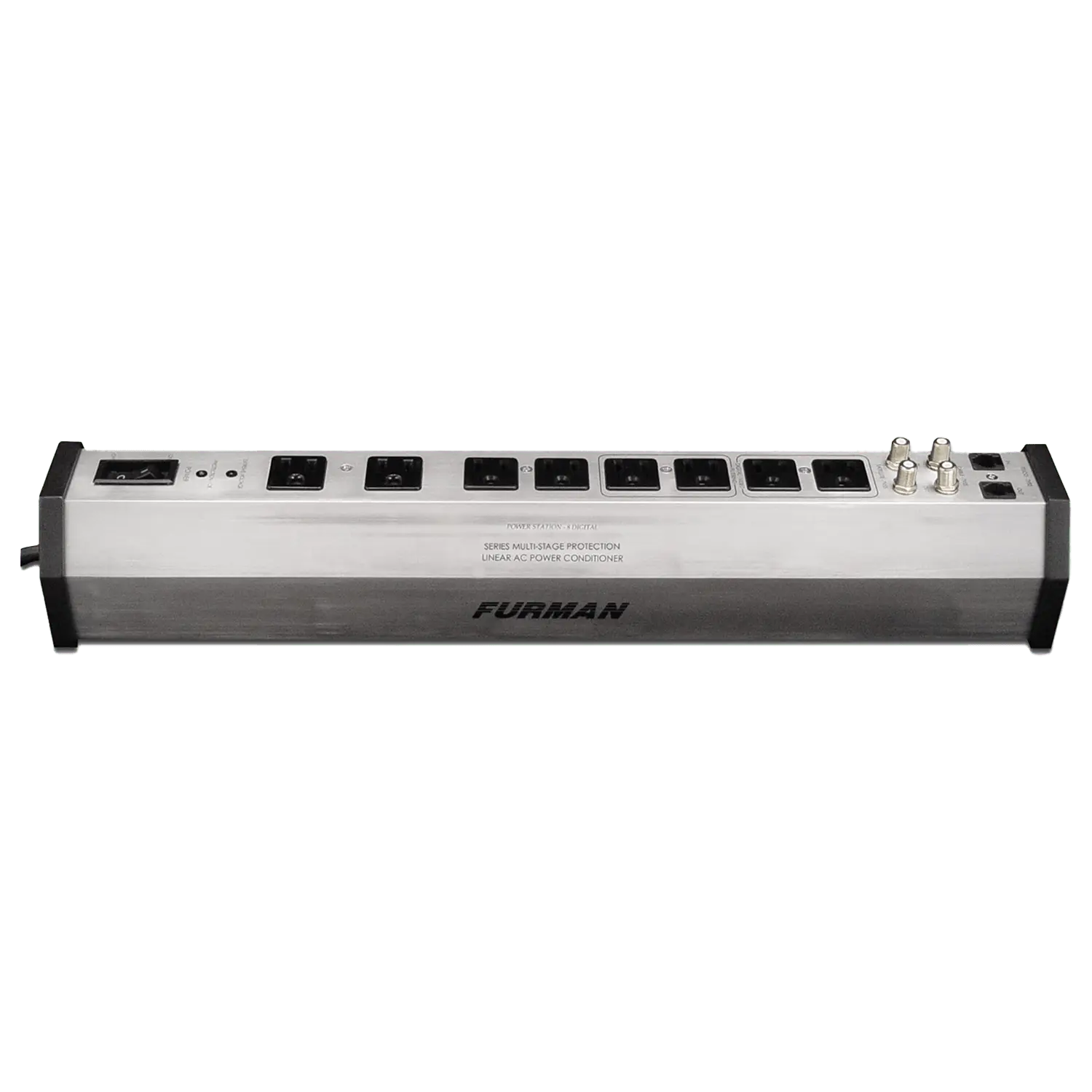
Furman
PST-8D
The Furman PST-8D earns our top pick in this category at $209.95. The PST-8D is Furman's consumer-tier shelf conditioner with the dimmable-LED variant in the PST line, the unit sized for a freestanding rack shelf rather than rackmount-only chassis. SMP series-mode surge, LiFT noise filtering, 8 outlets. At its price tier it competes with the Panamax M5400-PM (rackmount equivalent) and the APC H15 (cheaper, MOV-only). The Furman buy reason is the SMP technology in a shelf form factor for installs that don't have a rack to populate, the trade-off versus a rackmount equivalent is the cabinet aesthetic that's harder to hide behind closed doors than a rack panel.
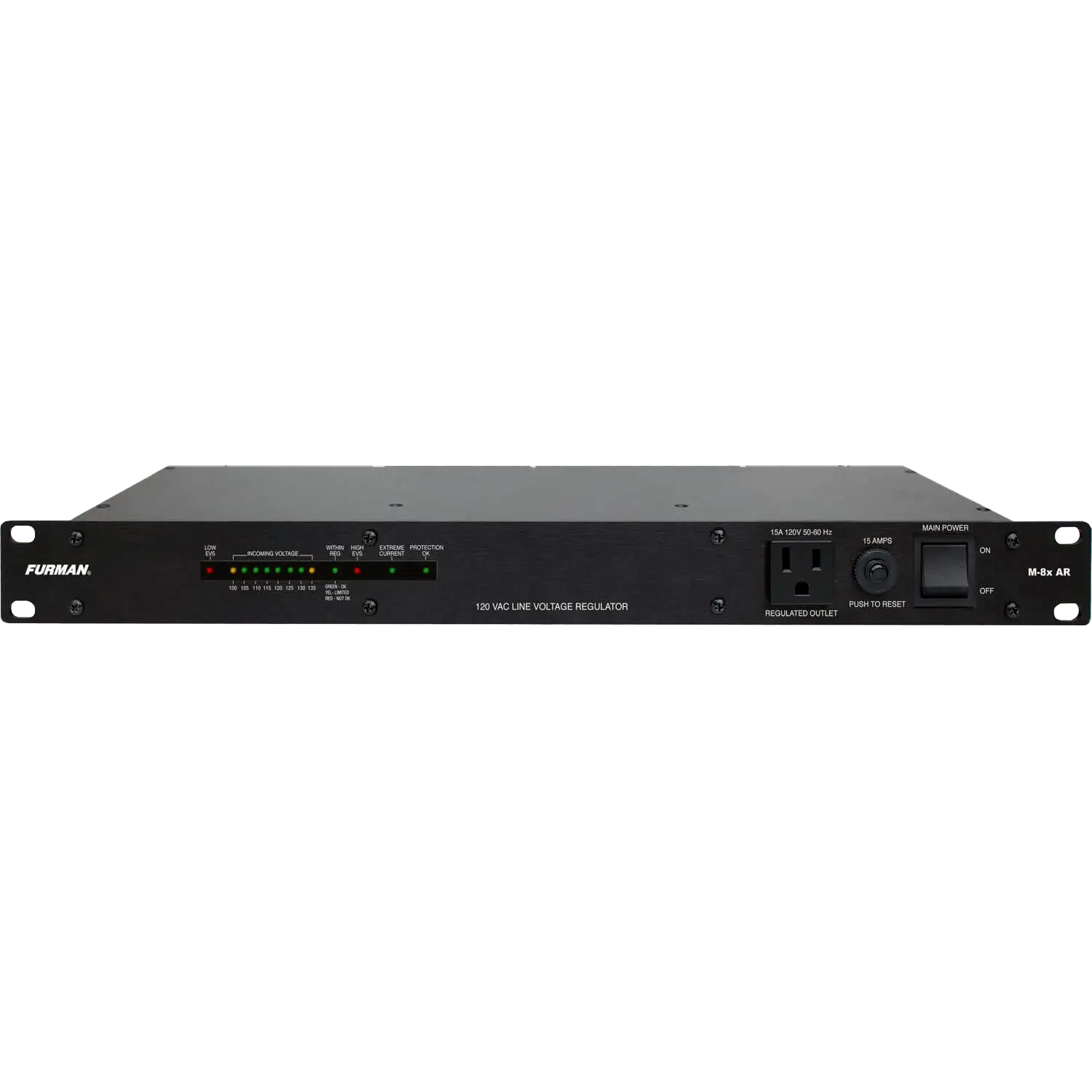
Furman
M-8X AR
For the best bang for your buck, the Furman M-8X AR stands out in this category at $799.95. The M-8x AR is Furman's consumer rackmount power conditioner with AC Regulation, the AR variant that holds output voltage stable in the 95–125 V band when the wall feed sags or surges within that range. SMP series-mode surge protection (the Furman differentiator versus MOV-based competitors that degrade with each surge), LiFT noise filtering, 9 outlets. At its price tier it competes with the Panamax M5400-PM and the APC H15 (which is MOV-only and lacks the AR voltage regulation). The Furman buy reason is the SMP plus AR combination that handles brownout-prone areas (rural lines, generator-fed systems), the trade-off versus a non-AR Furman like the M-8s is the price premium for the regulation circuit which only matters if your line voltage actually varies more than ±5%.
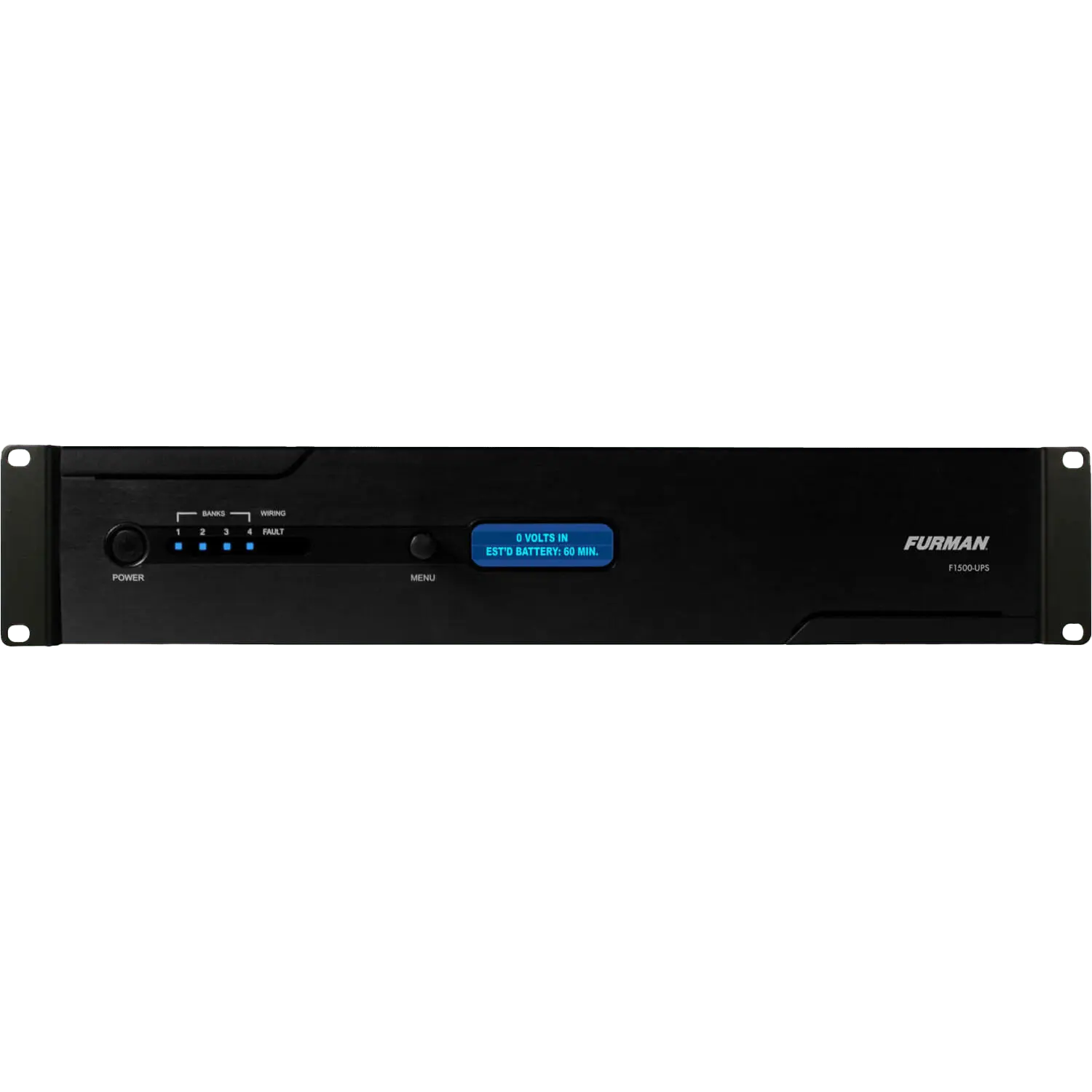
Furman
F1500
The Furman F1500 proves you don't need to break the bank in this category at $2,299.95. The F1500-UPS is Furman's rack UPS variant, the chassis that combines SMP/LiFT/AR conditioning with a 1500 VA / 1000 W battery backup for graceful shutdown during brownouts and short power events. The buy-case is specifically projector laser/lamp life: a hard power cut during projection damages the lamp or laser engine over time, where a UPS holds the projector up long enough to issue a controlled shutdown command. At its price tier it competes with the APC SmartUPS SMT1500RM2U (which lacks SMP and LiFT) and the CyberPower OL1500RTXL2U. The Furman buy reason is the conditioning-plus-UPS combination in one rack chassis for projector installs, the trade-off versus a pure UPS is the price premium for the conditioning circuitry; for AVR-only installs without a projector, the conditioning is more useful than the UPS function.
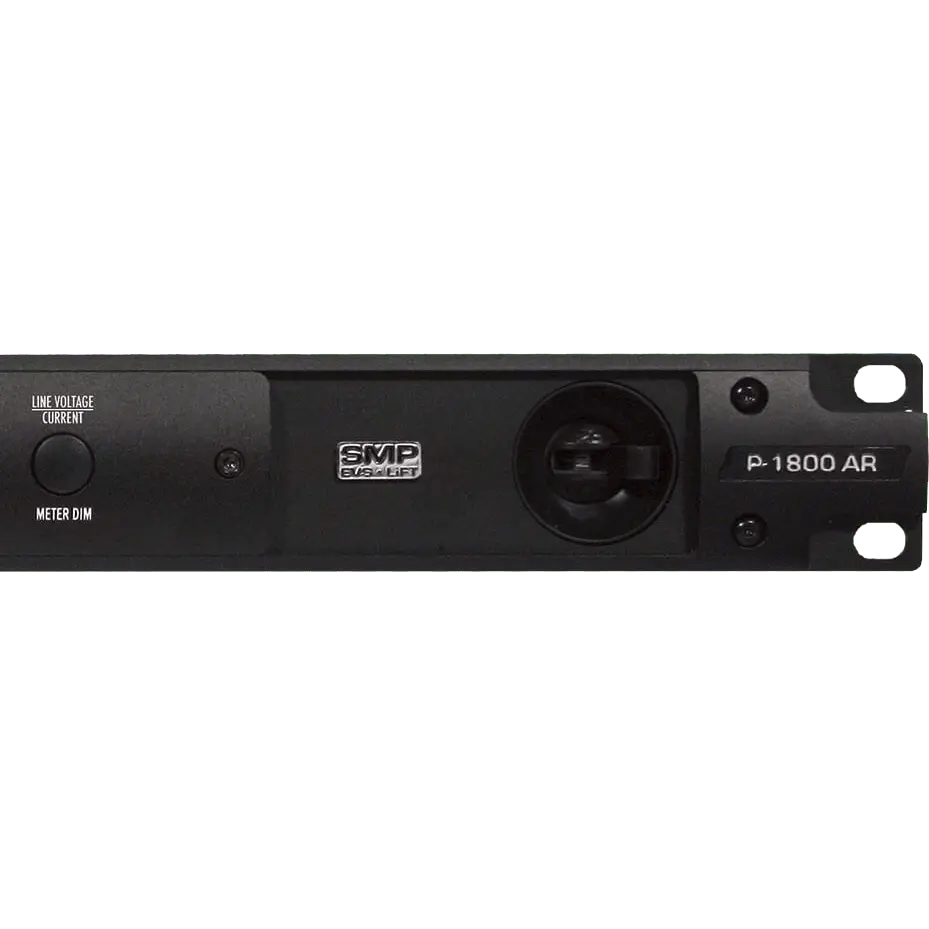
Furman
P-1800 AR
The Furman P-1800 AR represents the pinnacle in this category at $1,499.95. The P-1800 AR is Furman's high-current rackmount conditioner with AC Regulation, sized for amplifier racks where current demand spikes during dynamic peaks would brown out a smaller conditioner. The "AR" suffix means active voltage regulation in the 95–125 V band; the high-current spec means the chassis bypasses the typical conditioner current-limiting that strangles dynamic peaks on the AVR or amp downstream. At its price tier it competes with the Panamax M5400-PM Pro and the Surge X SX-1115. The Furman buy reason is the high-current rating for amp racks where dynamic peaks demand short bursts of well above the rated continuous current, the trade-off is the price premium versus the M-8x AR (which works for AVRs but can choke an active separates rig).
Frequently Asked Questions
Do power conditioners actually improve sound quality?
What is the difference between MOV and SMP surge protection?
Do I need a UPS for my home theater?
Is voltage regulation worth the upgrade?
Will a power conditioner protect against a direct lightning strike?
CinemaConfig may receive compensation for purchases made at participating retailers linked on this site. This compensation does not affect what products or prices are displayed, or the order of prices listed. See our affiliate disclosure.