The Best Atmos Height Speakers (2026): Upfiring Modules vs In-Ceiling
Atmos height channels have two physically different implementations, and most buying guides pretend they're equivalent. They're not.
An in-ceiling speaker fires sound downward from the actual overhead position. That's what Dolby originally specified, and it works the same in every room. An upfiring module sits on top of your mains, points a Dolby-tuned driver at the ceiling, and depends on the ceiling acting as a flat reflector to bounce the sound back to your couch. Dolby's own setup guide caps ceiling height at 10 feet and assumes a flat, painted-drywall surface. If your ceiling is vaulted, beamed, popcorn-textured, acoustic-tile drop, or has exposed ducting, upfiring is broken before you plug it in.
The honest version of this category looks like a fork. Renters and anyone who can't run wire pick an upfiring module: the Klipsch RP-500SA II ($899/pair), Polk Reserve R900 ($599/pair), or the orientation-flexible SVS Prime Elevation ($549/pair). Anyone with attic access or a ceiling they can cut into picks an in-ceiling like the Klipsch CDT-5650-C II ($349.99 MSRP, often $150 street per speaker) and gets a better Atmos effect for less money.
How We Score
We score height speakers on five dimensions. Installation reality weights highest: a speaker that fits how you live beats one that needs a finished basement gut-job. Dolby-spec compliance matters for upfiring (the certified HRTF crossover is what makes the bounce read as overhead, not just brighter mains). Low-end extension below 80 Hz separates the modules that hand off cleanly to your AVR crossover from the ones that leave a hole. Voice-match with the rest of your speaker chain affects how cohesive pans sound. Mounting flexibility is the tiebreaker for the upfiring tier, because half of these end up on a wall instead of a tower anyway.
We don't score "audiophile bass response" on height speakers. They're high-passed at 80 Hz by your AVR regardless of what the driver can do below that.
What you get at each price point
- $275–$400The renter compromiseEntry upfiring modules like the ELAC Debut 2.0 A4.2 ($200–$300/pair street) or a single SVS Prime Elevation ($274.99). You'll get a height channel that exists. Don't expect a discrete overhead pan to read as cleanly as it does in a demo room.
- $549–$899Upfiring done as well as physics allowsThe SVS Prime Elevation ($549/pair), Polk Reserve R900 ($599/pair), and Klipsch RP-500SA II ($899/pair). Dolby-certified HRTF crossovers, real low-end down to 50–55 Hz, and mounting options if the upfiring placement doesn't pan out. This is where upfiring stops being a gimmick.
- $300–$700 per pair installedReal in-ceiling, if you can run wireA pair of Klipsch CDT-5650-C II ($150 each street) plus an afternoon with a drywall saw beats every upfiring module above. The speakers cost less. The Atmos effect is more localized. The trade is a hole in your ceiling and an attic crawl.
- $1,400+Built-in heights on Atmos-enabled towersKlipsch RP-8060FA II or Polk Reserve R700 towers with the upfiring driver integrated into the cabinet. The bounce physics still apply, but the height module sits at the same horizontal position as your mains, which improves the front-stage spatial coherence. The cost is buying new towers.
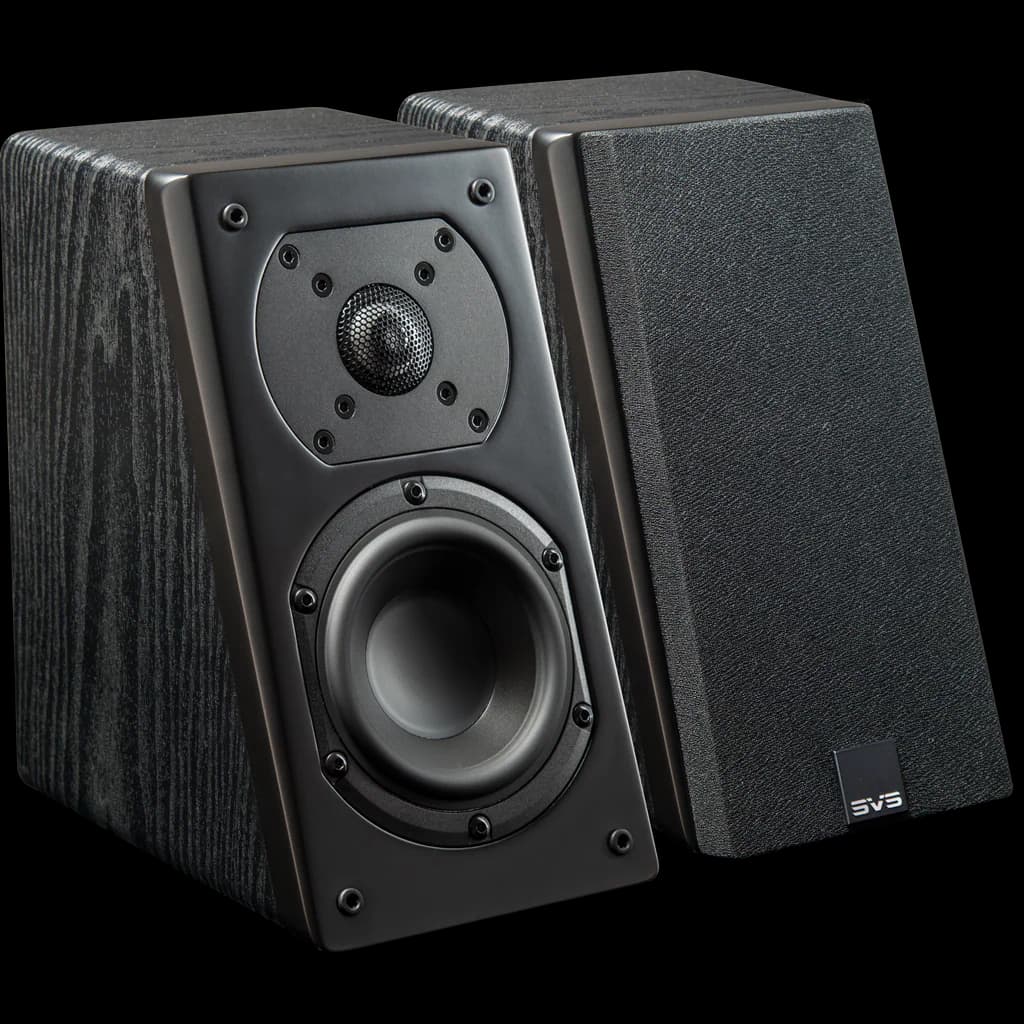
SVS
PRIME-ELEVATION
The SVS PRIME-ELEVATION earns our top pick in this category, offering Good sensitivity (87 dB) and Easy to drive (8 ohm) at $249.99. The Prime Elevation is SVS's dedicated Atmos / surround speaker for the Prime line, designed to mount in any of seven orientations: upfiring on an LCR, wall-mount as a height channel, or side or rear surround. A 5.25-inch woofer and 1-inch aluminum dome tweeter crossed at 2,500 Hz deliver 55 Hz of low-end extension at 87 dB sensitivity, meaningful for a height speaker because most reflected-Atmos modules can't deliver below 80 Hz cleanly. The cross-shop is in-ceiling speakers when the install is feasible; the Prime Elevation is the right answer when in-ceiling is off the table.
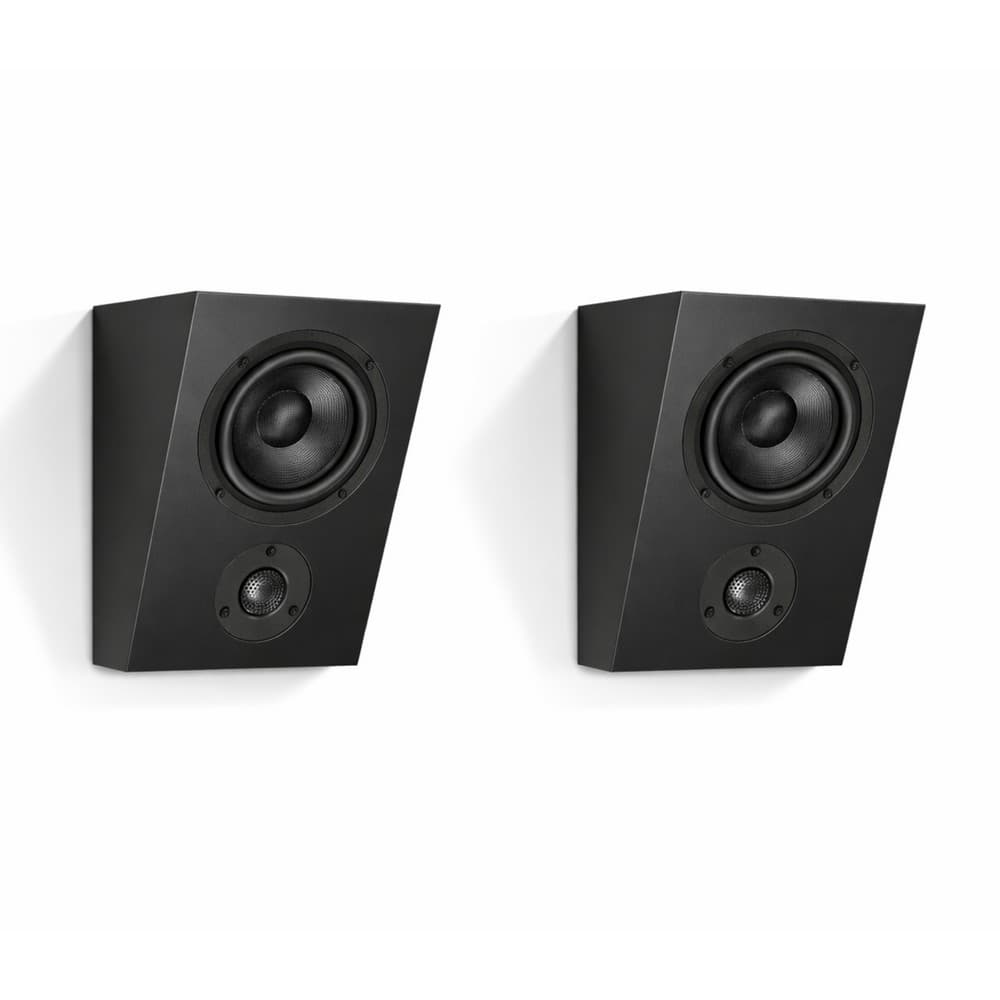
OSD Audio
T55E
For the best bang for your buck, the OSD Audio T55E stands out in this category, offering Good sensitivity (87 dB) at $359.69. The T55E is OSD's Dolby Atmos elevation module, the on-wall 5.25-inch 2-way designed to mount on a wall surface and reflect height-channel content off the ceiling for buyers without pre-wired ceiling speakers. The Atmos-elevation use case demands a flat painted-drywall ceiling at 8-to-10-foot height to work as designed; vaulted, beamed, or acoustic-tile ceilings break the reflection geometry that makes upfiring height work. 100 Hz claimed low-end (the upfiring output is meant to be high-pass filtered at 80 Hz by the AVR Atmos processing), 87 dB sensitivity, 4 Ω rating. At its direct pricing the cross-shop is the Polk Audio FXi A4 and the Klipsch RP-500SA; the OSD buy reason is the price below those cross-shops, the trade-off is that real upfiring channels physically integrated into a tower (Klipsch RP-8060FA, Polk Reserve R700) deliver a stronger height effect than any wall-mounted module reflecting off the ceiling.
Frequently Asked Questions
Do upfiring Atmos speakers actually work?
Are in-ceiling speakers better than upfiring modules for Atmos?
Do I need Dolby-certified speakers or will any small speaker work upfiring?
How many height speakers do I need for Atmos?
Can I just use bookshelf speakers as upfiring height modules?
What ceiling height kills upfiring Atmos?
CinemaConfig may receive compensation for purchases made at participating retailers linked on this site. This compensation does not affect what products or prices are displayed, or the order of prices listed. See our affiliate disclosure.